The perfect 2-week Thailand itinerary for first-timers

TripBlogs
Thailand is a fantastic year-round destination that mixes culture, nature, wildlife, food and stunning beaches. It’s a country that offers something for everyone, from bustling cities to tropical islands, local colourful villages, and over 40,000 temples. The transport network is brilliant, so you can cover a great deal of ground within a short space of time, easily travelling from the mountains of the north to the beaches of the south.
I have recently returned from an amazing fortnight in Thailand, and my itinerary offered a great balance of adventure, culture and relaxation without feeling rushed or exhausted. If you’re thinking of travelling to Thailand for the first time and you want a classic two-week itinerary, then keep reading for the perfect trip.
When to visit Thailand
Despite being a year-round destination, it’s important to understand Thailand's weather patterns before booking your trip. If you do a basic internet search about ‘the best time of year to visit Thailand’, you’ll get a variety of responses ranging from September to March. A search about the ‘rainy season in Thailand’ will tell you that the typical ‘monsoon’ season happens between July and October.
However, this is a very oversimplified version of the story. Even though I visited during the rainy season, it rained for only a couple of hours during the day and didn’t impact our itinerary or any of our activities. In many ways, the ‘rainy season’ can be the best time to travel, with fewer crowds, lower prices and still plenty of sunshine. Don’t always believe the headlines – research where you want to go in Thailand and look into the local weather systems in those specific destinations.

Beginning in Bangkok
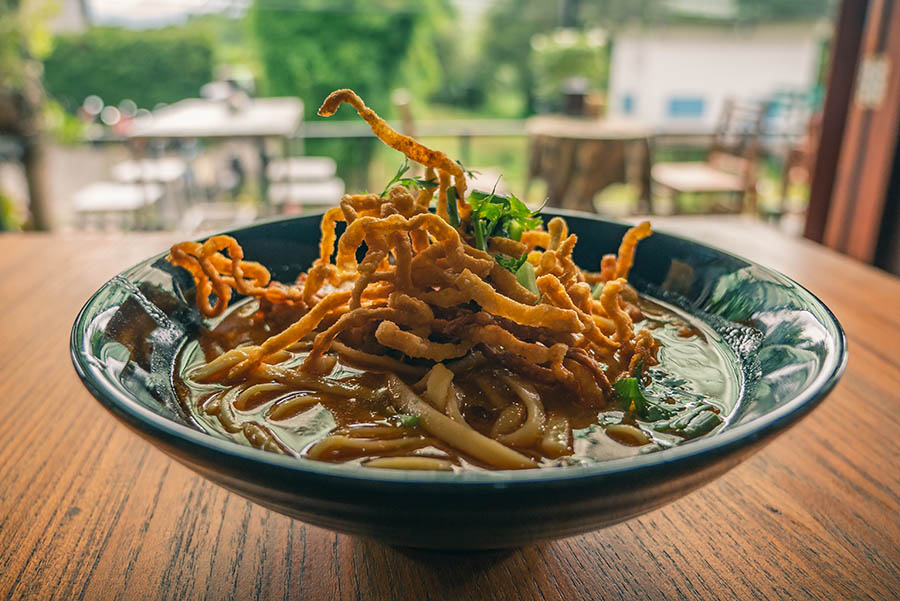
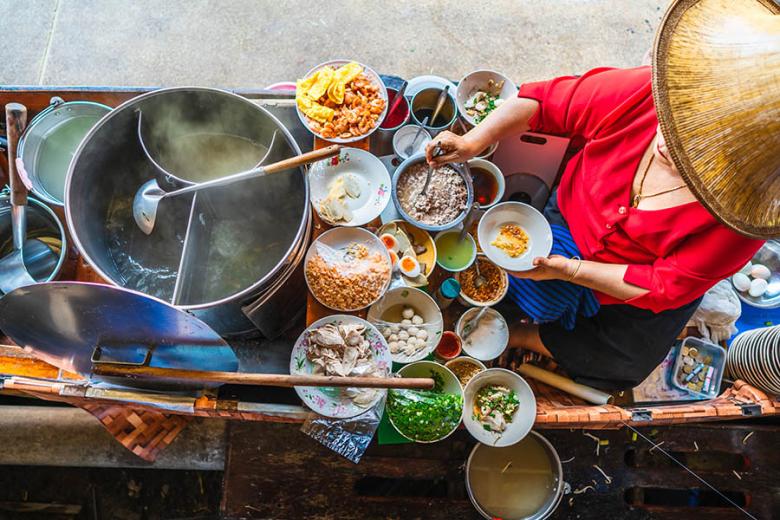
We flew into Bangkok with Qatar Airways to start our adventure. Most international flights arrive in Bangkok, but you can also fly into Phuket with Emirates and head straight for the beach. We stayed in Bangkok for three nights and explored the city, visiting some amazing temples, exploring Chinatown, and taking a day trip out to the ancient city of Ayutthaya.
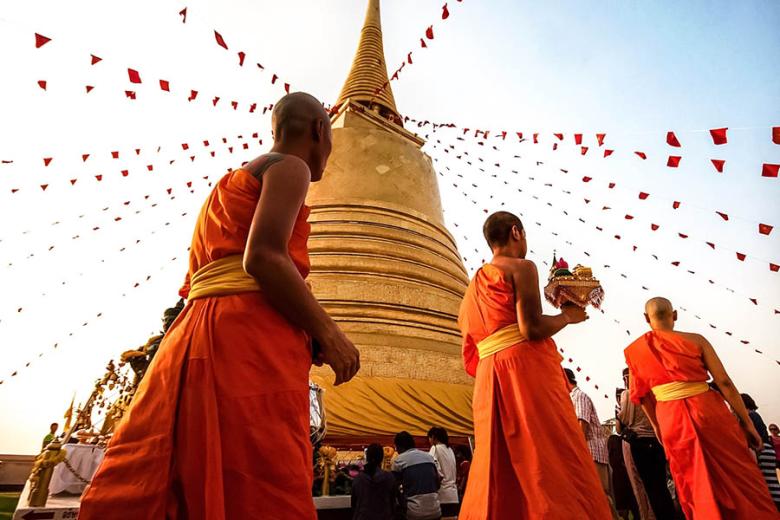
You can’t travel to Bangkok without visiting Wat Pho Temple and the Grand Palace. Wat Pho Temple is arguably Bangkok’s most enchanting temple, where you can see monks gathering for their morning chants. It’s a really atmospheric experience.
The Grand Palace was home to the Royal family for more than two decades, and you can walk around the grounds exploring the various temples, thrones, and museums within the compound. The highlight is the Emerald Buddha, which is the most admired Buddhist image in Thailand.
A day in Ayutthaya
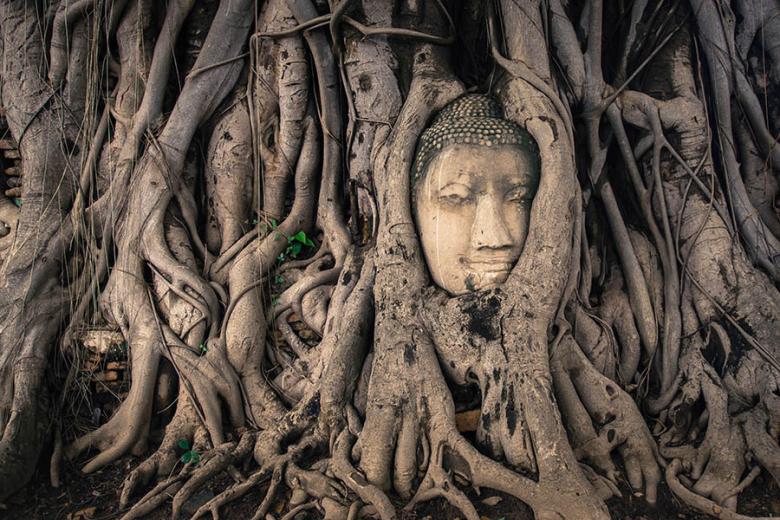
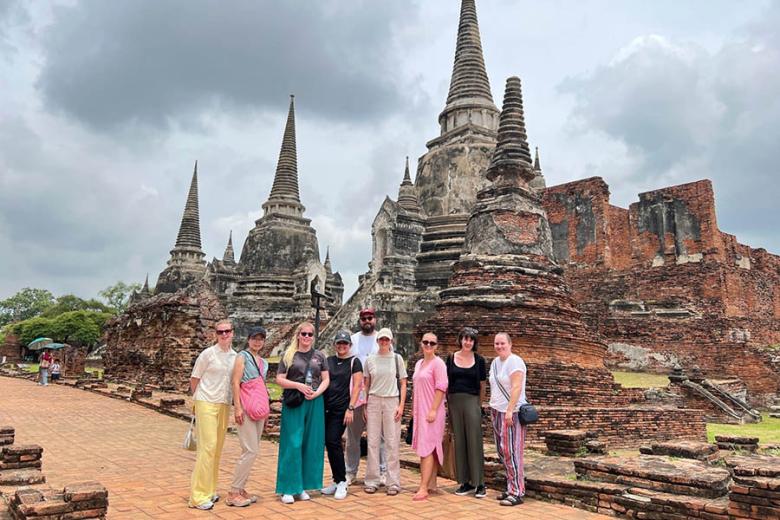
I recommend giving yourself an extra day in Bangkok so that you have time to visit the UNESCO city of Ayutthaya, about 55 miles north of the city. We took the train from the main Bangkok Train Station, passing through the countryside and lush paddy fields. When we arrived, we explored some of the temples and ruins by Kermit Tuk-tuk. Wat Mahathat is one of the oldest and most significant temples in Ayutthaya, home to a famous Buddha head emerging from the tree roots.
Exploring Chiang Rai
Next up, we flew to the northernmost major city in Thailand, Chiang Rai, close to the border of Myanmar. We took an early morning flight, which took around 1 hour and 25 minutes, so that we had the rest of the afternoon to explore.
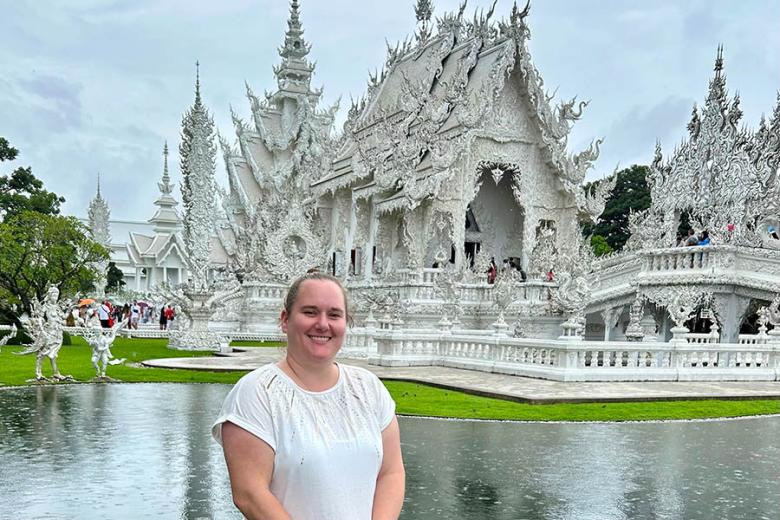
Chiang Rai is known for its Lanna culture and stunning temples. ‘Wat Rong Khun' (White Temple) is a beautiful temple just outside Chiang Rai, and when viewed from a distance, it appears to be crafted from sparkling white porcelain.
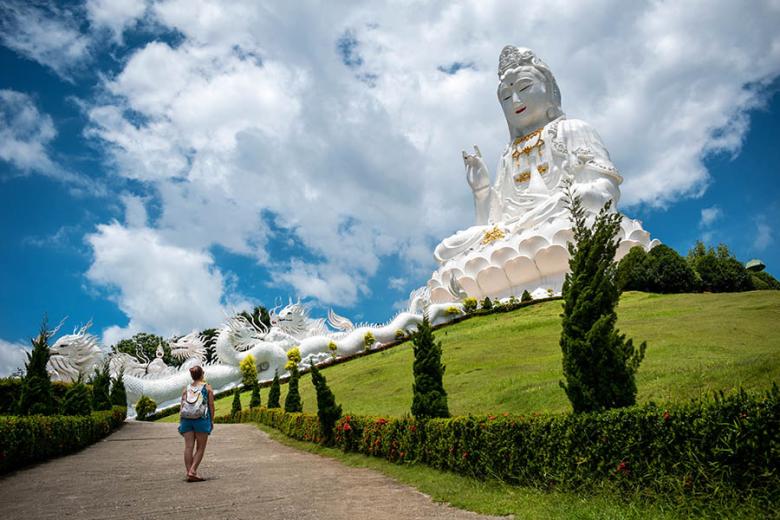
Nearby, ‘Wat Rong Suea Ten’ (Blue Temple) is known for its striking modern artistic design. We only spent one night in Chiang Rai, but if you extend your stay for a couple of nights, you can visit tea plantations and the Hloyo Hilltribe Village to learn about the Akha local lifestyle and culture.
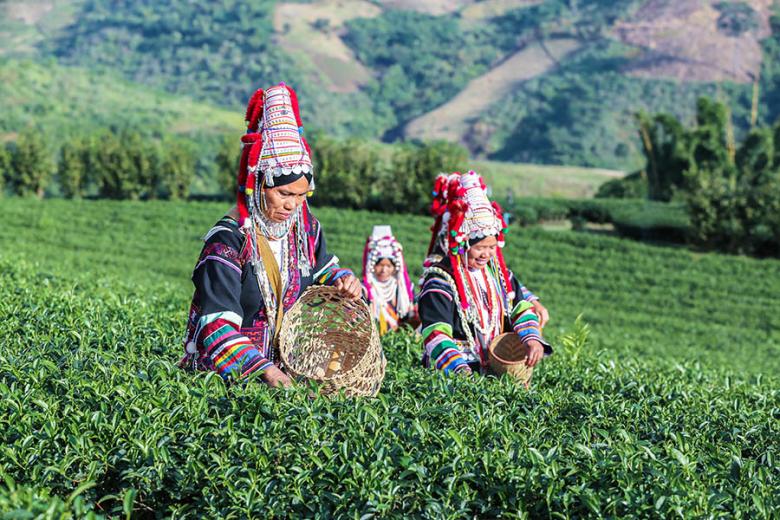
Meeting the locals in Mae Kampong
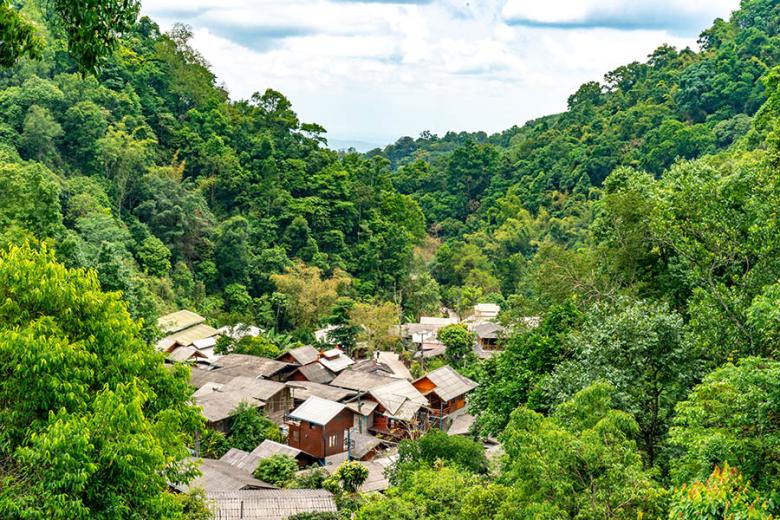
The following day, we drove to Chiang Mai, which took about five hours. On the way, we stopped off at a local village called Mae Kampong and had lunch with a local family in their home. This was a great experience that helped me to understand how the locals live and earn a living up in the mountains. The villagers welcome visitors, and their local economy benefits fully from this tourism. There are no big hotel chains or 7/11s in sight!
Touring the temples in Chiang Mai
We stayed in Chiang Mai for three nights at the Hotel DusitD2, located within walking distance of the Night Bazaar Market and nightlife. There is a mind-boggling number of hotels in Chiang Mai, but I definitely recommend staying close to the action.
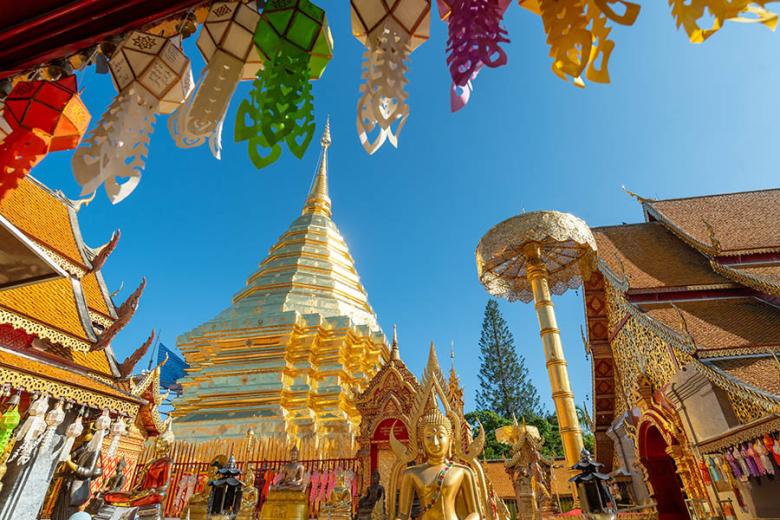
Whilst in Chiang Mai, we visited two more temples. The first was Wat Phalad, a temple hidden in the jungle on part of a hiking trail up into the mountains, used mainly by monks. The second was Wat Phra That Doi Suthep, which offers stunning views over the whole of Chiang Mai. We received a blessing of good health and good fortune from a monk at this temple, which was another unique experience.
Our street food tour
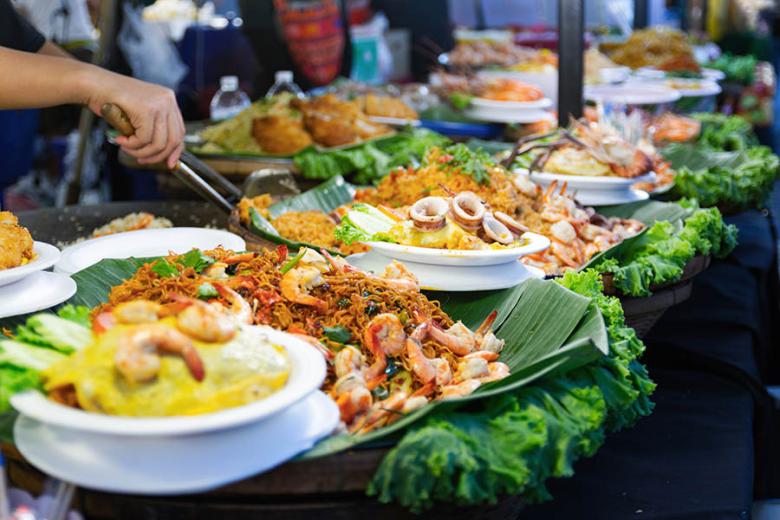
In Chiang Mai, we also tasted a selection of local dishes during a hidden street food tour. During this tour, we took an e-tuktuk around the old city to different local markets, trying different dishes such as Roti Pancakes and 'Khai Pam', local steamed eggs in a banana cup. I highly recommend this tour as it's a great way to see the city at night.
Hitting the southern beaches
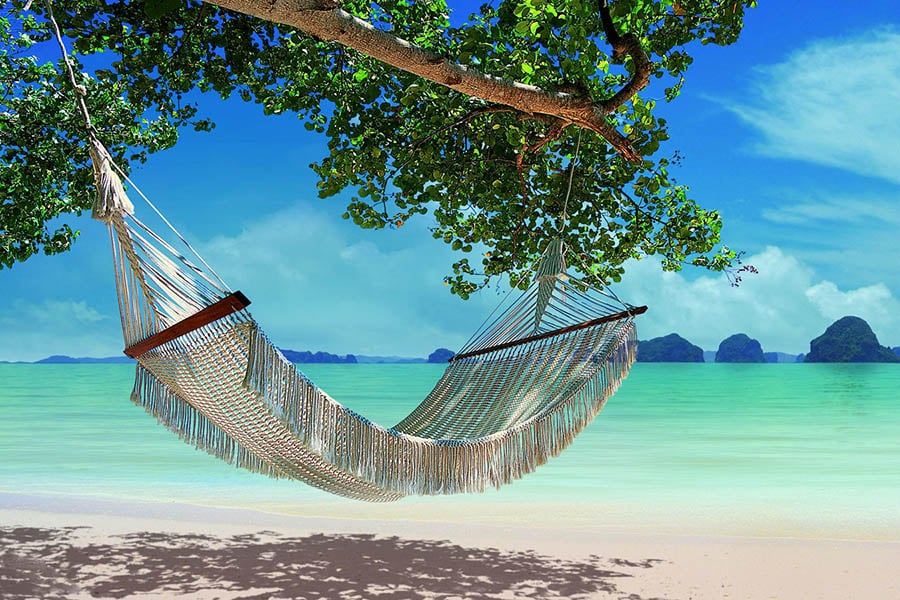
After exploring Bangkok and the northern cities, we headed south to relax on Thailand’s tropical beaches. We flew directly from Chiang Mai to Phuket, which took around two hours. We stayed in Phuket for three nights before moving to Krabi for a further three nights. There are dozens of beaches and islands to explore in southern Thailand, so you can choose to hop between different islands or settle into one beach resort.
Phuket and Phang Nga Bay
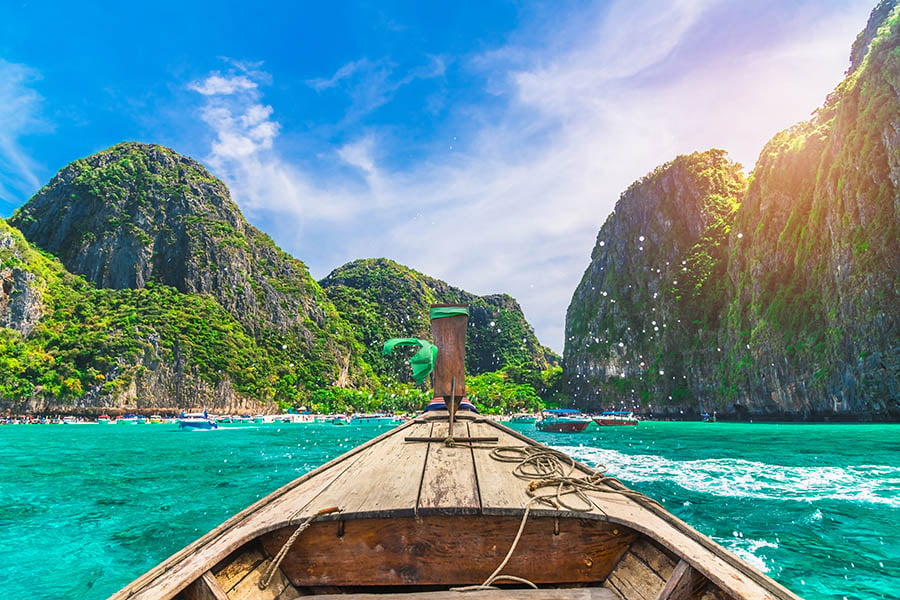
During our time in Phuket, we enjoyed a relaxing Thai massage, visited the Old Town, and spent a day exploring Phang Nga Bay by longtail boat. During the trip, we stopped at a cave on Phanak Island, where we had to wear hard hats whilst spotting Mud Skipper Fish. We then passed through another cave that can only be entered by kayak.
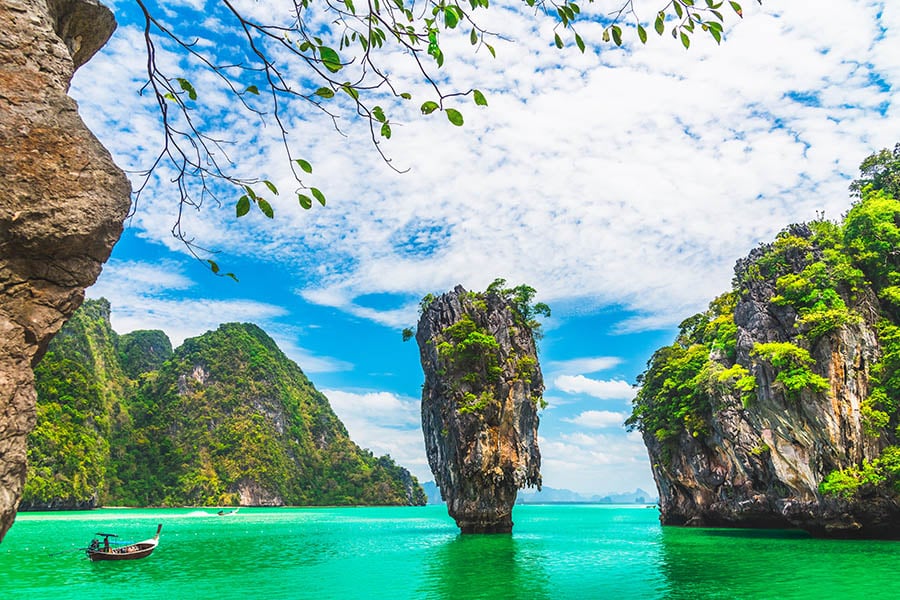
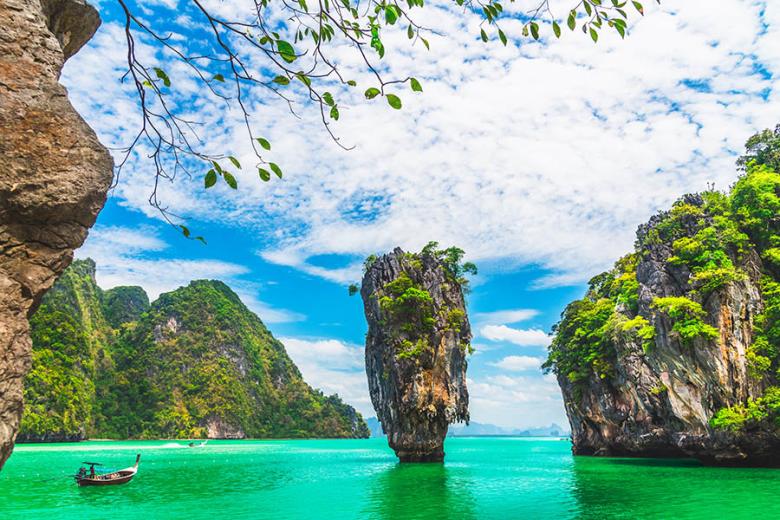
The next stop was James Bond Island, a great photo opportunity and a must-visit for any James Bond fan. We then spent two hours on Ko Nakha Noi (a private island), where we enjoyed a BBQ lunch on the beach before heading back to Phuket.
Ending up in Krabi
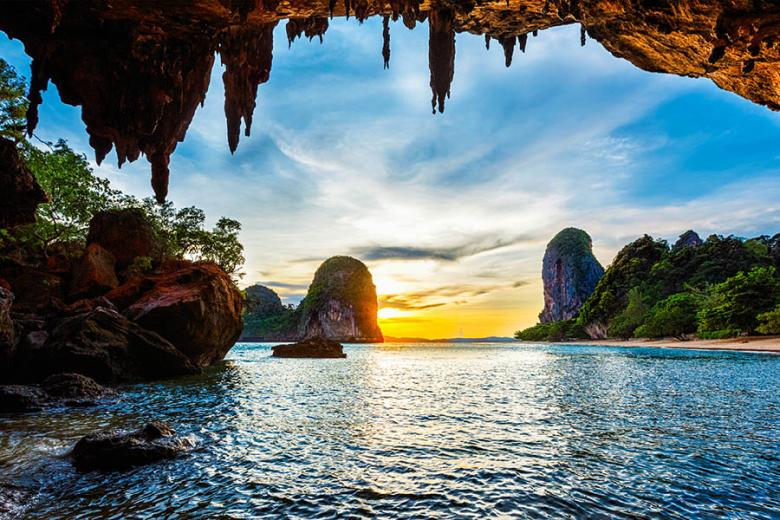
Finally, we drove to Krabi to relax on the beach for a few days. This drive took about three hours, and the scenery was amazing throughout the journey. Huge limestone outcrops rise from the tropical jungle all the way to the coast. Krabi is an amazing place to end a trip in Thailand.
The Old Town has a really local atmosphere, with a lively night market and lots of cosy little bars. You can opt to take a local cooking class, kayak through the mangroves, take a food tour, or hike to the top of Dragon Crest Mountain. From Krabi, it’s easy to take day trips to neighbouring beaches and islands, such as Railay Bay, Koh Lanta, and Koh Phi Phi.
My thoughts about Thailand
A classic 2-week Thailand itinerary like this is perfect for first-time visitors. It gives you a taste of everything the country has to offer. By mixing cities, wildlife, islands, and temples, you can come home from two weeks in Thailand feeling like you’ve had several holidays rolled into one. There’s so much to see and do, and it’s a destination that is perfect for travellers both old and young. Having scratched the surface over two amazing weeks, I can’t wait to visit Thailand again.
Ready to plan a trip to Thailand?
We're experts at creating unforgettable holidays to Thailand, complete with boutique accommodation and plenty of personal touches. We'll listen carefully to your hopes for the trip and build an itinerary that's perfect for you. To get started, give us a call on 1273 320 580 or send us a quote request by email.


Our 2-week family itinerary in Thailand

Andrea Motta
Senior Travel Consultant
at Travel Nation

4 Thailand luxury beach resorts for your wishlist
Shelley Worsley
Product team
at Travel Nation

Our family stay at Elephant Hills in Thailand
Jim Faulkner
Senior Travel Consultant
at Travel Nation

Exploring off the beaten track Thailand: Lampang and Mae Hong Son
Bryony Dunn
Marketing Manager
at Travel Nation
Perfect partners: my Singapore and Thailand holiday

Natalie Brown
Senior Travel Consultant
at Travel Nation
How to plan a holiday to Thailand with kids
Jim Faulkner
Senior Travel Consultant
at Travel Nation