Sailing aboard the iconic Aranui 5 cruise ship

TripBlogs
After flying from London to Papeete via San Francisco, I stepped aboard the iconic Aranui 5 cruise ship. Within moments, I realised that this would be no ordinary cruise. Over the following days, this one-of-a-kind ship became my floating home as I explored some of the furthest reaches of French Polynesia.
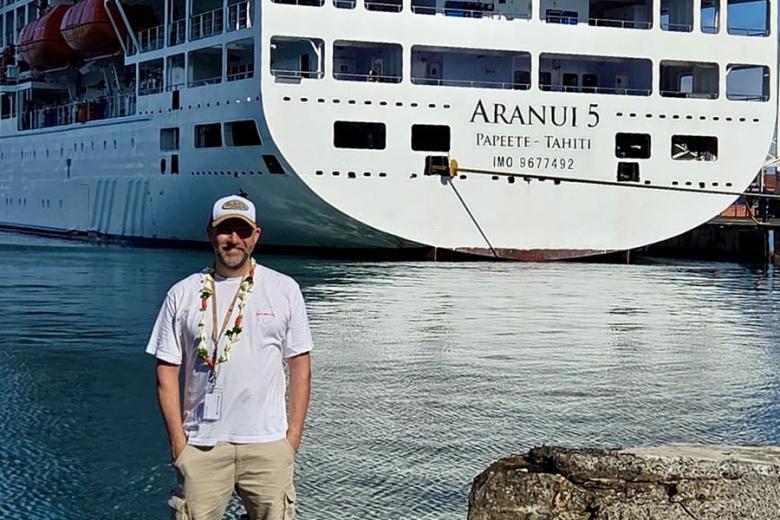
Ara means journey, while nui means big. The name was a fitting promise of the epic adventure that lay in store. The remote voyage, the extraordinary scenery, the fascinating local culture, and the welcoming French Polynesian people completely blew me away. My trip aboard the Aranui was a once-in-a-lifetime experience that I’ll never forget, and I can’t recommend it highly enough.


What makes the Aranui 5 so special?
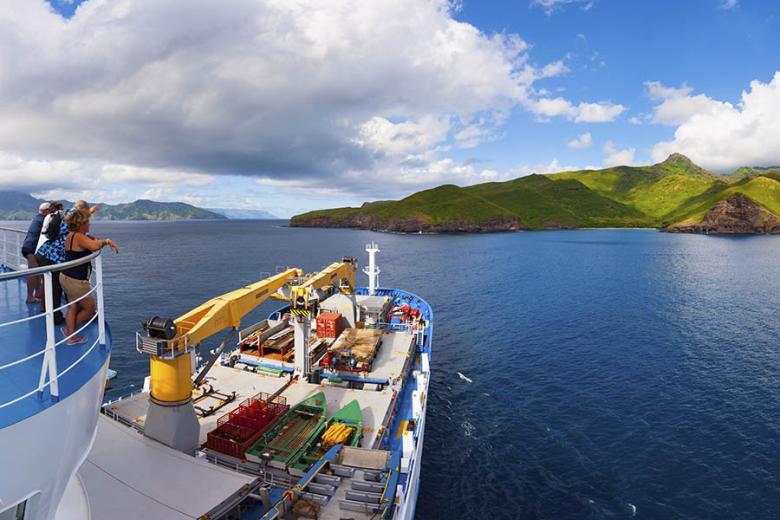
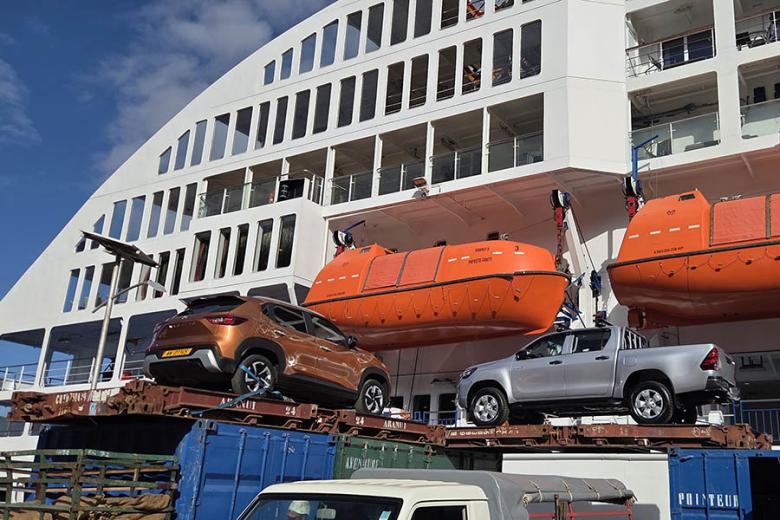
The Aranui carries travellers, freight, and vital supplies between some of French Polynesia’s most remote islands. Part cruise liner and part cargo ship, it’s a vessel like no other, with a uniquely diverse mix of passengers. It’s a gateway to coral lagoons, volcanic valleys, living Polynesian traditions and communities far beyond the usual tourist trail, and an essential trade lifeline for local islanders.
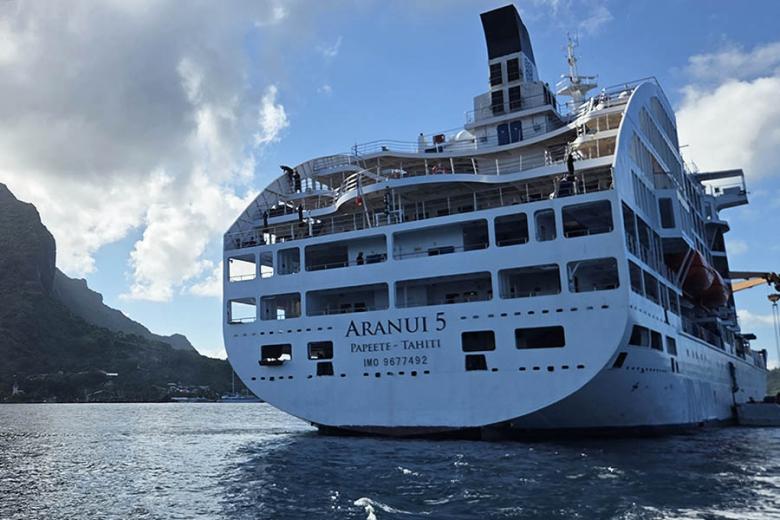
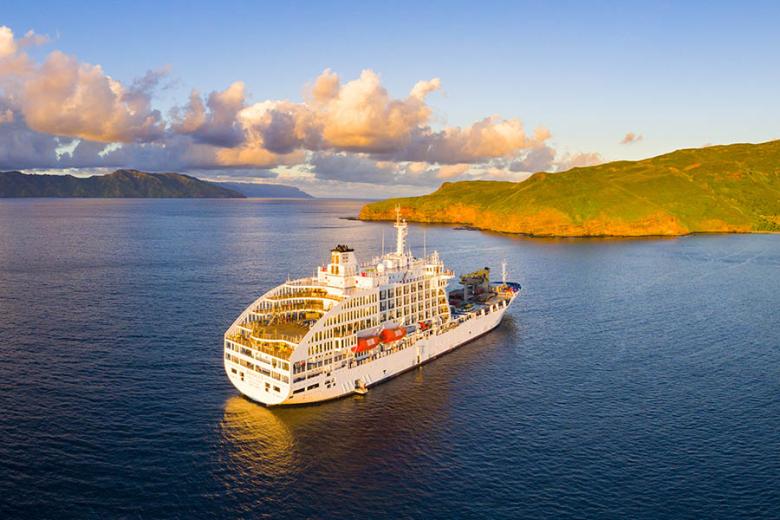
The 126-metre-long Aranui 5 can accommodate up to 230 passengers across 103 cabins and hold a whopping 3750 tonnes of cargo in its four holds. It makes roughly 50% of its income from passengers and 50% from cargo, making it a sort of boutique supply ship. The route takes it from Papeete to Fakarava and then onto the mystical Marquesas, a little-visited island group with its own culture and language.
Boarding the Aranui in Papeete
Papeete’s busy port welcomes cruise ships, ferries to Moorea, and all kinds of military vessels. However, the gleaming white Aranui is easy to spot amidst the hubbub at the new cruise dock. The onboard welcome felt immediately Polynesian - warm smiles, fresh pastries, juice, tea and coffee, all accompanied by traditional ukulele music.
Check-in is super easy, especially if you print your medical declaration and pre-boarding forms at home. I presented my passport and a valid credit card to set up my onboard account (all purchases on the ship are cashless) and, before I knew it, I was holding the key to my cabin.
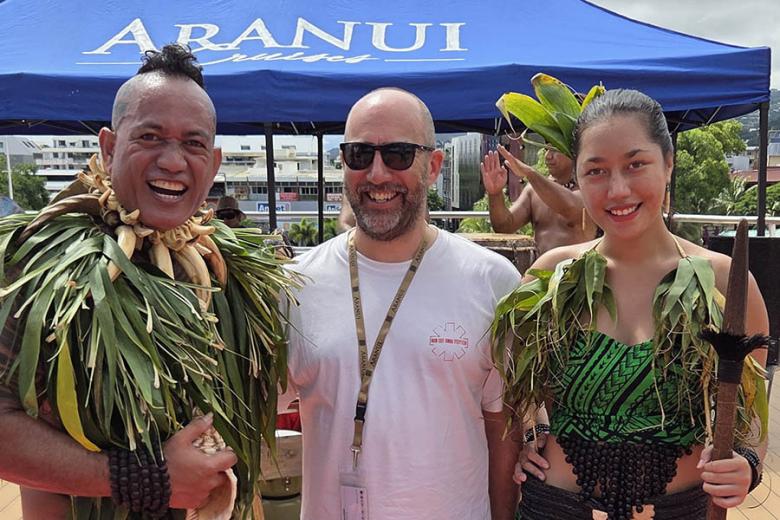
Life aboard the Aranui
For a relatively small ship, the Aranui offers an impressive range of accommodation. You’ll find everything from shared dormitories and family rooms to standard cabins, deluxe rooms with balconies, and several types of suites. My cosy standard cabin had a porthole, which let in far more sunlight than I expected. It was clean, comfortable, well-equipped and spacious enough not to feel cramped.
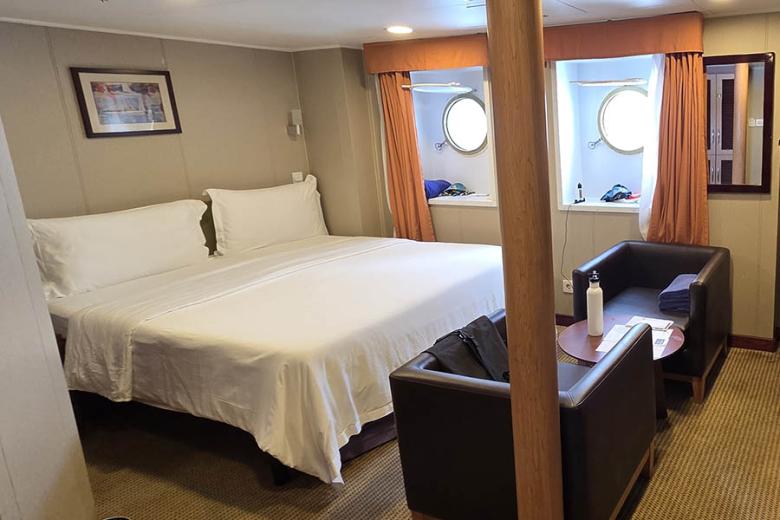
A handy introduction
Every passenger receives a reusable Aranui metal water bottle, and filtered water and ice stations are available on most decks. An introductory briefing covered meal times, safety, and the ship’s essential areas. Afterwards, the activity crew issued snorkelling equipment for guests to keep until the final day of the trip.
Relaxed evenings and ukulele lessons
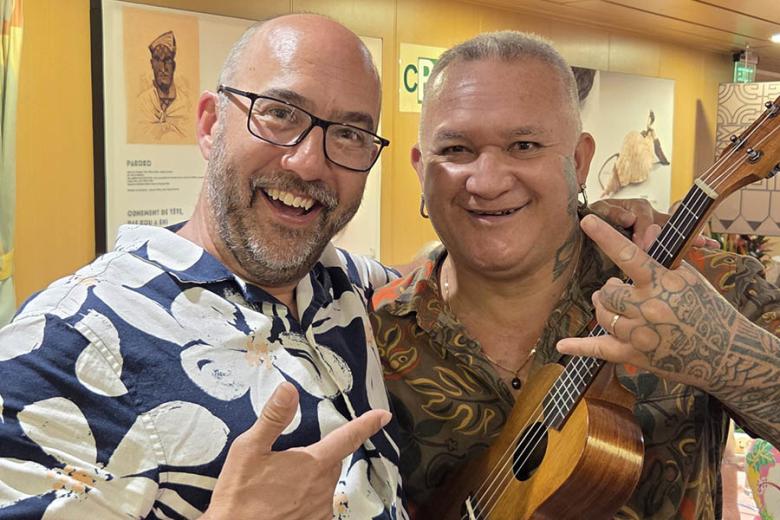
Evenings aboard the Aranui had their own easy rhythm. Before dinner, the entertainment team filled the bar with music from ukuleles, guitars, and drums.
The ship also offered Polynesian dance, haka, and ukulele lessons. My hour-long ukulele lesson was great fun! We ended the voyage with a light-hearted quiz about everything we had experienced, which was a lovely way to round off the journey.
Useful things to know on board
• Wi-Fi: Complimentary access was available for a few hours each day in selected common areas. I bought a ship-wide premium package—approximately £24 for 3GB or £40 for 6GB—which felt worthwhile as a solo traveller.
• Laundry: Two bagged laundry services were included during the cruise. Self-service washers and dryers were also available on a lower deck.
• Television: Cabins had televisions showing relevant documentaries and films about French Polynesia, such as The Bounty with Anthony Hopkins.
• Language: The crew taught us a few local phrases. Even a simple greeting or thank-you brought smiles ashore. • Atmosphere: The passenger mix was international, and shared excursions and open seating made it easy to meet fellow travellers.
• eSIM: I highly recommend buying an eSIM for a voyage on the Aranui, as it will make your life much easier and cheaper. We have a partnership with Saily, who offer excellent packages in French Polynesia from as little as £12.50.
The flavours of French Polynesia
The food onboard was a real pleasure. Breakfast was a comprehensive buffet, with local fresh fruits such as mango, grapefruit, and pineapple, as well as cereals and yoghurts. There were also hot and cold meats and an egg station where the chefs would quickly prepare your eggs to your liking. Tea, coffee and fresh juices (including a very strange banana juice) were also readily available.
For something informal, the sundeck café served paninis, burgers, chips, and lighter snacks. On island days, lunch was provided by the crew or at local restaurants, and the quality remained impressively high. It was a seamless, tasty set-up all round!
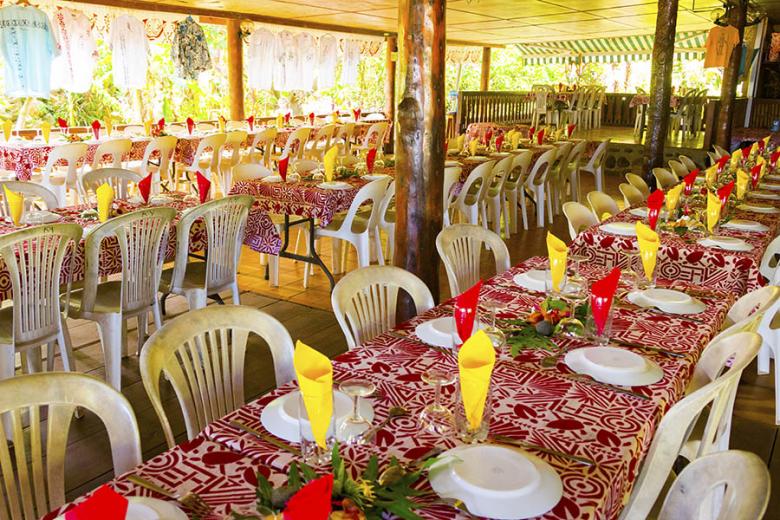
Lunch and dinner were three-course set menus served in two sittings, with dietary alternatives available, and complimentary table wine. There was a changing mix of Polynesian specialities and French or Western dishes, from mahi-mahi and tuna to steak, lamb and chicken.
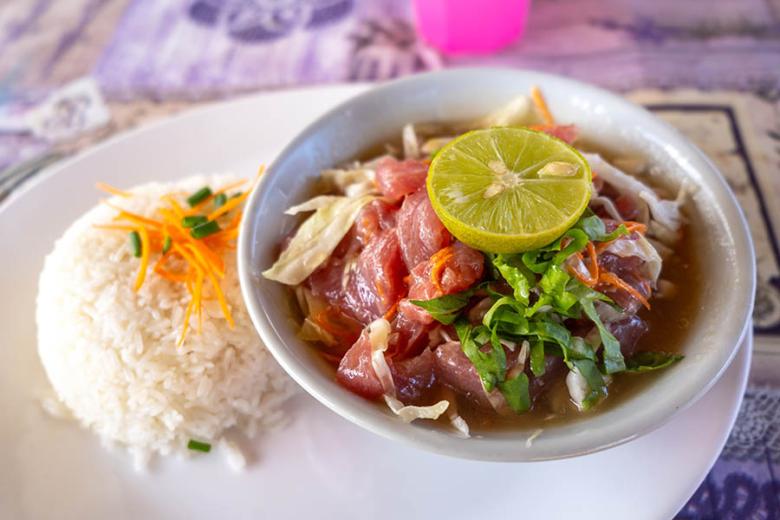
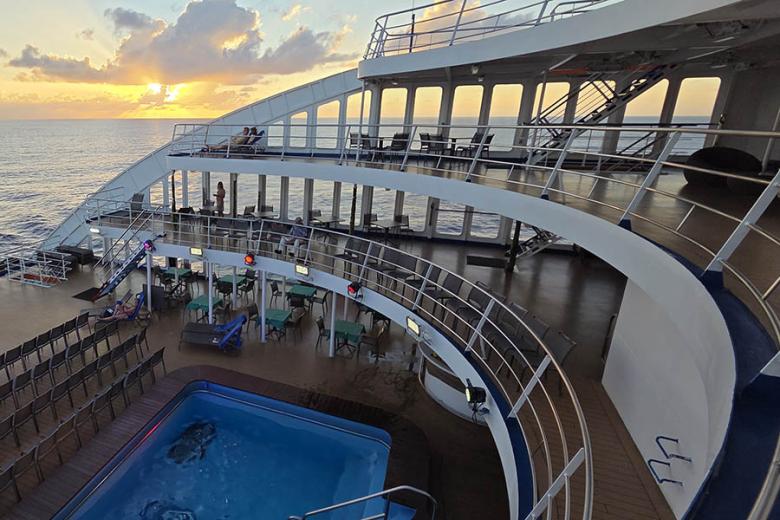
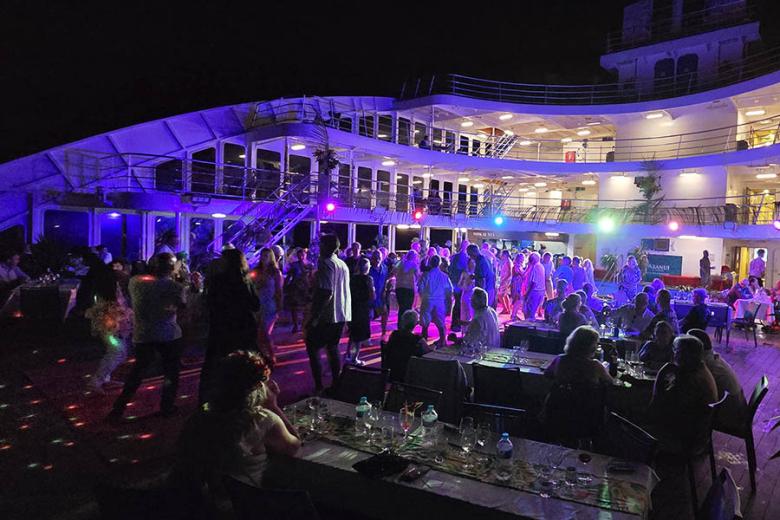
One evening, a traditional Polynesian buffet introduced me to raw fish salad, taro, breadfruit, and richly flavoured local dishes. Another evening, we dined on the rear sundeck at sunset while a live band played amidst decorations of fresh flowers and palm fronds. After dinner, there was a light-hearted 80s disco, and most people braved the dance floor.
Day 1: Leaving Tahiti
Our first full day at sea was a chance to unpack, learn the ship’s layout and settle into its rhythm. With so much to take in, I was happily ready for an early night.
Day 2: Fakarava: a snorkelling paradise
We arrived in Fakarava overnight, so awoke to a new island and we had the morning to explore. Fakarava, the second-largest atoll in French Polynesia, is recognised as a UNESCO Biosphere Reserve for its exceptional biodiversity and pristine reefs.
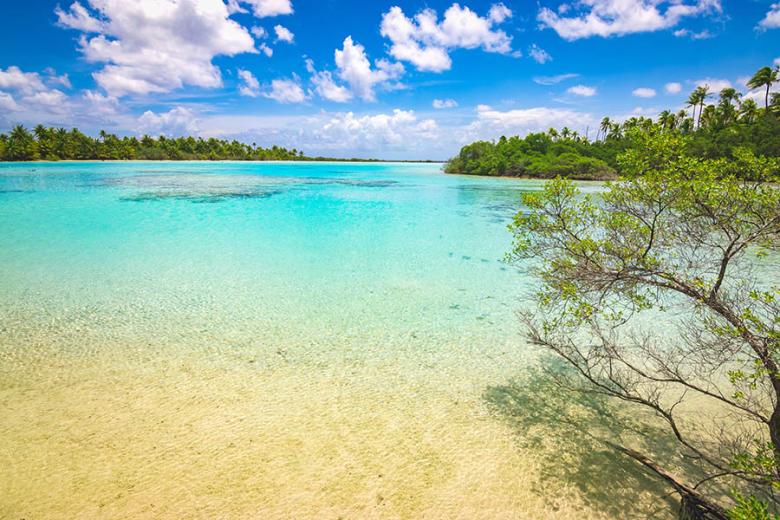
I had a little time before my pre-booked snorkelling trip began, so I walked along the island’s only road, swam from quiet beaches, and listened to Sunday singing drifting from the local church.
In the warm shallows, a two-metre-long nursery shark swam past me just a few metres from shore. I was startled at first, but the shark was entirely untroubled by my presence.
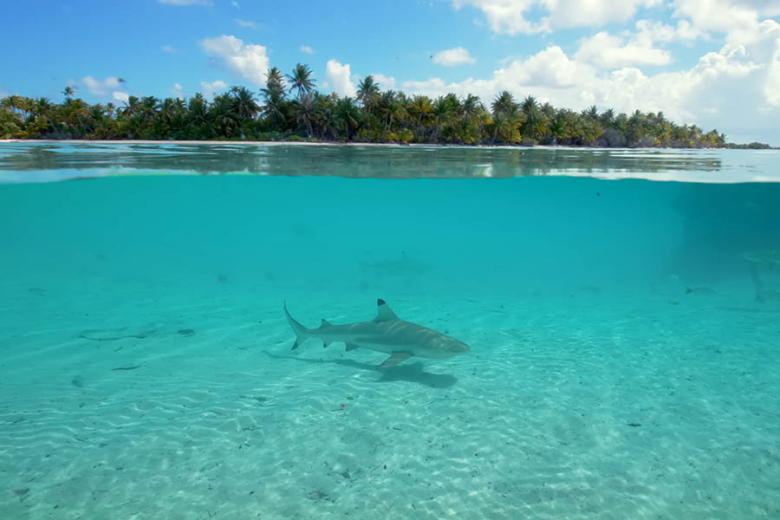
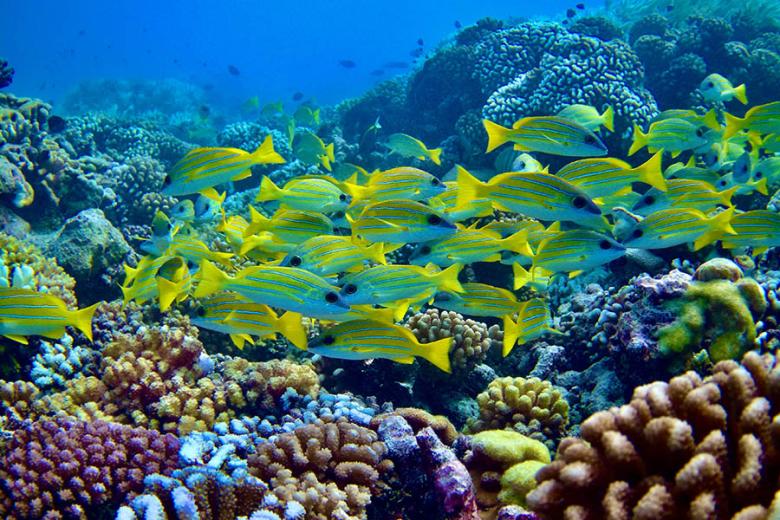
My snorkelling trip took me to Pufana, a shallow coral island within Fakarava’s lagoon which acts as a sort of nursery for young fish. Here, the crystal-clear water revealed tropical fish in every colour imaginable, while blacktip reef sharks weaved around the coral. It was an exhilarating first taste of the underwater world that would play such a huge part in my journey.
Day 3: Stories of the Marquesas at sea
This was a full day at sea, which gave me time to slow down and explore the Aranui properly. The ship has a lovely sundeck and pool, a great bar and café, a shopping boutique and even a well-equipped gym.
The highlight of my day was a lecture by Marquesan cultural advocate and author Pascal Erhel Hatuuku. Throughout the voyage, his talks brought depth and meaning to what I was seeing, covering Polynesian culture, tattoo symbolism, the history of the Aranui, and the intricate choreography of its cargo operations.
Before bed, I moved my clock forward by 30 minutes, as the Marquesas Islands keep their own time, in more ways than one.
Day 4: Ancient culture and wild landscape on Nuku Hiva
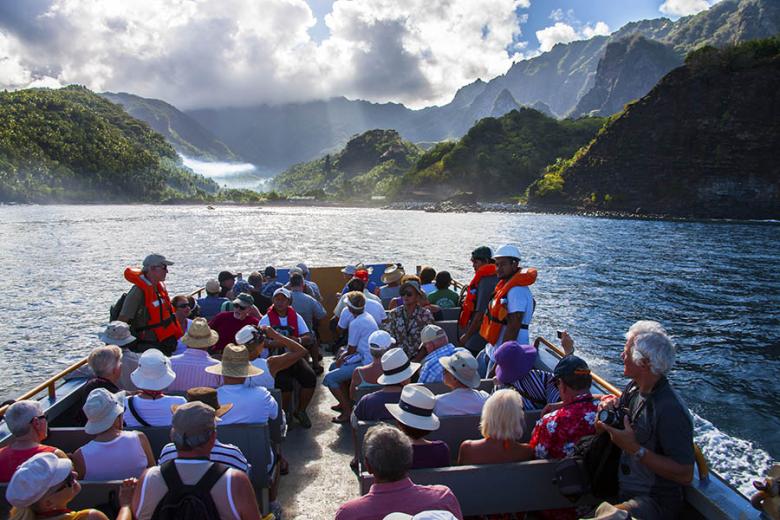
As our launch boat approached Nuku Hiva, the Aranui revealed its other identity. Cranes and forklifts swung into action, unloading motorbikes, cement, mattresses, frozen food and sacks of essentials. This was not merely a cruise ship calling at an island; it was an essential carrier for local trades and communities.
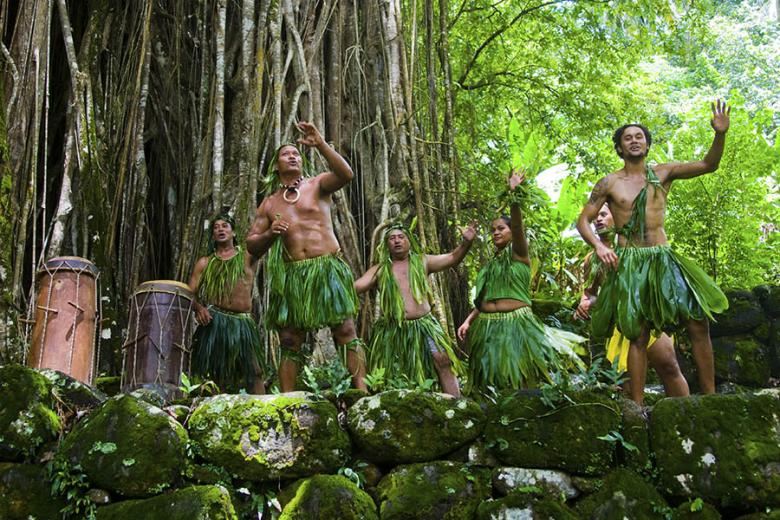
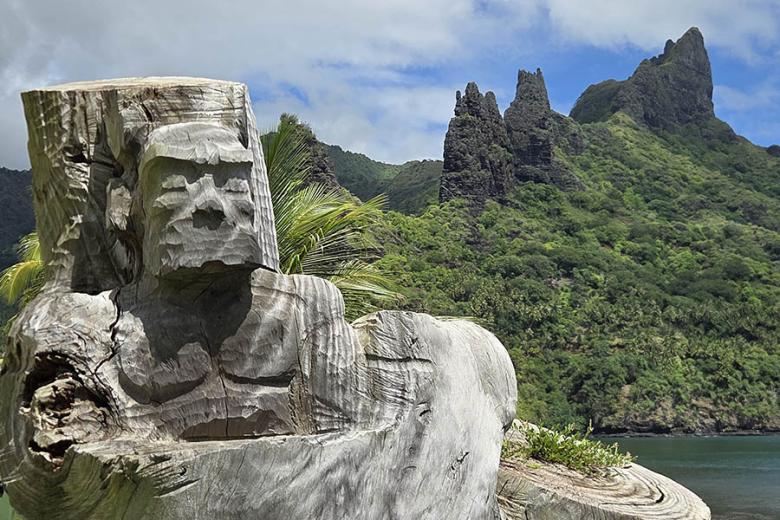
After seeing Tiki Tuhiva—the largest tiki sculpture in the Pacific—and visiting Taiohae Cathedral, we crossed the island by 4x4 to the archaeological site of Tohua Kamuihei. Here, beneath a vast banyan tree, local performers performed ceremonial songs and dances. The tree trunks seemed to form a natural theatre, amplifying every drumbeat and voice.
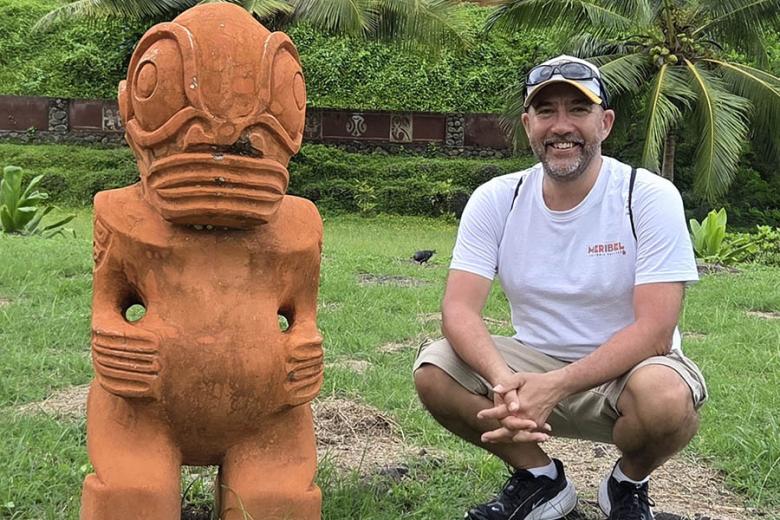
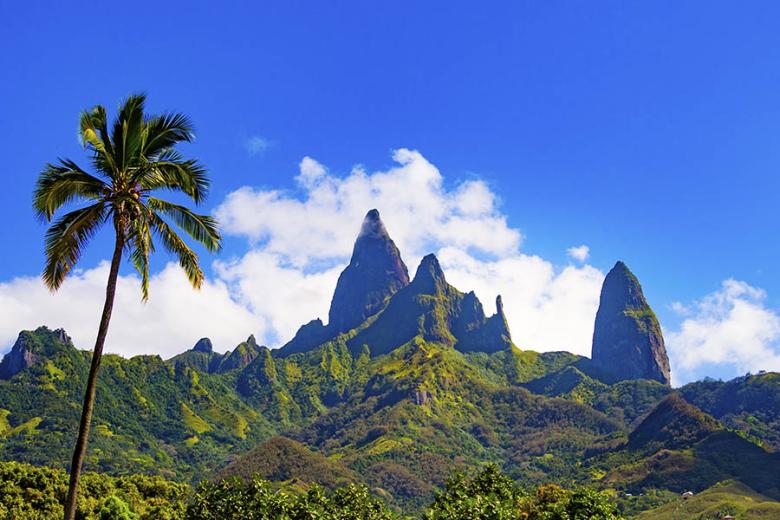
On the drive back, we saw various waterfalls and the spiky green towers of natural rock that are symbolic of the Marquesas Islands. They looked a little bit like the towers of Torres Del Paine in Patagonia, but in a lush, tropical setting.
Day 5: Ua Pou: dramatic peaks and enchanting people
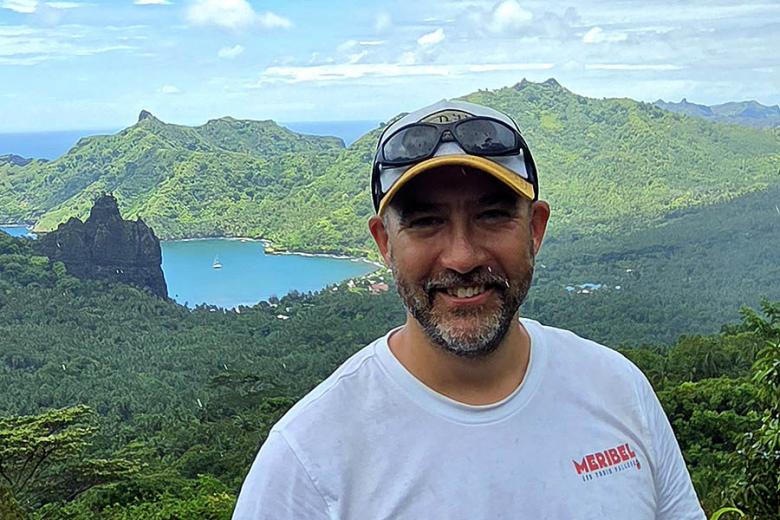
The next morning, I woke up to Ua Pou’s dramatic skyline, its steep volcanic peaks rising behind the bay. I joined the more active passengers for a 3.5-kilometre hike to a large cross above the village, with views over the bay below.
It took around 1 to 1.5 hours to complete, but we were rewarded with an amazing panoramic vista, and it was 100% worth the effort. The hike was hot and humid, but not technically difficult, so take plenty of water if you choose this trip.
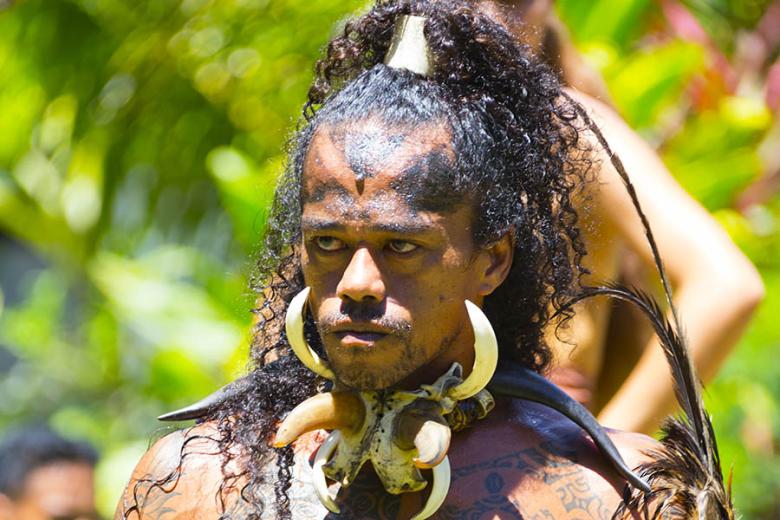
After the hike, we were treated to another cultural show in the town centre. It was really cute to see the local young boys performing the Haka with their fathers and uncles, as well as little girls learning the dance moves from the local Mammas (affectionate local term for the female matriarchs of the families).
Ua Pou is famous for its naturally occurring ‘flower stone’, which looks as though it has flower petals painted inside its rock. This is one of only two places in the world (the other is Brazil) where you can find this beautiful naturally occurring rock. They make amazing jewellery with it, so it’s the perfect place to pick up a unique souvenir.
In the afternoon, I set off on a 4x4 tour of the island, which I really enjoyed. We stopped at a viewpoint that overlooked the island’s challenging airstrip. The crosswinds on Ua Pou are so strong that only 4 specialist pilots are licensed to fly into the island! Although the landing strip itself was fenced off, it was funny to see wild horses and cattle grazing around the edges of the runway.
Ua Pou is one of the driest islands in French Polynesia, as there are no natural rivers or lakes. Before we arrived, it had been in drought for 15 years, but amazingly, they’d had rain for the two weeks before we arrived. Our local guide told us that this was the lushest and greenest he’d seen the island in many years.
Day 6: Hiva Oa and Tahuata: art, memory and craft
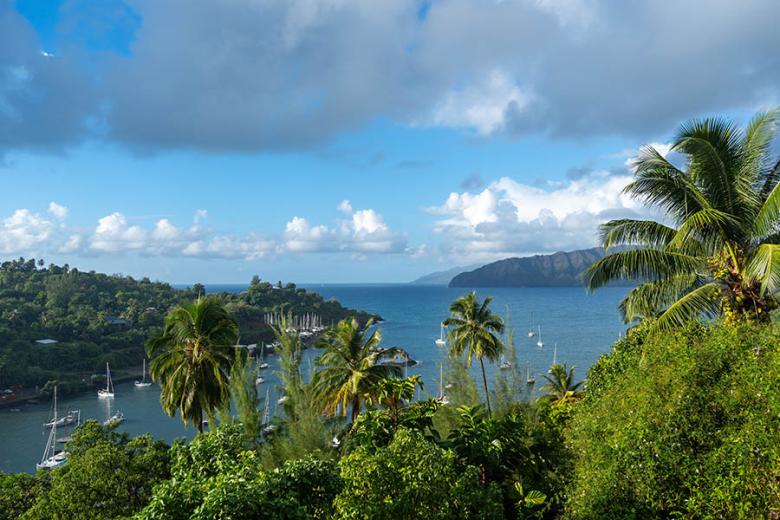
This morning, we set off to explore Atuona on Hiva Oa, the second largest village in the Marquesas Islands. I joined the hikers and followed a short 4km harbour-and-hills walk, before exploring the village itself.
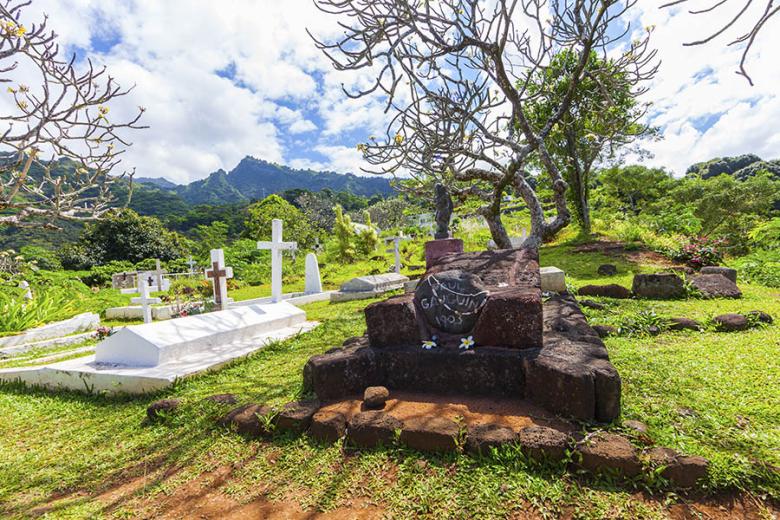
Hiva Oa is closely associated with French painter Paul Gauguin, who lived here until he died in 1903. Today, you’ll find his artwork in hotels and restaurants all over French Polynesia. His simple grave lies in a peaceful cemetery near that of Belgian singer-songwriter Jacques Brel, and the small Gauguin museum offers an accessible introduction to the artist’s work.
Both Hiva Oa and Tahuata are famous for their exquisite bone jewellery, from simple bracelets to large, elaborate necklaces and headpieces. It’s not as gruesome as it sounds. They are really beautiful pieces with incredible details made by true local craftsmen.
Day 7: Fatu Hiva - a hike to remember
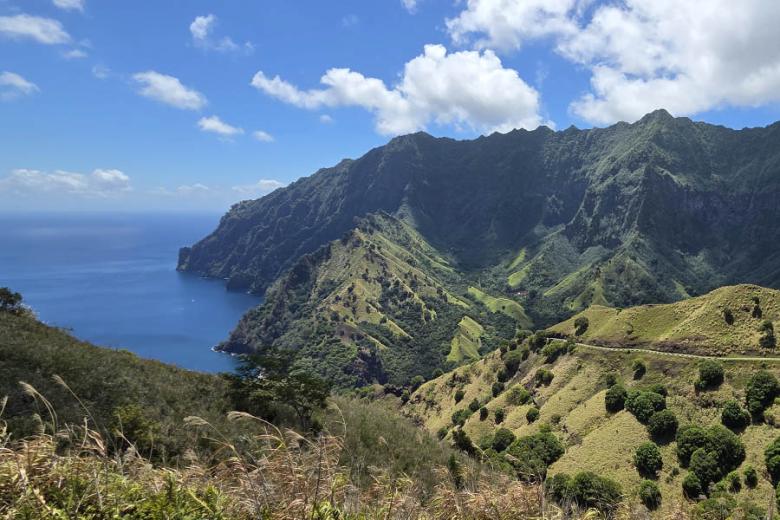
This was my favourite day of the cruise. I joined a 9-mile cross-island walk from Omoa to Hanavave, a route that wound steadily into a landscape of deep-green valleys, fluted volcanic ridges and extraordinary rock formations. Around one bend, the view stopped me in my tracks: cinematic, ancient and almost impossibly lush. It was lovely get some real miles in the legs, and the views just kept getting better.
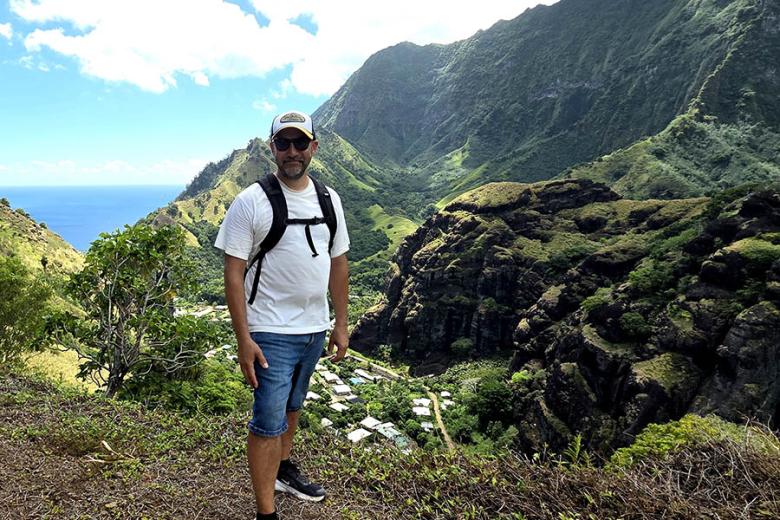
Halfway along the route, the Aranui’s kitchen crew appeared beside the road with fresh baguettes, salads and fruit. Then, the second half of the walk descended towards the town of Hana Vave through the day's most spectacular scenery.
At the end of the trail, we enjoyed a well-deserved cold beer whilst we waited for the tender to take us back to the ship. I don't think beer has ever tasted so good!
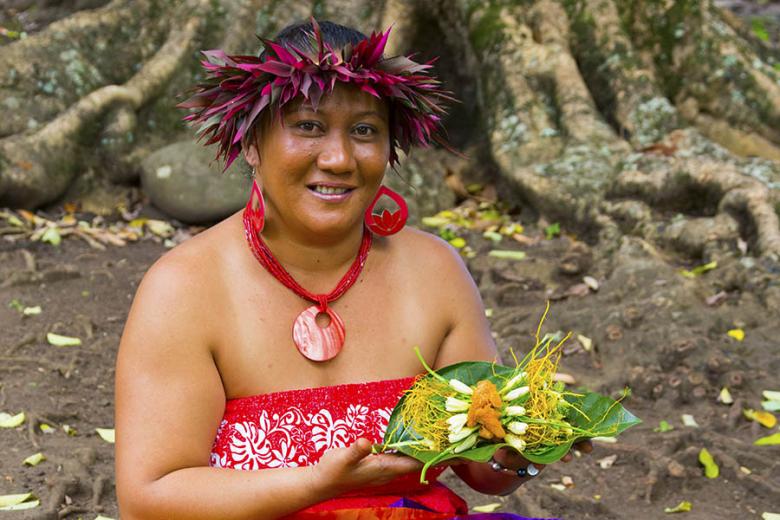
The local craft speciality on Fatu Hiva is the art of Tapa Bark Painting, a skill passed down over many generations. The locals carefully strip the bark from breadfruit, banyan, or mulberry trees, then tap it with a wooden tool to soften and flatten it into a flat, papery fabric. The fabric is then painted by the local artists, with images such as maps and local wildlife.
Day 8: Ua Huka - wild horses and rugged bays
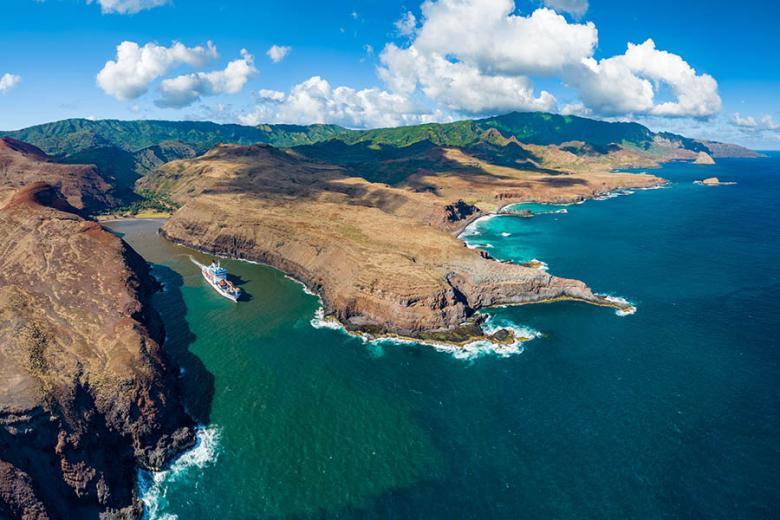
After breakfast, I boarded the barge to Hane quay on the island of Ua Huka, where I spent some time exploring the town’s small and simple museums. I then jumped into another 4x4 for a guided tour. The views of the rugged coastline were spectacular.
At one point, we passed a place called Shark Bay where I spotted a small pod of around four or five Manta Rays feeding near the surface. We were quite high up on the road looking down on them, but even from that distance you could see just how huge they were!
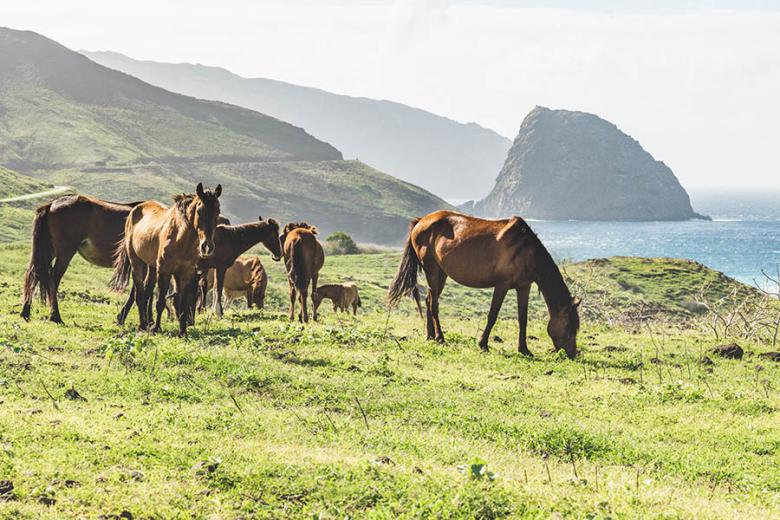
Ua Huka is well known for its wild horses, which outnumber the humans on the island by three to one! The horses were originally brought from Chile to Ua Huka by Admiral du Petit-Thouars in 1842, and they have prospered, along with a large population of feral goats. Proficient riders can book an optional activity to go horse riding with local guides around some of the island.
We stopped for lunch at a local restaurant, which was a real banquet. There were tables full of a wide variety of local and international dishes, all washed down with a cold bottle of Hinano, the local beer of the Marquesas Islands.
Day 9: At Sea - a moment to slow down
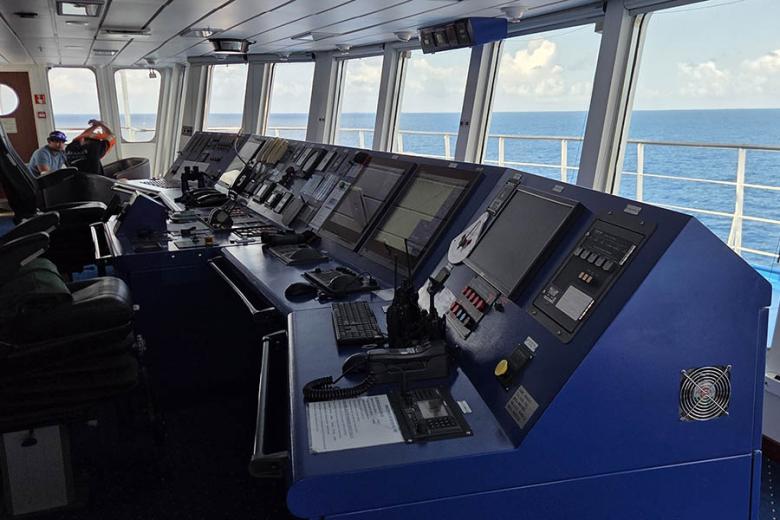
After a week in which every day seemed to race past, this sea day offered a welcome pause. I visited the bridge, stood behind the navigation equipment, and spoke to the captain, which was fascinating. Then, I returned to simpler pleasures - a book, a cold beer on the sundeck and the rare luxury of an afternoon nap.
Day 10: Exploring Rangiroa's Green Lagoon
Rangiroa’s name is actually made up of two words - Rangi and Roa. Together, these mean ‘Great Sky' in the local Paumotu language. It’s the largest atoll in French Polynesia, with 415 small islets and sandbars in the Tuamotu Archipelago, as well as a ring of coral that spans over 80 kilometres.
There are a lot of optional activities here, including some world-class scuba diving (if you’re certified), a tour of Tahiti’s only vineyard, glass-bottomed boat trips, or snorkelling and dolphin-watching trips. Of course, there is also the option to explore independently or soak up some sunshine on the sand.
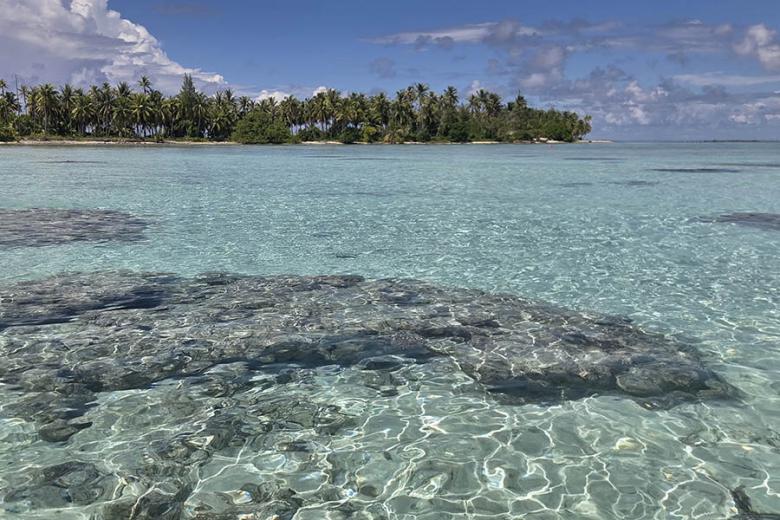
One of my long-standing clients recommended that I visit the Green Lagoon, and I was not disappointed (thanks for the tip, Lise!). The Green Lagoon is a beautiful small natural bay with waist-high warm turquoise waters. I just waded around with my snorkel, and as soon as I dipped my head underwater, I was in a tropical underwater wonderland.
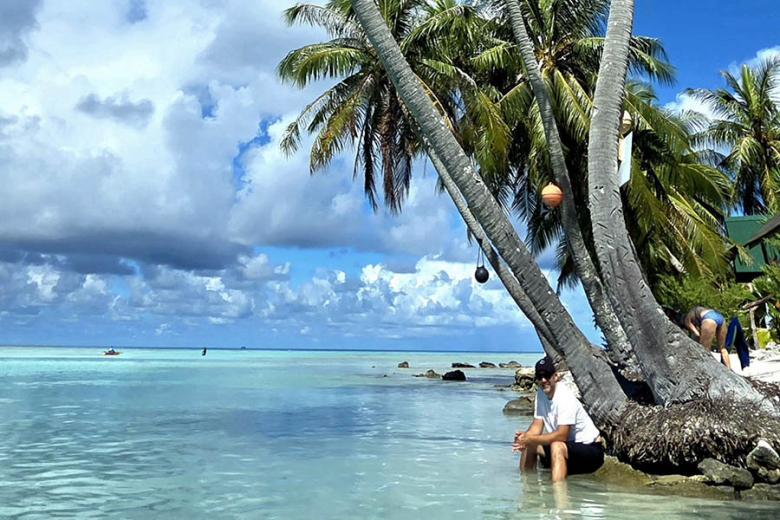
The locals provided a non-stop background of beautiful singing, and we enjoyed the free drinks and fresh fruit on offer. After a busy week, it was great to relax for a few hours in the warm waters. There were some picture-perfect crooked palm trees for that perfect Instagram picture! To me, this was paradise.
Day 11: Bora Bora – coral gardens and reef sharks
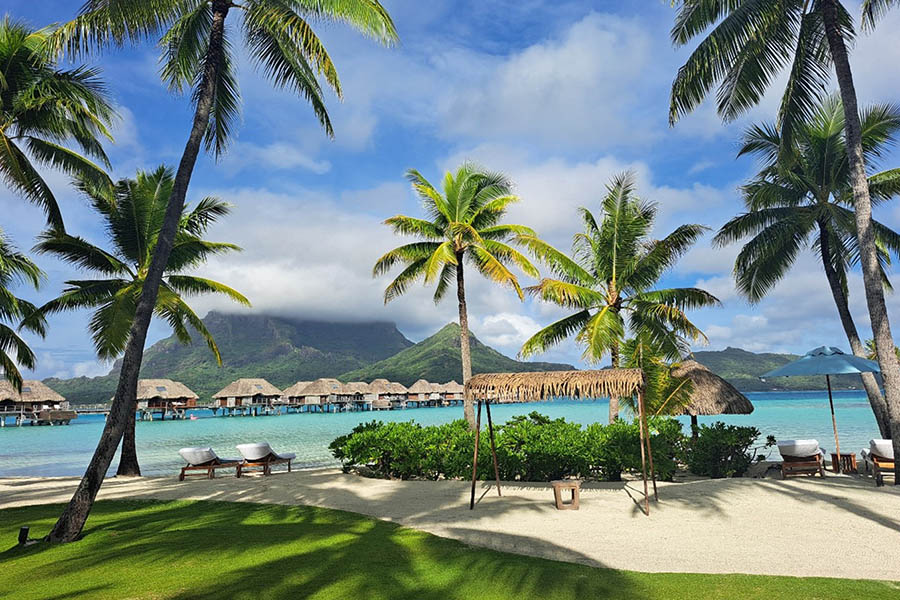
The final scheduled stop on the cruise is considered the glamorous jewel in the crown of French Polynesia - Bora Bora. There was a full day’s itinerary included with the Aranui, including lunch on an inhabited motu (island) within Bora Bora’s lagoon.
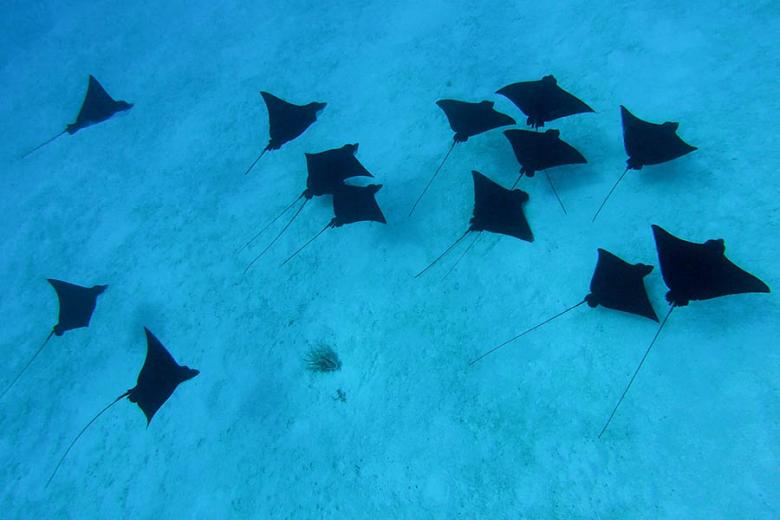
There were a lot of optional activities to choose from here - scuba diving, lagoon tours by boat or jet ski, and snorkelling trips with sharks and rays. I grew up watching Jaws way too many times as a kid, so I opted for the snorkelling trip. It was a big deal for me to be in open water with black-tip reef sharks just a few meters away!

I also gazed in wonder (and almost forgot to breathe through my snorkel) as two large stingrays glided right past me, almost touching me. Next, I spent an hour snorkelling in Bora Bora’s ‘Coral Garden’, a wonderfully diverse and colourful area of reef inside the main lagoon. I’ve snorkelled all over the world, but this was the best coral I’ve ever seen.
The end of the voyage
I was due to spend two nights in a hotel on Bora Bora, so I said my goodbyes to my new friends and the crew who had looked after us so well on Day 11. I disembarked onto Bora Bora’s main dock in the small town of Vaitape.
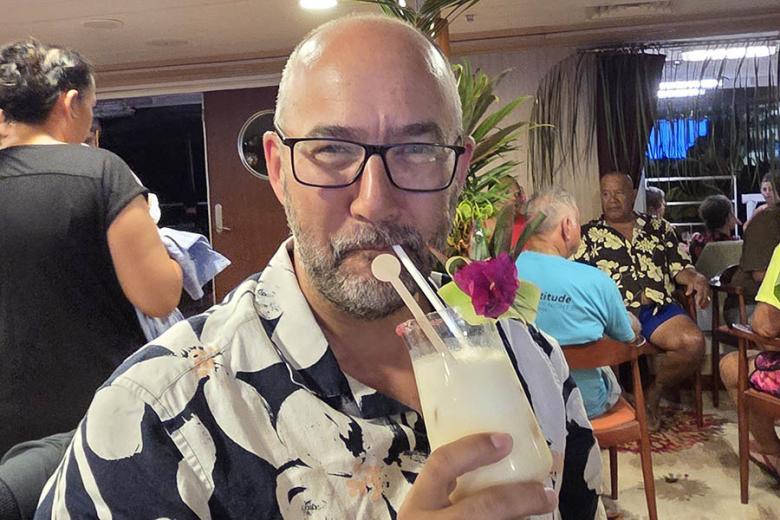
A room bill was left on my bed by the evening turndown service the day before my disembarkation. This was quick and easy to settle by card with reception. Tips, while not compulsory, are obviously very welcome. There was a secure box for this at reception, and any tips are shared fairly amongst the crew. I didn’t quite realise how many cocktails I’d managed to drink over the last 10 days!
Note: If you are not disembarking on Bora Bora, you’ll spend one more night aboard Aranui and sail back to the port at Papeete, arriving on the morning of Day 12.
My thoughts about sailing aboard the Aranui
For me, sailing aboard the Aranui was an eye-opening and truly unforgettable adventure. I loved the ship’s relaxed, friendly atmosphere, the warmth of the crew, and its unusual dual role as a passenger cruise ship crossed with a cargo lifeline for remote island communities.
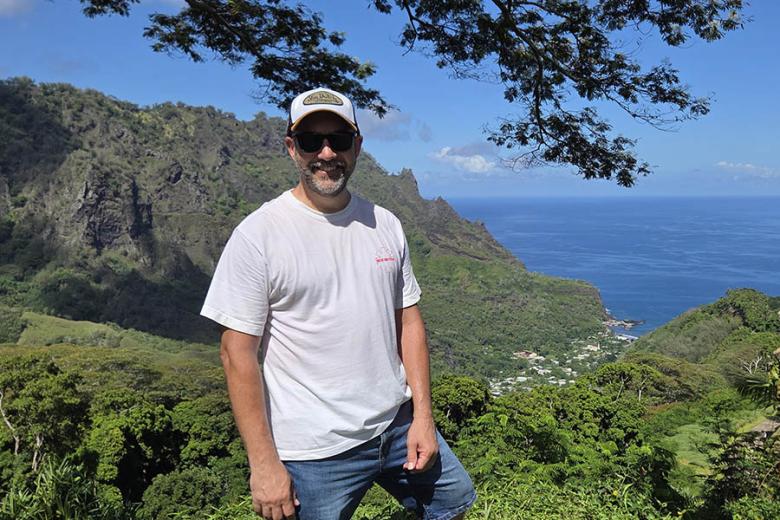
From spectacular volcanic landscapes and rich Polynesian culture to memorable hikes, wildlife encounters and snorkelling, every day offered something new. It was a voyage that felt authentic, inspiring, and relaxing at the same time. Few travellers reach these far reaches of French Polynesia, making it a true privilege and a once-in-a-lifetime experience. If you’re considering a trip aboard the Aranui, do it! You definitely won’t regret it.
Ready to sail aboard the Aranui 5?
We're specialists at creating personal, unique trips to French Polynesia, and we can include a voyage aboard the Aranui on any itinerary. We'll handle all the arrangements and be there to support you every step of the way. To book a similar trip, just get in touch, and we'll get the ball rolling!


Exploring the Society Islands, French Polynesia

Natalie Brown
Senior Travel Consultant
at Travel Nation

My boutique cruise around French Polynesia and the Cook Islands

Scott Berry
UK Sales Team Manager
at Travel Nation

Our favourite resorts in French Polynesia: Bora Bora, Moorea, and beyond

Ruth Koessel
Senior travel consultant
at Travel Nation
About the author Jim Faulkner
Senior Travel Consultant
Jim started exploring at just 19 years old, and he has travelled around the world several times. However, since having a family, his travel plans have become a little shorter and more organised. Jim has worked in the travel industry for thirty years, and his knowledge is second to none. He is very familiar with the loveable chaos of family life and knows how difficult it can be to plan a trip, so he loves planning family-friendly holidays all over the world.