Exploring the best of Laos and Cambodia

TripBlogs
Last year, I was lucky enough to set off on a luxury holiday to Laos and Cambodia. It was a hugely varied trip that exceeded all my expectations. These two enchanting destinations offer the perfect combination of culture, nature and relaxation. If you’re looking for a peaceful escape in Southeast Asia, it’s the perfect solution.
Within two weeks, you can take a Mekong Cruise, get a glimpse into local culture, relax on a castaway island, and explore the incredible temples of Angkor. Travelling like this means that you don’t feel rushed AND offers brilliant value for money. It’s affordable luxury at its very best.


Laos and Cambodia in a nutshell
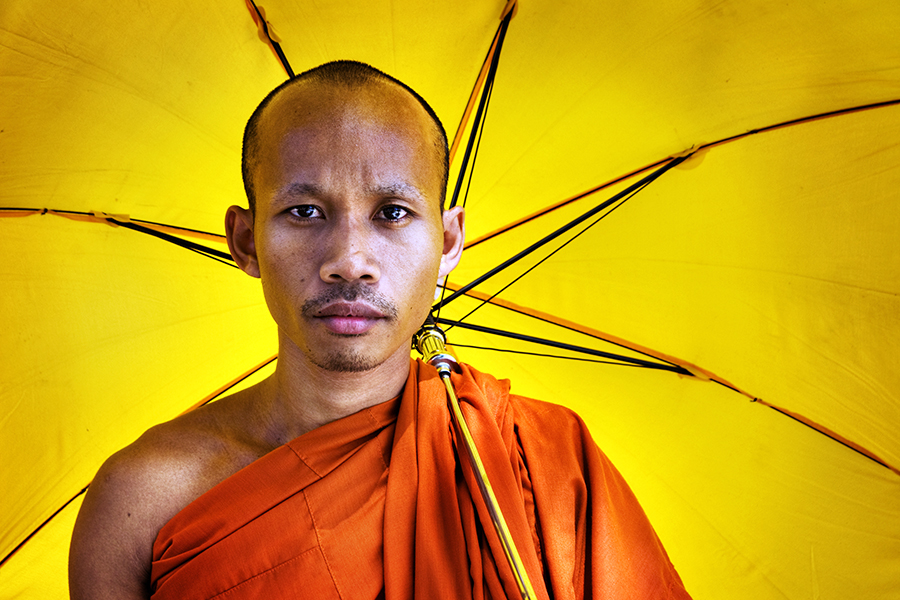
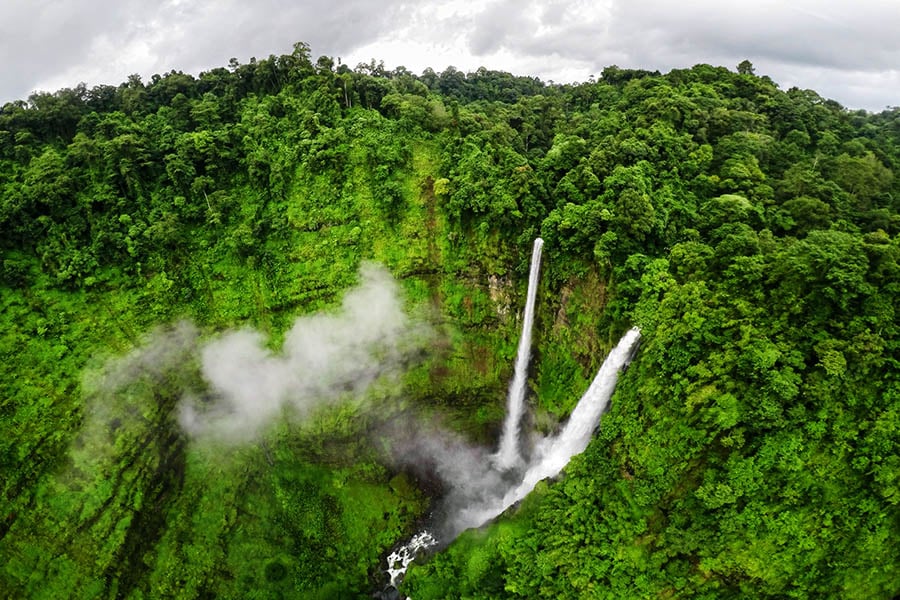
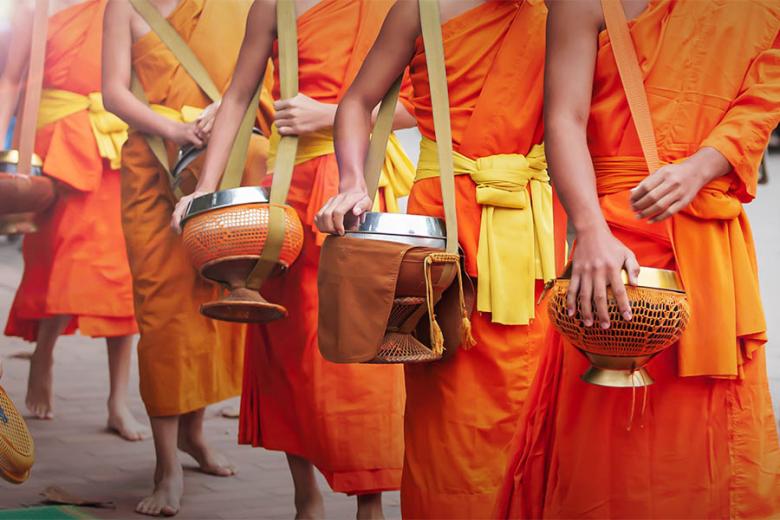
While Laos used to be considered a backpacker destination, it’s now perfect for peaceful luxury escapes amidst lush, green scenery. A little landlocked country, Laos remains untouched by mass tourism. As a result, its ancient traditions, such as giving alms to barefoot monks at dawn, continue to thrive. I found Laos incredibly safe and clean, with very gentle people who were not in any way pushy.
Cambodia is steeped in history but also vibrant and forward-looking. It’s altogether more advanced in tourism than Laos. The capital, Phnom Penh, is a modern and exciting city with luxury hotels and exquisite bars and restaurants. However, it’s also somewhere that you can learn about the horrors of the Khmer Rouge occupation in the 1970s, a harrowing but very important period for the West to understand.
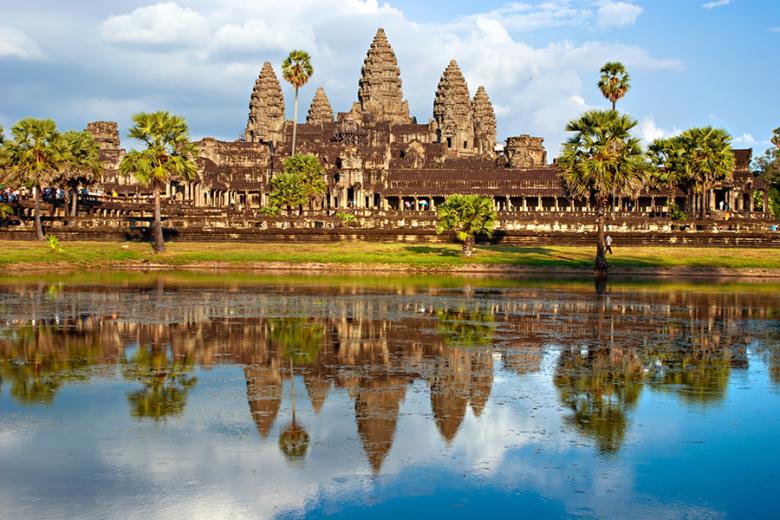
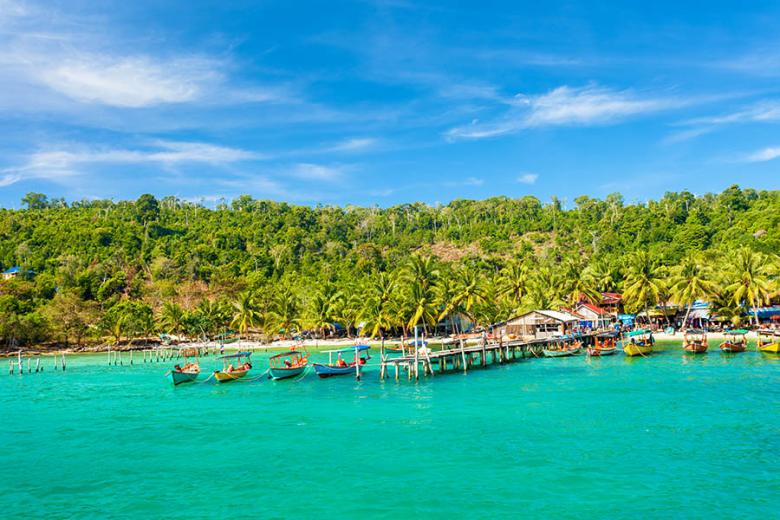
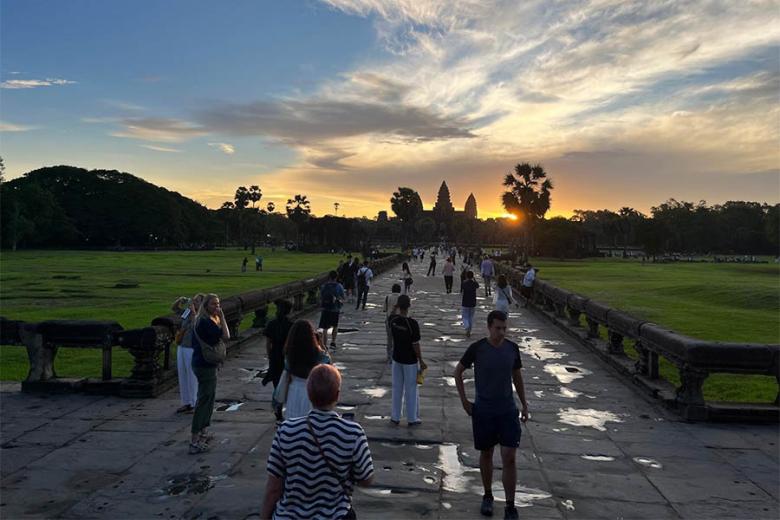
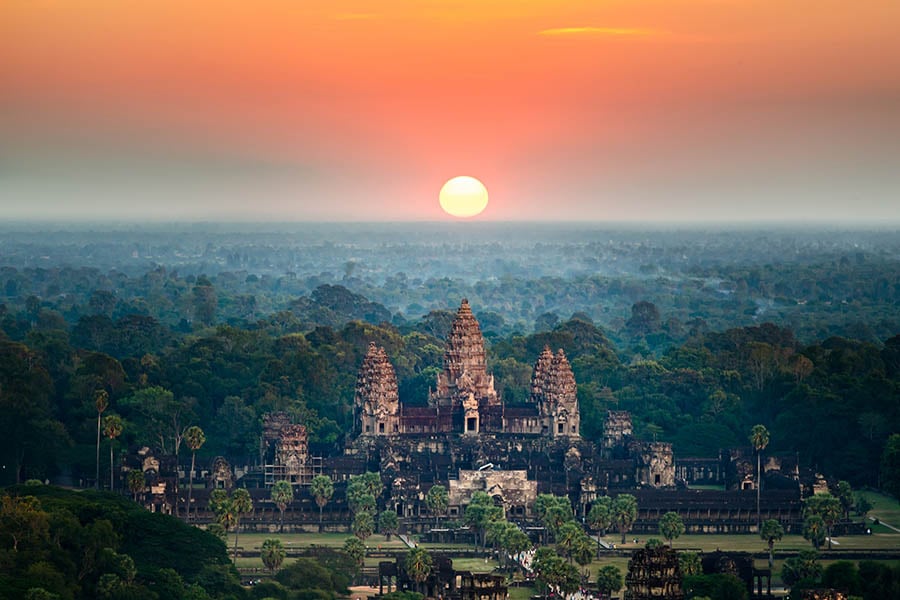
Of course, the biggest draw to Cambodia is the Temples of Angkor. These ancient complexes are immense and incredibly atmospheric. They are best seen at sunrise and sunset for a truly magical experience. The golden sandy beaches in southern Cambodia are also spectacular, with exclusive resorts on Koh Rong and private island escapes on Koh Russey and Krabey Island.
When to travel to Laos and Cambodia
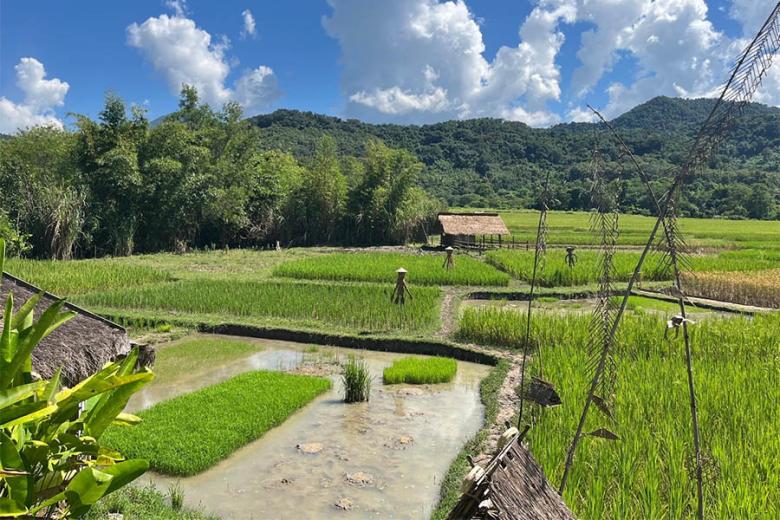
I travelled to Laos and Cambodia at the end of September, which is traditionally the rainier ‘green season’, as the mountains are covered with trees in full leaf and the rice paddy fields are bright green. While there were a handful of heavy downpours during my trip, these were fairly short-lived, and the sun came out in between. For me, this was perfect.
The drier season runs from January to March, which is less humid and a little cooler. However, with little rainfall, the scenery isn’t nearly as lush and attractive, so there are definite perks to travelling out of season.
It’s best to avoid the end of March and the beginning of April in Laos, as they burn crops, and this can create smog for a couple of weeks. Mid-April is also the New Year in Laos, which can be very busy, and certain tourist sights close during the public holidays.
May to August is the peak of the monsoon season, so you’ll need to prepare for some heavy rainfall. However, the rain will not be constant, and there will be plenty of sunshine between showers. You will also be able to take advantage of some fantastic deals in the more luxurious hotels, which drastically reduce their prices during the rains.
How to travel through Laos and Cambodia
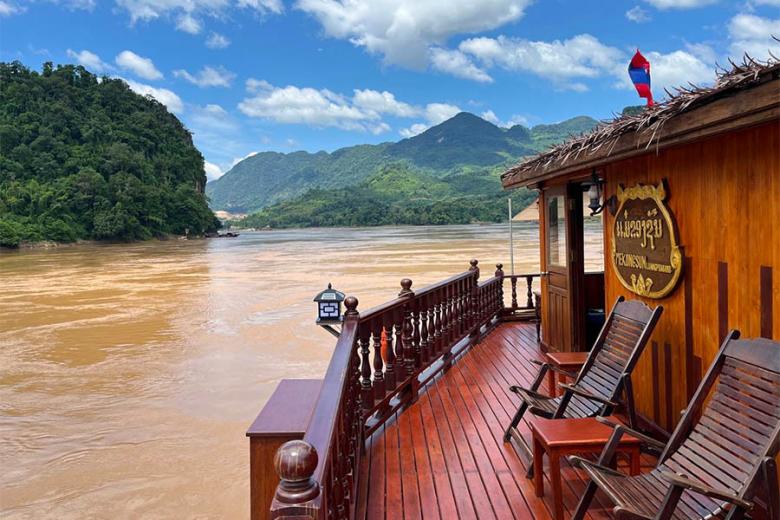
The Mekong Delta flows through Laos and Cambodia and offers spectacular options to cruise various sections of this mighty river. A few of the roads in Laos need improvement, but that adds a sense of adventure to the experience. Both countries operate several high-speed trains, which is a very scenic and comfortable way to travel between destinations in the region.
Arriving in Luang Prabang
Luang Prabang Airport is small, with very few queues, making it a lovely, stress-free place to arrive in Southeast Asia. I was met on arrival by our friendly local guide and transferred from the airport to our central hotel. Amazingly, the journey took just 15 minutes - perfect after a long flight!
I stayed at Villa Maly, which was just a 5-minute walk from the night market, bars, and restaurants. It’s a rustic boutique hotel in a French-colonial style with teak floors and four-poster beds (complete with mosquito nets). It features a lovely swimming pool and spa area, where you can get a massage for just USD 30. Bargain!
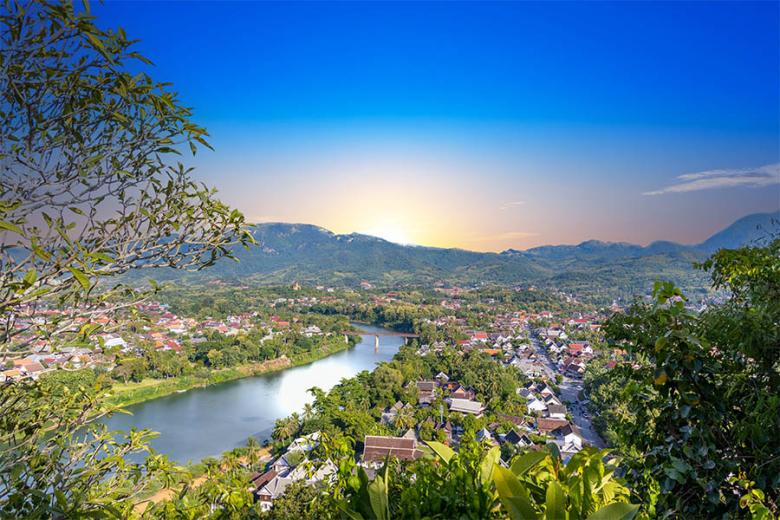
Luang Prabang is a protected UNESCO World Heritage site, so it has strict rules on new buildings, and it’s beautifully preserved. The town has an almost ‘village feel’ with quaint, charming buildings, artisan shops and family-run bars and restaurants. It’s a very calm place to explore at a leisurely pace, stopping at little cafes and bars along the way.
Sailing aboard the Mekong Sun
After a couple of days in Luang Prabang, I embarked on a 3-night river cruise aboard the Mekong Sun, sailing upstream towards the Thai Border. The ship had an old-world ‘Agatha Christie’ charm and style. With just 14 cabins (3 have full balconies, and the rest have Juliette balconies), it’s a true boutique experience. The personal service and friendliness of the crew and Cruise Director were exceptional.
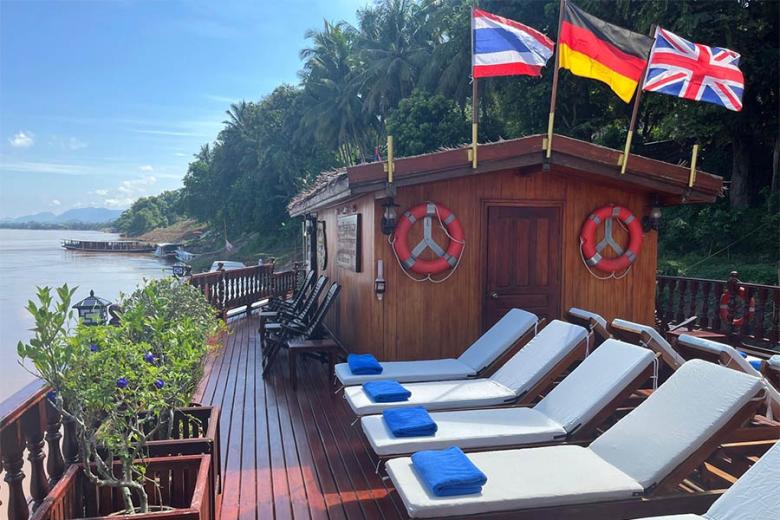
All meals were included, and there was an Honesty Bar, so I could simply lie back on my sun lounger sipping a G&T and watching the world go by. Sailing along the river created a constant breeze, which, in 85% humidity, was very welcome. We stopped en route at various local villages, learning about the crafts they make and how they live. Laotian people are very friendly and keen to welcome you into their homes.
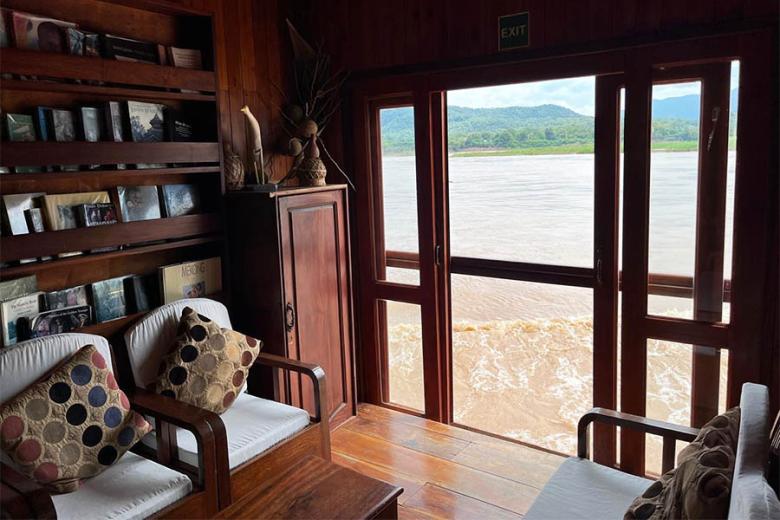
This cruise can be taken in any section through Laos, making it an excellent way to travel between destinations in the country. You can either travel from the Thai border to Luang Prabang or Luang Prabang to Vientiane. There are also several longer itineraries available if you have time and you fancy a slower journey all the way into Thailand.
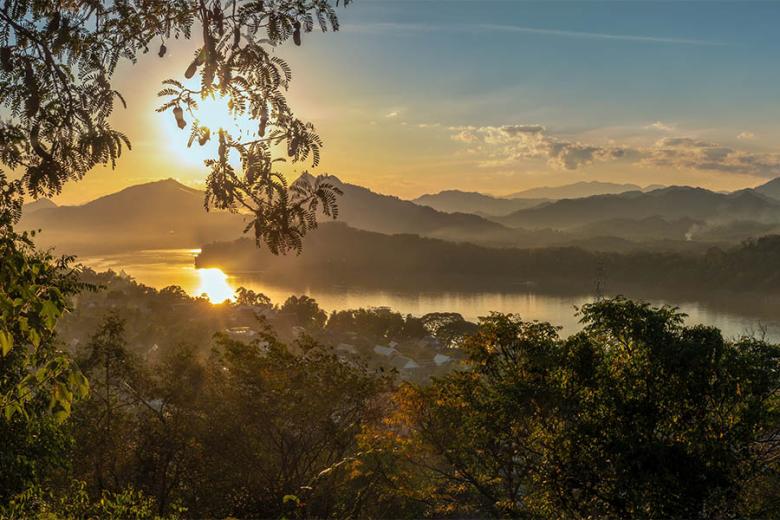
Staying at Namkhan Resort
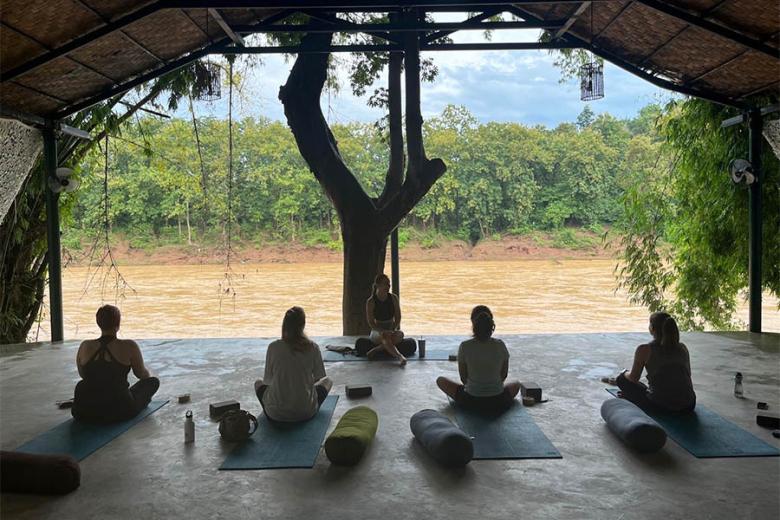
Returning to Luang Prabang, I stayed at a beautiful eco-lodge just 15 minutes outside town on the bank of the Nam Khan River. The Namkhan Resort concept is a luxury retreat focusing on wellness and relaxation, with just 24 rooms spread over 5 acres and a working organic farm that grows the ingredients used in the restaurant.
There are three main room types at the resort, and all of them are lovely. Deluxe Rooms have high ceilings and wooden structures, the Yurts are on stilts, and the Villas are perfect for families. It’s the ideal place to start or end a trip, chilling out before or after a busy itinerary.
Sightseeing in Luang Prabang
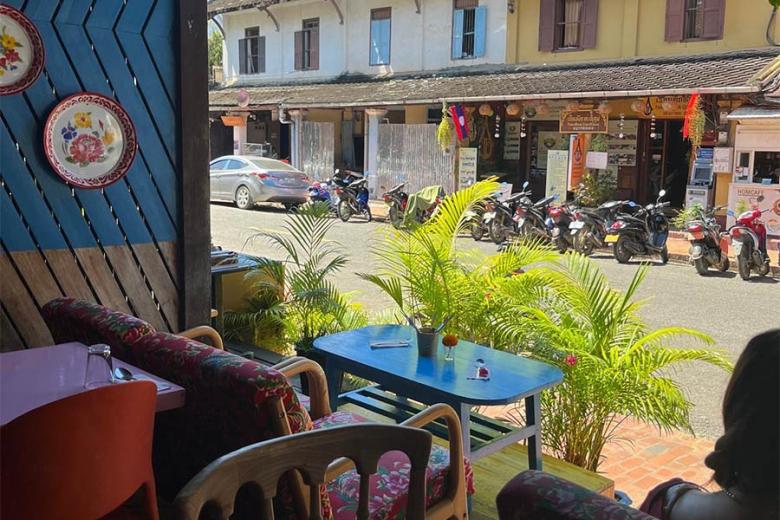
With wide tree-lined streets, white picket fences, artisan crafts, and cosy coffee shops, Luang Prabang is very easy on the eye. It’s safe and laid-back, with no pushy street sellers and a welcoming atmosphere, making it the ideal place to start a Southeast Asia trip. It’s far more relaxed than the larger, more hectic cities in the region, with an upmarket bohemian vibe.
The hotels in Luang Prabang are mainly colonial-boutique-style. Eating out is inexpensive, costing less than £10 for a main meal accompanied by a couple of drinks. The local beer is Beer Lao, which is very refreshing and costs about £2 a bottle.
Kuang Si Falls and the Sun Bear Sanctuary
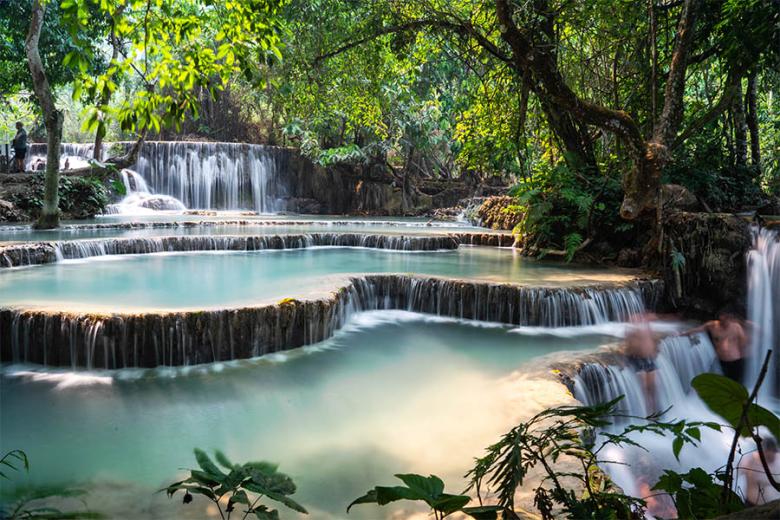
During my stay, I visited the Kuang Si Falls about an hour outside of Luang Prabang. They are impressive and full-flowing at this time of year. While you can swim in the pools near the falls during the dry season, it becomes unsafe when the rains begin. However, the falls become stronger and more dramatic during the green season, and the surrounding scenery is lush and jungly.
At the falls, you can also visit the Sun Bear Sanctuary, which is home to rescued cubs who have lost their mothers to poaching. It was good to see them protected and well looked after by the sanctuary, although they were all sound asleep during my visit.
Visiting a buffalo dairy farm
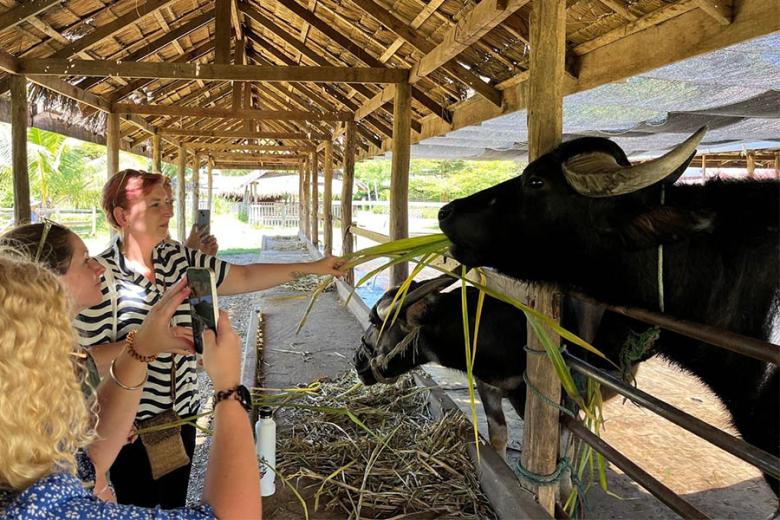
Next, we visited a local buffalo dairy farm, which was very impressive! Founded by three women - one American and two Australians - the farm has been up and running for 8 years. The philosophy behind the farm is fascinating and offers a perfect example of community partnerships that benefit everyone.
The women look after, vaccinate, and feed the buffalo herds for the local farmers. In return, they use the buffalo milk to make cheese and ice cream. When the farmers need them back, all they need to do is ask. It’s a win-win! It was a very wholesome experience and great to see such good care of these amazing animals.
Exploring a Laotian Living Farm
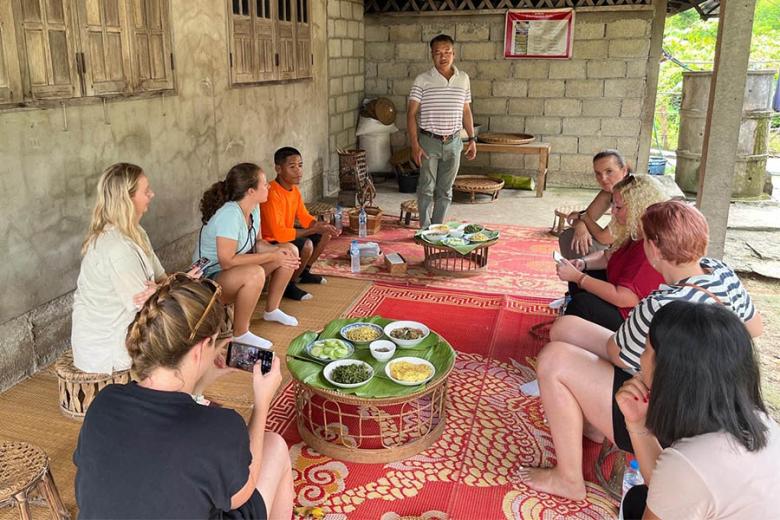
Next, we went to the Living Farm, where we learned all about the traditional process of harvesting rice from the paddy fields. After being given a full explanation and a tour, we had a go at harvesting ourselves and enjoyed lunch in the truly stunning surroundings.
Learning about elephant conservation
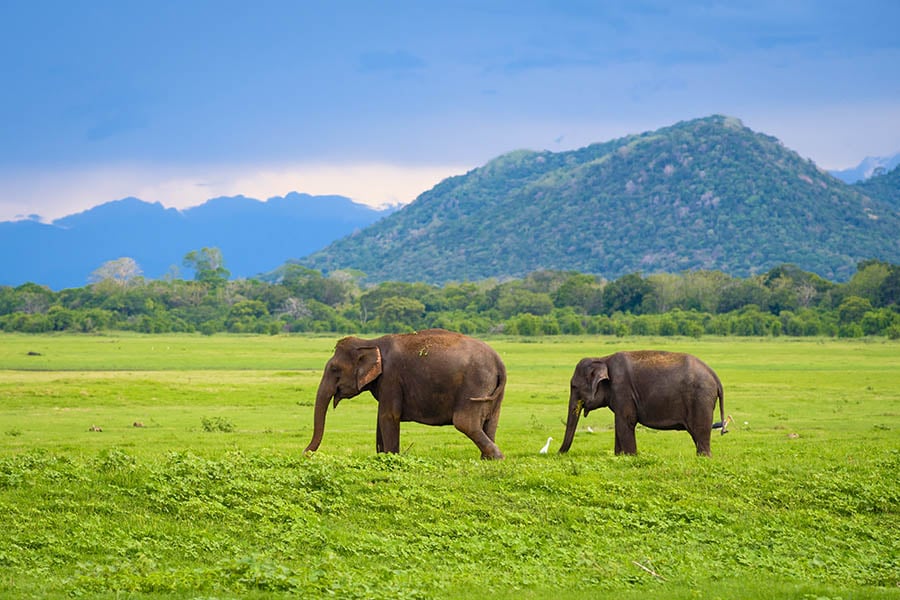
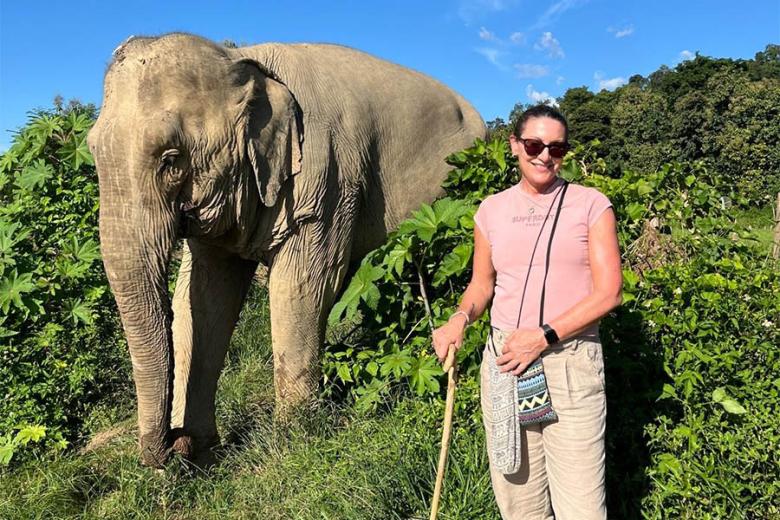
The following day, we visited the Mandalao Elephant Conservation Centre, which is home to twelve elephants rescued after years of hard logging or from zoos. Now, they can roam freely across 200 hectares of land and spend their retirement in protected peace.
We were encouraged to make banana, tamarind, salt and sticky rice balls to feed them before crossing the river on a long-tail boat to visit them. The elephants cannot be released into the wild, as they have been too domesticated over the years. However, it was moving to see that they now have a wonderful life, which they more than deserve.
Taking a foodie tuk-tuk tour
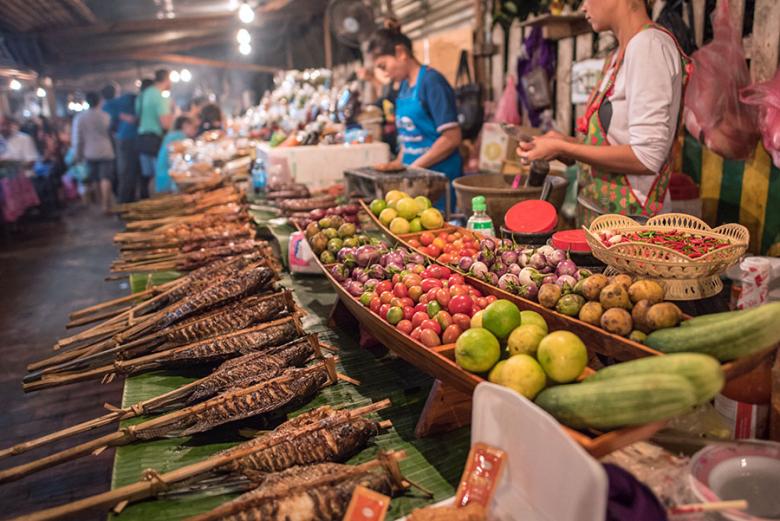
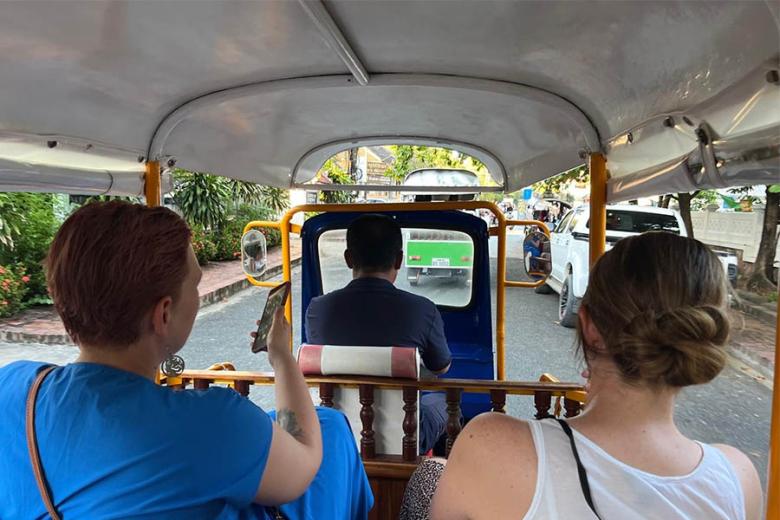
Later that evening, we set off on the Palace’s Palate Foodie tour of Luang Prabang. We began with a cocktail and nibbles at a beautiful restaurant overlooking the Mekong, before hopping in tuk-tuks for a tasting tour. We travelled to three different restaurants, enjoying one course in each place. It was a brilliant evening that gave us a delicious taste of the fine-dining scene in this lovely city.
The luxury train to Vang Vieng
Saying goodbye to Luang Prabang, we travelled first class by train to Vang Vieng, which took just over an hour. It was a high-speed luxury train, and definitely preferable to five or six hours on bumpy roads! The service was wonderful, the seats were comfy, and we passed a mix stunning limestone cliffs and lush forests along the way. It was a really memorable journey.
The re-invention of Vang Vieng
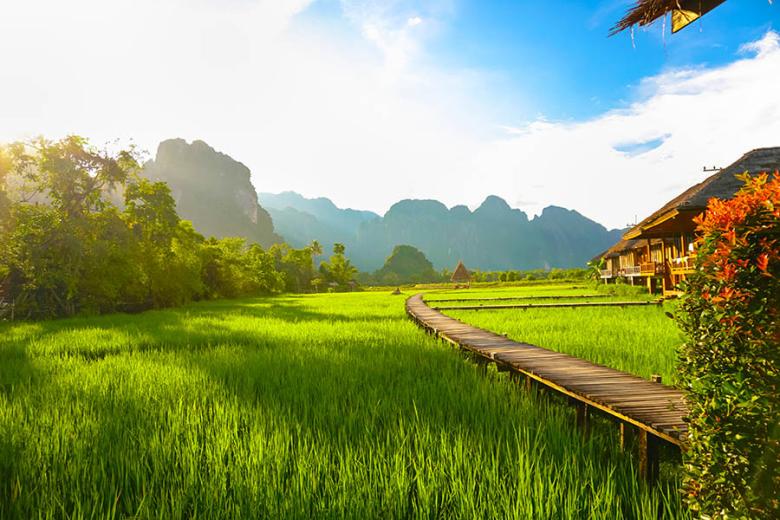
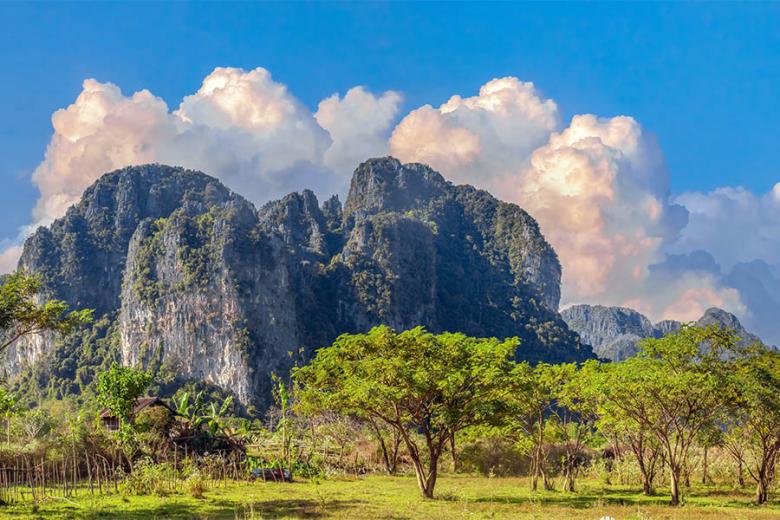
For a long time, Vang Vieng was one of the key backpacking hubs in Southeast Asia. However, it has now moved beyond being a mecca for young travellers, and there are some wonderful upmarket experiences to enjoy. These days, it’s a thriving eco-tourism hotspot, set against a stunning backdrop of karst mountains and meandering rivers.
Vang Vieng is ideal for anyone who loves being active outdoors. You can go caving, kayaking, and hiking on all kinds of scenic trails. You can also opt for a sunrise hike that ends with breakfast at a spectacular viewpoint. It is a small town with a daily night market and a handful of local restaurants. It’s definitely worth spending a couple of nights here to relax and soak up the scenery.
The road to Vientiane
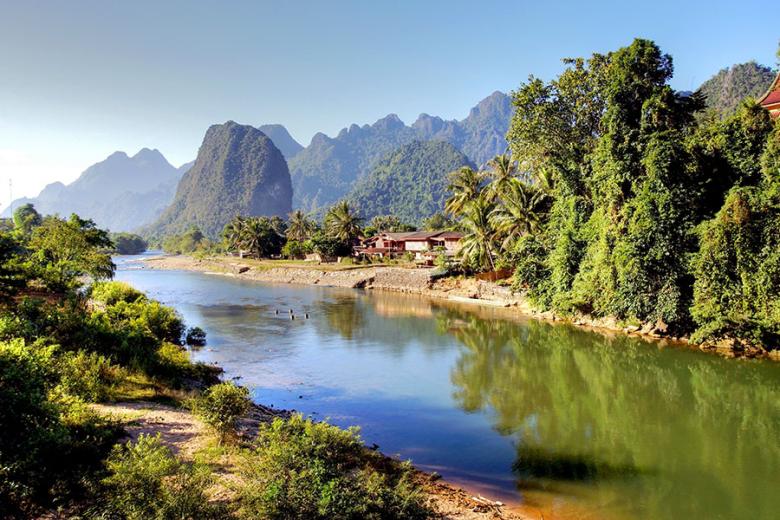
Next, we travelled by road to Vientiane, and there was always something fascinating to see outside the window. Vientiane is larger and less charming than Luang Prabang, but it’s a great place to learn about the history of Laos. It’s also an ideal city to start or end a Mekong Cruise, as the airport is just 15 minutes outside of town.
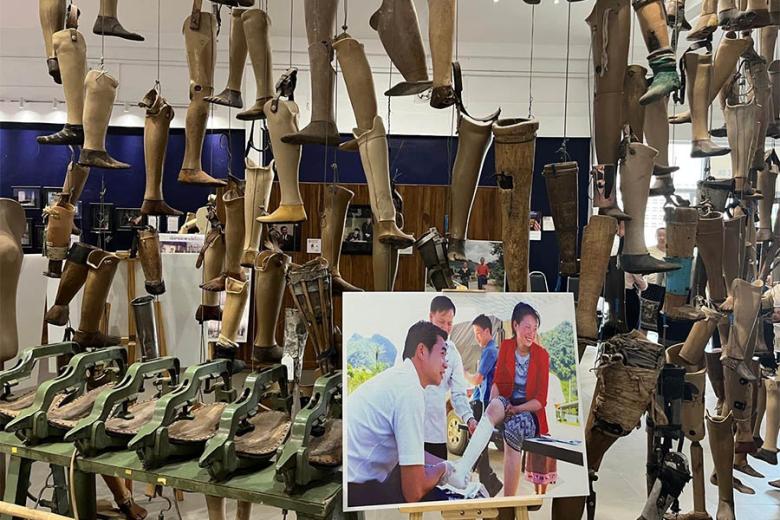
We visited the COPE (Cooperative Orthotic & Prosthetic Enterprise) Museum, which explained how bombs were dropped during the Vietnam War, littering the country with landmines and cluster bombs. The centre was set up to help the victims of unexploded ordnance (UXO) and provide prosthetics to help them regain their independence.
Then, we visited Patuxay Monument (Victory Monument), built by the French and dedicated to the memory of Laotian soldiers who died during World War II and the War of Independence in 1949. We ended our city tour with a visit to That Luang, a large gold-covered Buddhist Stupa and Vientiane’s holiest site.
Crossing into Cambodia
The following day, we flew to Phnom Penh, which has an impressive, brand-new airport that only opened in September 2025. After collecting our luggage, we took tuk-tuks to our luxury hotel - The Rosewood Phnom Penh.
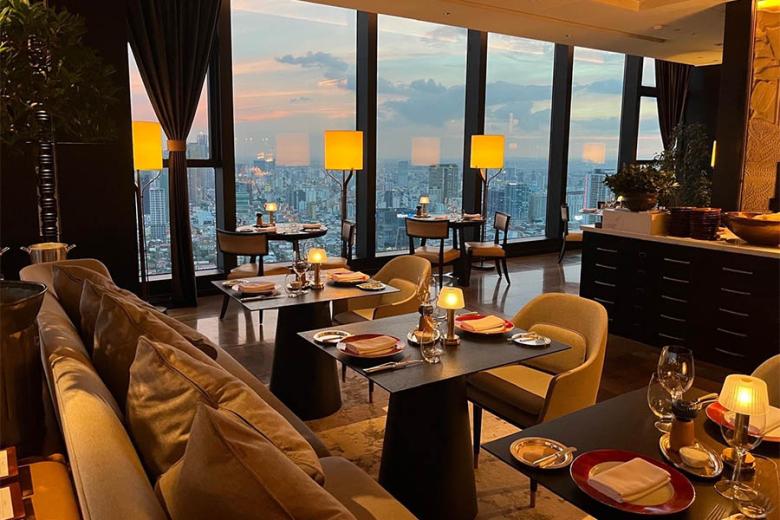
This city hotel has an incredible, contemporary design, with amazing views of the skyline and the Mekong River from its wonderful rooftop bar. It's one of the least expensive Rosewood hotels, making it a great (and unusually affordable) introduction to this luxury brand. I highly recommend it!
Tasting Cambodian gin
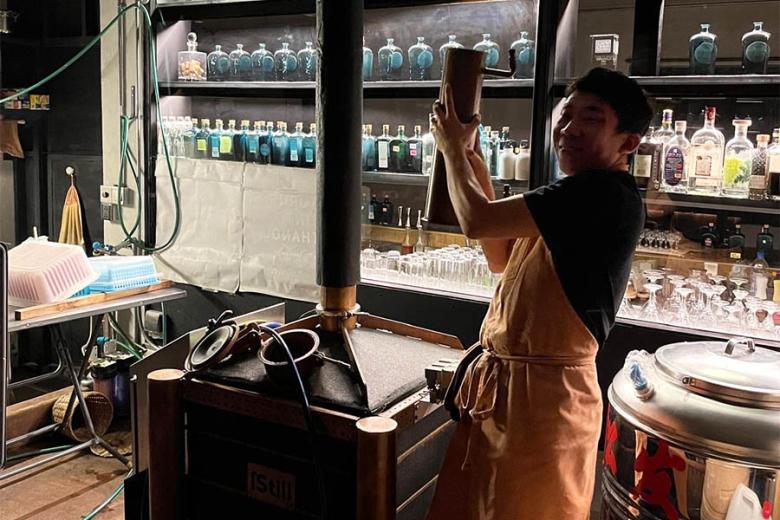
Next, we headed down an atmospheric, dark alley with graffiti and through a secret door to the ‘Mawsim Gin Distillery’. This is a very cool small cottage industry that makes premium Cambodian gin. Recently, it’s started winning lots of awards. We spent a brilliant evening gin-tasting whilst listening to the very passionate curator describe the story of their rise to fame.
Learning about the Cambodian genocide
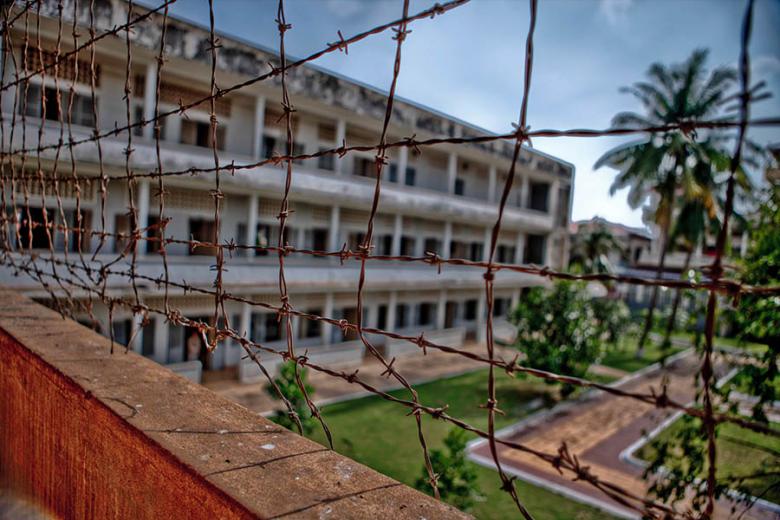
The following morning, we visited the Tuol Sleng Genocide Museum, which is an incredibly hard-hitting experience. We learnt that Pol Pot, leader of the Communist Party from 1975 to 1979, was responsible for more than one million deaths of his own people during his reign of terror. He died in 1998 and was never brought to justice. Only five of the prison guards were brought to trial, and only three went to prison.
The prison was originally a school, but they turned the rooms into cells and elaborate torture rooms. It was beyond cruel and totally harrowing, and the rest of the world didn’t intervene. Shockingly, this all happened within my own lifetime, making it horrifically recent. Two survivors work at the museum today, and you can talk to them about their experiences. It’s very moving and an important place to visit if you’re exploring Cambodia.
Escaping to Cambodia’s islands
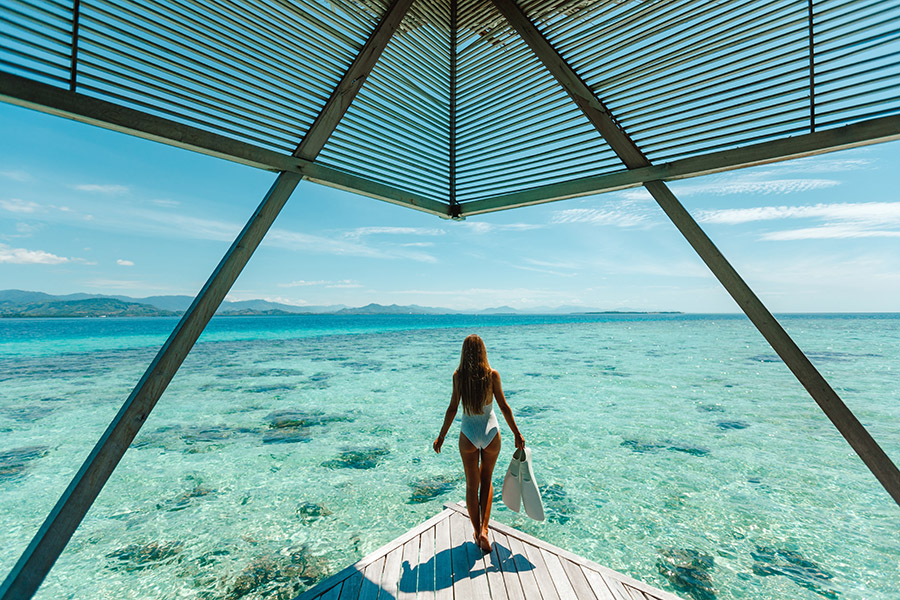
From Phnom Penh, we drove for four hours to Sihanoukville on Cambodia’s coast. This tourist town has changed immeasurably over the last ten years and is now home to high-rise hotels and casinos, so it doesn’t retain a sense of the real Cambodia. However, it’s the gateway to Cambodia’s hidden treasures – the castaway islands of Koh Rong, Koh Russey, and Krabey Private Island.
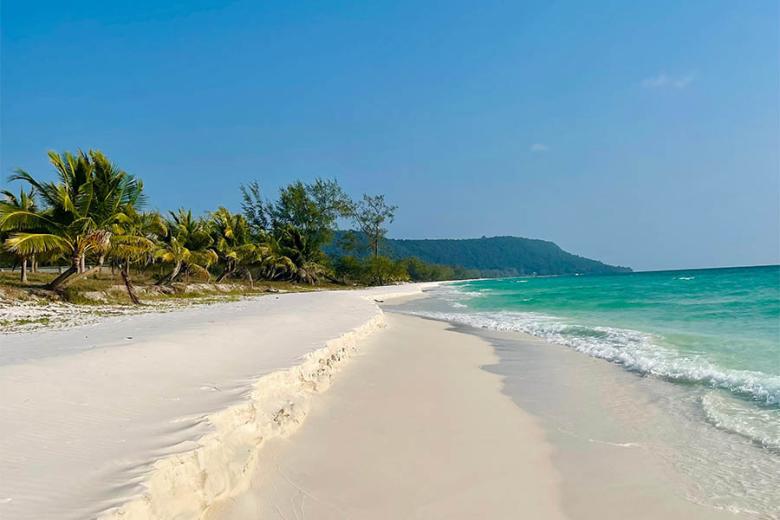
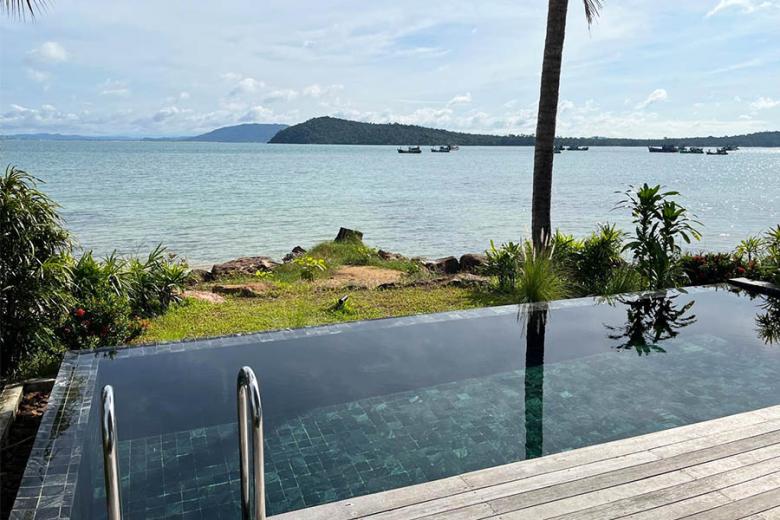
From the pier, it’s a 10-minute boat crossing to Six Senses Krabey Island. It’s the only resort on the island, with just 40 private pool villas perched along the hillside with gorgeous jungle views. This is a highly exclusive spot that’s perfect for secluded honeymoons and indulgent escapes focused on wellness.
We stayed at the brand-new JATI Koh Russey Private Island Resort, set within a 46-hectare tropical forest and surrounded by lovely beaches. Here, there are 82 villas spread along the beach and tucked away in the jungle, some with their own private pools. It has a huge spa and lots of water sports on offer, making it great for couples and families.
Staying in Siem Reap
Our final stop was Siem Reap, a charming tourist town transformed over the past five years. During COVID, the government invested in infrastructure improvements, making Siem Reap a modern, accessible city today.
We stayed at the luxury Shinta Mani, an art deco, contemporary hotel designed by Bill Bensley, full of interesting artwork. It’s a wonderful base in Siem Reap.
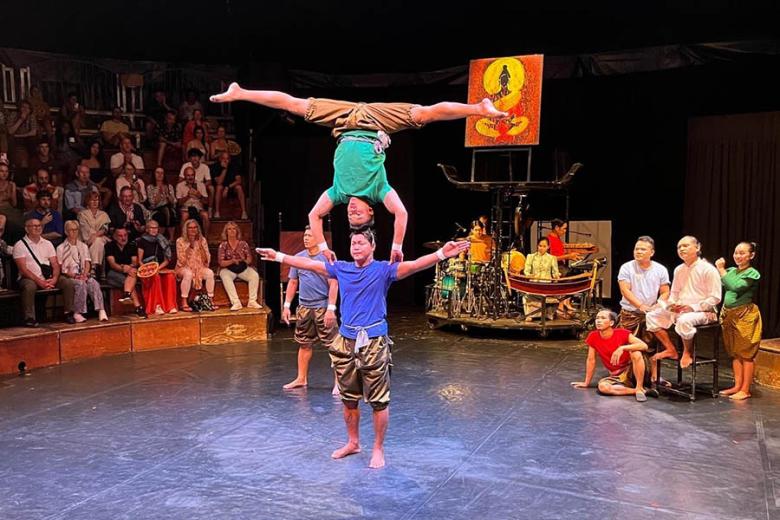
In the evening, we went to the Phare Circus, a one-hour performance of a story told in dance and acrobatics that helps Cambodians cope with past trauma. We also had a behind-the-scenes tour.
Exploring the temples of Angkor
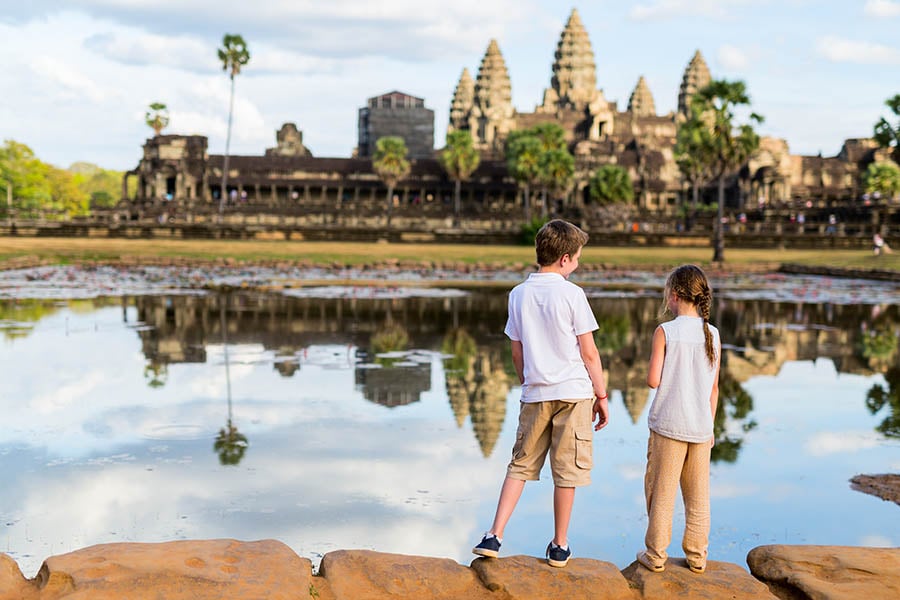
On our final day, I woke up at 4:30 am to see Angkor Wat at sunrise. I sat just outside the temple complex to avoid the crowds and to see the sunrise reflected on the moat. Even with many tourists, the experience was incredibly peaceful, and I highly recommend visiting early in the morning before the heat of the day sets in.
In the afternoon, I visited Ta Prohm, the temple of Tomb Raider fame. It’s amazingly atmospheric, with trees growing out of the stones, and roots entwining everywhere. Some of these trees are up to 500 years old, which is pretty mind-blowing. It’s a stunning and unique temple, making it a must-see for all ages.
The perfect pairing of destinations
I loved my journey through Cambodia and Laos. It offered a wonderful balance of relaxation, culture, and wildlife. I learned so much about traditional living in the rural communities, and about the horrors of genocide in the cities. It was an eye-opening and moving experience. Travelling slowly by river boat in Laos was incredibly peaceful, while the Cambodian islands added a tropical holiday vibe to the trip. As twin-centre holidays go, you can’t do much better!
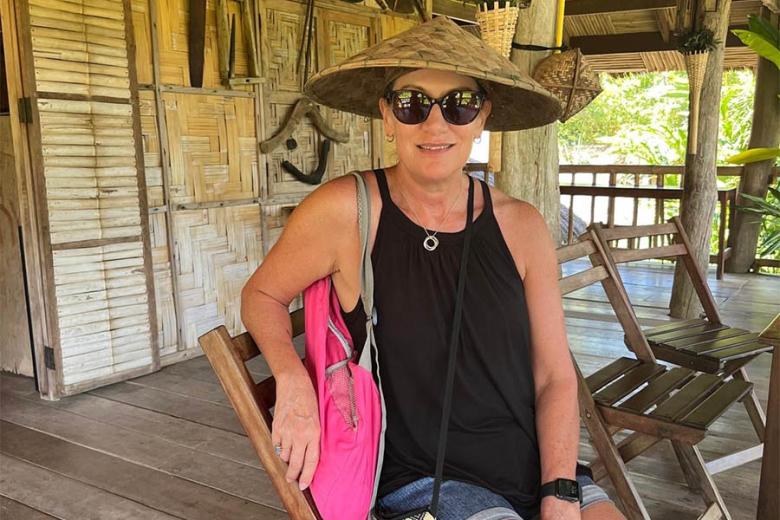
Eager to explore Laos and Cambodia?
We're experts at creating tailor-made holidays packed with local experiences, boutique accommodation, and personal touches. We'll build you an unforgettable Southeast trip that matches your budget and interests. To get started, give us a call on 1273 320 580 or send us an online quote request.
Request a quote

Exploring off the beaten track Thailand: Lampang and Mae Hong Son
Bryony Dunn
Marketing Manager
at Travel Nation
Perfect partners: my Singapore and Thailand holiday

Natalie Brown
Senior Travel Consultant
at Travel Nation

Our family stay at Elephant Hills in Thailand
Jim Faulkner
Senior Travel Consultant
at Travel Nation
About the author Tracey Smith
Senior Travel Consultant
Tracey joined Travel Nation in 2024 after 17 years at Trailfinders in Kensington, so it's safe to say she knows her stuff! She's incredible at creating thoughtful, personalised trips all over the planet, and she has a passion for arranging intimate, far-flung weddings in the South Pacific and the Indian Ocean. When she's not working, Tracey can be found taking long walks with her beloved dogs or pottering around her garden in Sussex.