Exploring the spiritual Kii Peninsula, Japan

TripBlogs
The Kii Peninsula is for those intrepid travellers who are keen to get away from the busy cities and learn about a completely different side to Japan. It’s somewhere to learn about Japanese religions (Shintoism and Buddhism), try meditation, discover traditional customs, and hike UNESCO-listed pilgrimage routes through cedar forests. Here, you can experience atmospheric ryokans (traditional inns), soak up the health benefits of the local onsens (natural hot springs) and sample traditional Japanese food.

Where is the Kii Peninsula?
Directly south of Osaka, it takes just a couple of hours to drive deep into the Kii Peninsula. You can fly internationally into Osaka, or domestically from Tokyo. It’s an ideal self-drive destination with clear, well-maintained roads and signs in English. The Japanese also drive on the same side of the road as the UK, which is handy. If you have a satnav, you’ll find driving and parking very easy.
If you’re not driving, you can take the train to Nara, only 35 minutes from Kyoto, or an hour and a half from Osaka. Both cities offer easy access to the Kii Peninsula. There are even public buses from Osaka or Kyoto to the more remote destinations such as Koyasan.
If you’re short on time, you can even fly to Nanki-Shirahama Airport, near this beautiful beach resort, and pick up a car here to explore the rest of the Kii Peninsula. There are three flights a day from Tokyo with Japan Airlines.

A handy alternative to Kyoto
It’s worth noting that Kyoto is very popular with tourists, so hotel availability can be an issue and the costs are higher. A brilliant alternative to Kyoto is Nara, which is just 35 minutes from Kyoto by direct. It’s a beautiful city that does sees a high volume of day-tripping tourists. However, once they have gone for the day, the city is relaxing and very enjoyable, particularly wandering around Nara Park feeding the friendly wild deer.

When to visit the Kii Peninsula
I visited Japan in October, which the peak of autumn and almost as popular as cherry blossom season. The colours of the trees turn red, orange and yellow, making the scenery even more stunning than usual. It will be significantly busier, and prices will be higher, but the rewards will be spectacular.
It’s also important to bear in mind that the weather in autumn and spring is becoming increasingly unpredictable with climate change, so there’s no guarantee that you’ll see the full effect of autumn foliage or cherry blossom. Sometimes, they only last for one or two weeks, so there’s always some luck involved.

If you’re good with the cold, I also recommend considering the Kii Peninsula in winter. Although it can be freezing, sites such as the Japanese gardens and forests can be really beautiful, and the prices are much lower. You’ll also really appreciate the onsen hot springs in the winter, so make the most of them!
Personally, I would avoid visiting in high summer. Between June and September, the temperatures can be as high as 40 degrees and very humid, which can more for very sweaty sightseeing! In May, there are a lot of public holidays and lots of Japanese people will be travelling. so be careful to check the dates and avoid them.


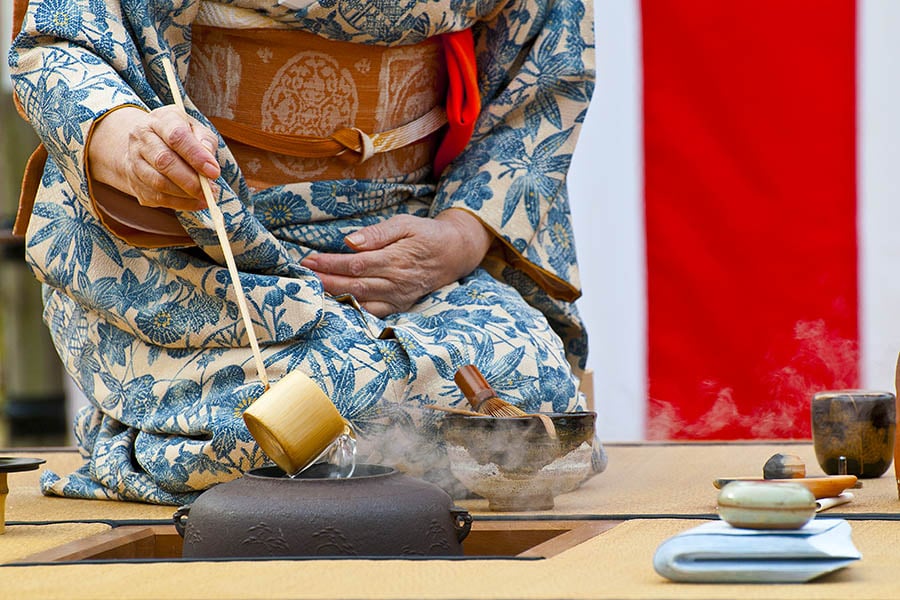
Arriving at Kawayu Onsen
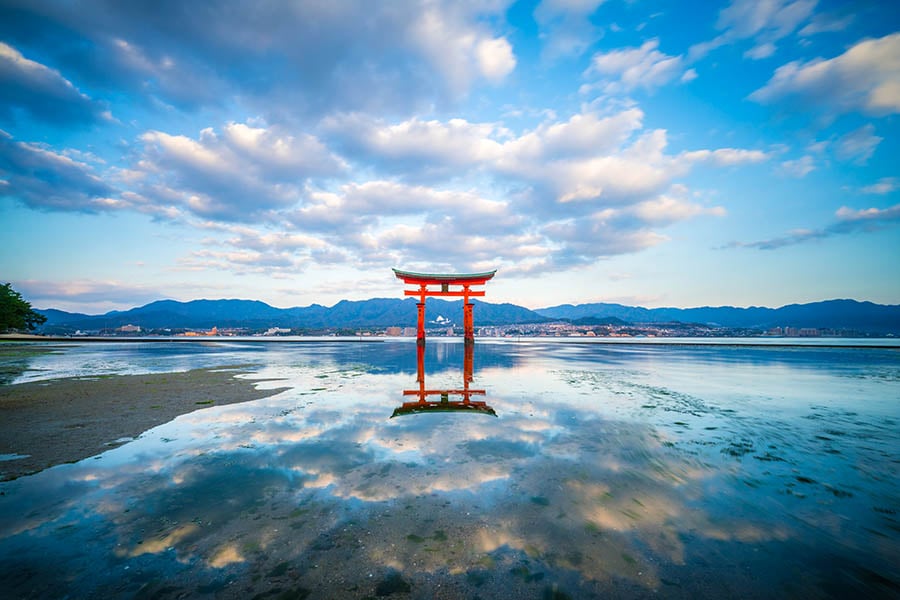
After landing at Kansai Airport in Osaka, we transferred directly to the hamlet of Kawayu Onsen in the Wakayama prefecture on the Kii Peninsula. The journey took around 2.5 hours. The Wakayama region of the Kii Peninsula is all about nature and it’s the birthplace of Japan as a nation. It’s very spiritual and the religions of Shinto and Buddhism are both practiced here.
Kawayu Onsen has a flowing river with natural hot springs. The Japanese archipelago sits on one of the most volatile places on the planet. Here, the lava and molten rock heats the depths of the earth, so when rainwater filters through the rock the temperature rises by 3 degrees every 100 metres. This heated water is forced to the surface at about 42 degrees, the perfect bath water temperature, and it contains many health benefits.

For this natural onsen you may wear a swimming costume. For the many public and private onsens you must be completely naked, and men and women are separated in the public baths. The public baths are regularly used by many Japanese people of all ages, and they are often used for social get-togethers. I was lucky enough to have my own private onsen on my balcony at Fujiya Ryokan overlooking the natural onsen running through the town.

Hiking the Camino de Kumano Trail
After a traditional Japanese breakfast of raw fish, pickles and rice, we enjoyed our first activity, walking a section of the Camino de Kumano Trail. This is part of a pilgrimage route which forms a network of trails in the Kii Peninsula. Only this one and the Camino de Santiago in Spain, are recognised by UNESCO world heritage as official pilgrimages, so walking both is a huge achievement.

We hiked a 7km loop of the Kumano Kodo Trail, starting at Hondu. First, the trail leads you through cypress forests and rural villages, ending at the Taisha Grand Shrine. You can stop at each shrine enroute and collect your stamps in your Pilgrim’s Passport, which is proof of the section you have walked. It’s a fairly easy walk, and we took our time over four hours, stopping for a bento box lunch for a leisurely half an hour.

During the hike, we learnt that shrines represent the Shinto religion and celebrate beginnings such as marriages, coming of age, and births, as well as worshipping nature. In contrast, temples represent Buddhism, and they are used for funerals. In the Buddhist faith, funerals are still celebrations, as they believe that, if you have lived honestly, you will move on to your next life and paradise.

Hopping between onsen hot springs
After the hike, we travelled down to Yunomine Onsen, which is a stunning hamlet and hot springs, where you can stay in a charming and characterful ryokan. Next, we continued for an hour and a half to the coast, where we visited the beautiful Nanki-Shirahama hot springs. If you choose to stay here, you can spend a memorable night at the five-star Kuroshio Sou Ryokan. It’s a small, sustainable, and very stylish ryokan trying to appeal to a more western market by offering alternatives to Japanese food.

Staying at Shirahama Beach
Shirahama famous for its pure white sandy beaches and unusual rock formations created by molten lava millions of years ago. We stayed at the five-star Infinito Resort, a large property with lovely swimming pools that offers Italian fine dining and a private onsen on your balcony overlooking the coast. The buffet breakfast included plenty of Western options as well as Japanese food.
It’s a very polished resort with incredible views, which is perfect if you’re after a mini beach break in Japan. There are direct flights from Tokyo to Nanki-Shirahama Airport three times a day, so it’s very easy to reach the area.

Exploring the temples of Koyasan Town
Next, we travelled for 2.5 hours to Koyasan Town, which is famous for its 117 temples and shrines. You can access it by bus from Kyoto (in season) or take the train and cable car up to Koyasan. We first visited a pilgrimage lodge called Rengejo-in Temple, which offers simple traditional rooms, meals, morning prayer and meditation.
We then visited Kongobu-ji Head temple to learn about esoteric Buddhist meditation. The ‘aaaahhhh’ sound is the symbol of the start of the universe, and you should try to visualise this when making an ‘aaaahhhh’ sound and long breaths. Shinto religion works with, and supports, Buddhism. It’s beautiful – and rare - to see religions working together rather than against one another. I find it very inspiring.

Staying at Amanosato Villa
We then continued with a 30-minute drive to Amanosato Villa, our home for the night. This incredible five-star hotel is uniquely designed and small but perfectly formed. It offers 11 beautiful suites with with impeccable service and degustation menus. Each suite has a separate living area, and the bathrooms have massive circular baths. With vaulted ceilings and high-tech gadgets operating the lighting and curtains all from an iPad, it very space age and feels a little Scandinavian. It’s also all-inclusive, with a generous mini bar to boot!

Travelling to dreamy Dorogawa
After breakfast, we visited the Reiyokan Museum in Koyasan, which was a fascinating experience. Here, you’ll find many statues of Buddha and warrior kings from the 12th and 13th century. An hour is all you need to explore the museum, and it’s well worth it. You’ll leave with a much better understanding of this period of Japanese history.
We then travelled north for three hours to the mountain Onsen town of Dorogawa. This is a quiet, picturesque town full of traditional ryokans and lit by twinkling lanterns. All the accommodation here is quite basic, but very old and charming, with futon beds and tiny ensuite bathrooms.

Some ryokans have private onsens that you can reserve while others have a public onsen only, where they add a special Chinese medicine to the water to help with stomach problems for women. Fascinating!
Ryokans supply traditional kimonos for you to wear after your onsen and to wear during dinner. Here, you’ll find only traditional Japanese food, with many delicious courses and small dishes. It’s a charming, authentic experience for travellers that want a taste of true village culture, but it’s also ‘no frills’ so one night is enough.

Our fire and water Shugendo Experience
Shugendo is the third religion of Japan, coming in behind Buddhism and Shintoism. In short, Shugendo is Mountain Worship. You need to purify yourself before travelling into the mountains and it’s based of around appreciation and gratitude. This means that you need to challenge yourself with extreme practices, such as immersion in freezing water (water purification) or hanging off a cliff with a single rope. Only by enduring these practices can you truly appreciate the comforts that we have.

We learned about Shugendo with a Goma Gyo (fire experience) and Suigyo (water purification) at Ryusen-ji Temple. It’s something that I’ll never forget. First, we experienced Goma Gyo (fire purification) in the temple. The priest gave us each a piece of wood to write our names on and any wishes we may have. He then chanted whilst burning them and sending our wishes up to the Gods.
We then changed into traditional wear and entered the freezing water for three minutes whilst the priest chanted to purify us. This is an opportunity to let go of any negative thoughts from the past and appreciate the natural world that the mountains represent. It was an incredibly thought-provoking experience.

Finishing our trip in Nara
After our purification experience, we drove three hours to Nara City, which offered a huge contrast to the small towns and mountain villages that we had visited so far on this trip. Nara is a modern city with incredible temples and shrines, but it’s most famous for its friendly deer that walk freely around the town and Nara Park.
We stayed at the amazing five-star Noborioji Hotel, with large, sumptuous suites overlooking the gardens and temples of Nara. During our stay, we enjoyed an incredible Italian/Japanese fusion 12 course meal. The hotel manager. Aki, was very warm and welcoming and spoke excellent English (which is quite rare in Japan).

Aki took us in a taxi to Nigatsu-do (February Hall), which is part of the Todaiji Temple. After dark, the lanterns create an atmospheric experience and there was hardly anyone else there. It’s free to just explore by yourself and, from the temple you can see all of Nara at night.
Kyoto has very similar temples but will always be busy and you often need to pay. It’s worth basing yourself in Nara for three nights and taking the 45-minute train journey to Kyoto for the day.

Exploring Nara
The following day, we explored Todaiji Temple with its Great Buddha, once the largest wooden construction in the world (now the eleventh). We were lucky enough to have a private ‘behind the scenes’ tour with a monk.
Next, we moved on to the Kasugataisha Shrine which has beautiful grounds and lots of friendly deer to feed. The deer are protected and roam freely. You can even buy special food for them.
Afterwards, we wandered around the shops in Nara before taking part in a ‘Gripped Ink Experience’ with a Japanese calligrapher. He showed us how to make the ink and demonstrated some beautiful writing.

My thoughts about the Kii Peninsula
The Kii Peninsula is an off the beaten track destination for those intrepid travellers who are looking for the spiritual side of Japan, who want to get away from the tourists and crowds, who enjoy hiking and nature and who wish to experience traditional Japanese hotels and onsens.
You’ll need to be prepared for limited English being spoken and be open to different cultures and cuisines. It’s the opposite of big cities such as Tokyo so well worth combining both for a real all-round understanding of Japan.

Ready to plan a trip to Japan?
We've been creating tailor-made Japan holidays for over two decades, so your trip is safe in our hands. We'll listen to your hopes for your holiday and build you a once-in-a-lifetime trip based on your own interests. To get started, simply give us a call on 1273 320 580 or send us a quote request by email.

Rural Japan in a week: following the Three-Star Road

Adam Smith
Senior Sales Consultant
at Travel Nation
Exploring Shikoku: Japan off the beaten path

Liz Goodall
Sales Team Manager
at Travel Nation

The perfect itinerary for 3 weeks in Japan
Audric Guerin
Senior Travel Consultant
at Travel Nation
About the author Tracey Smith
Senior Travel Consultant
Tracey joined Travel Nation in 2024 after 17 years at Trailfinders in Kensington, so it's safe to say she knows her stuff! She's incredible at creating thoughtful, personalised trips all over the planet, and she has a passion for arranging intimate, far-flung weddings in the South Pacific and the Indian Ocean. When she's not working, Tracey can be found taking long walks with her beloved dogs or pottering around her garden in Sussex.