My luxury cruise in the Galapagos Islands
TripBlogs
After a week exploring Ecuador’s beautiful mainland, I flew to the Galapagos Islands, a paradise for anyone who loves nature and wildlife. I spent five incredible days aboard the luxury yacht ‘Tribute’, which is by far the best way to see the islands. Looking back on it, I’m still pinching myself.
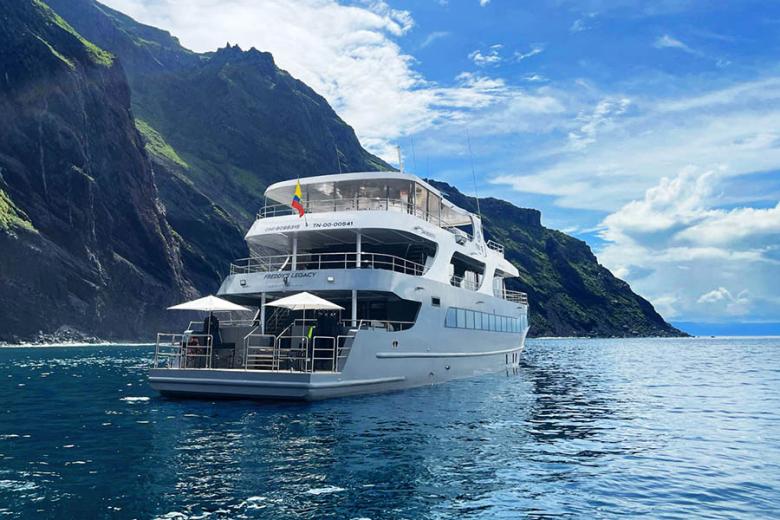
I spent the whole time in the Galapagos Islands feeling like I was in a David Attenborough documentary - you can understand how Charles Darwin must have felt in 1835! The land, air, and sea creatures here have absolutely no fear of humans. It’s hard to put into words, but it feels like a utopian otherworld where everything lives in harmony without fear.
Getting around the Galapagos
There are two airports in the Galapagos - one on San Cristobal Island and the other (Baltra) on Santa Cruz Island. Trips to the Galapagos often start in one of these destinations and end in the other. Our 4-night Galapagos cruise took us around the central and north islands, a great route for wildlife and bird lovers.
We started our cruise from San Cristobal and sailed via Isla Lobos to Santa Fe Island. We then ventured via Black Turtle Cove (North Santa Cruz) to Genovesa, one of the outer islands. Afterwards, we continued to Chinese Hat (off Santiago Island) and onto Rabida, before disembarking in Puerto Ayora on Santa Cruz Island.

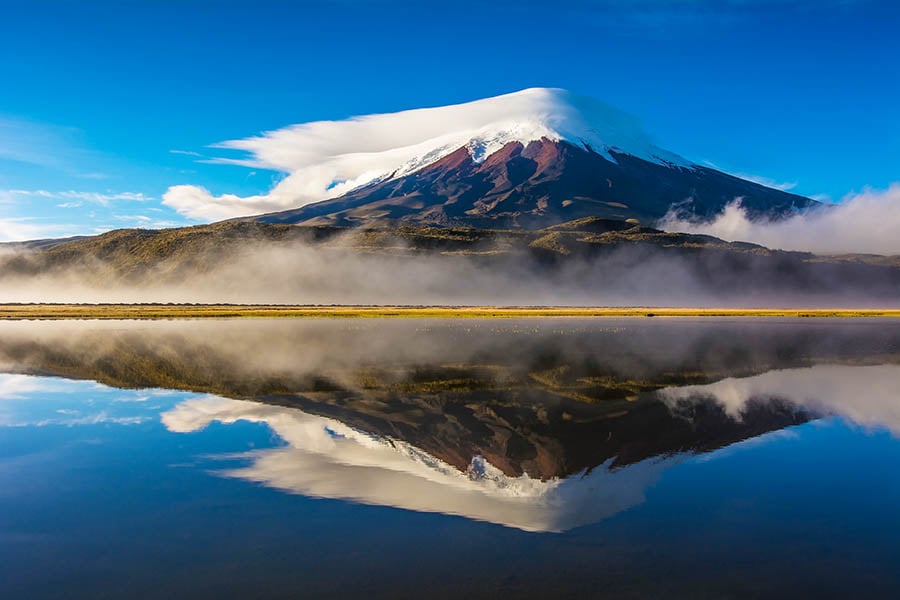
Sailing aboard the Tribute
The Tribute is a luxury yacht that can accommodate a maximum of twenty guests, with a crew of thirteen. It feels very exclusive. On the main deck, the main lounge area is extremely comfortable. This is where meals are served, coffee and cocktails are prepared, and daily briefings are held.
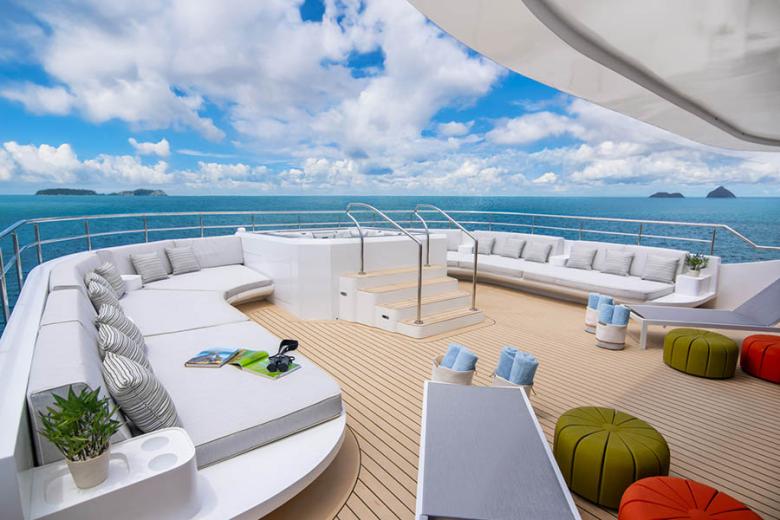
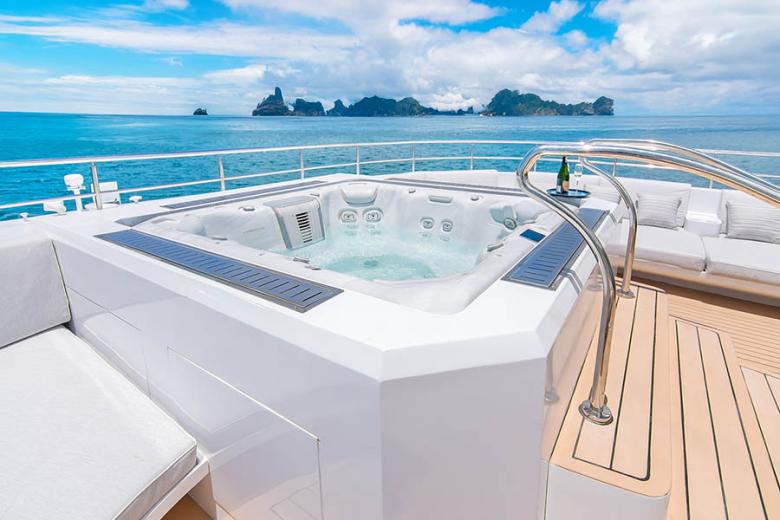
The top deck offers a large covered alfresco dining table where we had a very tasty BBQ lunch one afternoon. The top deck is also home to the ship's hot tub, which is a great place to warm up after snorkelling. Sitting in the jacuzzi with my new friends, drinking a cold beer and watching the sunset made me feel like a rock star.
My cabin aboard the Tribute
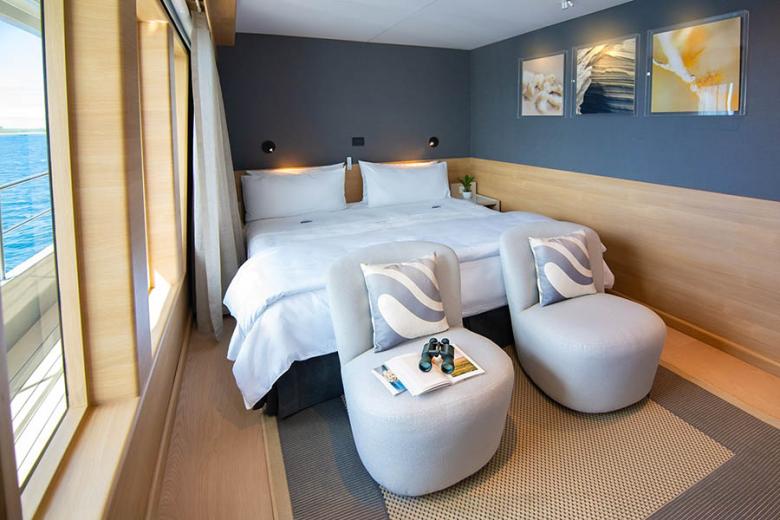
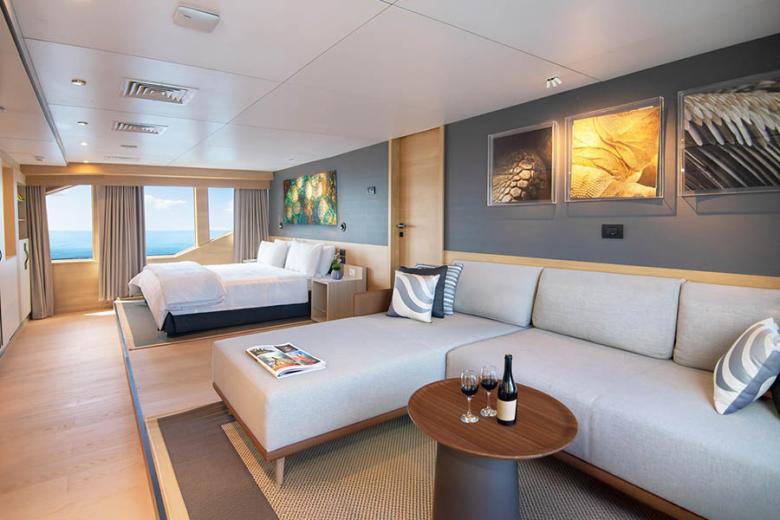
I stayed in a Panorama Suite on the main deck of the Tribute (20sqm). It’s a beautiful cabin for two people, with a double bed or two singles. It felt like a top-tier hotel with wonderful soft pillows and a maid service three times a day. I was told that my cabin’s location on the main deck makes it a good option for anyone who suffers from motion sickness, because you’re in the centre of the vessel and closer to sea level.
The main area was very spacious, with extra seating, plenty of wardrobe space, and a safe. The ensuite bathroom was huge, with a large walk-in shower and space-age toilet. Both the cabin and bathroom had wonderful big windows facing out to sea, with groovy electric blinds in the bedroom.
There is also a very opulent Owner’s Suite on the main deck (50 sqm) that can accommodate a family of three, or a couple looking for extra space and the ‘wow factor.’ On the upper deck, there are two Premium Suites which offer a little more floor space (25 sqm) than the main deck Panorama Suites.
Day one: Exploring Isla Lobos
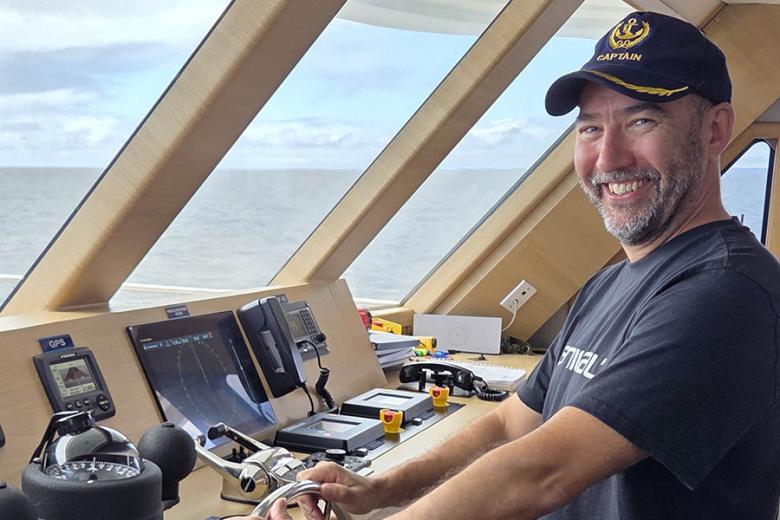
After boarding in San Cristobal, we set sail immediately to pristine Isla Lobos. The captain and crew gave us a very warm welcome, with welcome drinks and endless smiles. We also met our naturalist guide, Christian, who spent the cruise making sure that we saw and learned as much as possible.
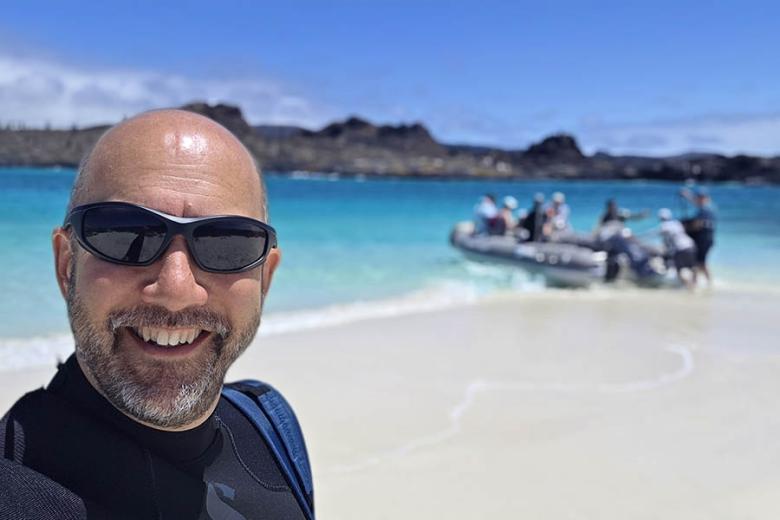
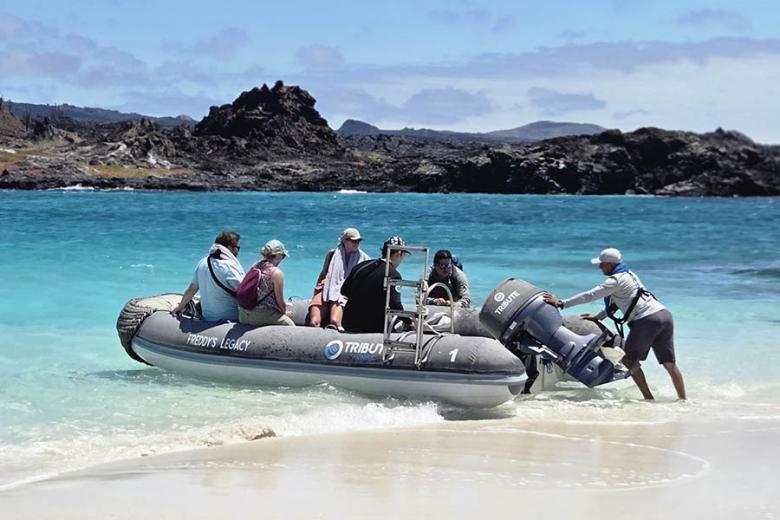
After settling into our cabins, we enjoyed a fantastic 3-course lunch on the way to Isla Lobos. Next, we experienced our first ‘wet landing’. This is where you take a small dinghy from the main boat over to the island and disembark directly into the surf on the beach (usually ankle deep, but no deeper than knee height).
A true wildlife paradise
Isla Lobos is a protected haven for blue-footed boobies, sea lions, and frigatebirds (which look more like pterodactyls!). We donned our wetsuits and snorkelling gear (correctly fitted and provided for free) and snorkelled through the calm, shallow channel between San Cristobal and Lobos Islet.
We immediately saw several large sea turtles, happily sitting on the ocean floor, munching on seagrass. We had a fleeting flyby from a couple of large Eagle Rays, which felt very serene and otherworldly. After an hour, we were greeted back aboard the Tribute with cold towels, chilled fruit cocktails, and canapes.
Sunset strolls, sealions, and whale-spotting
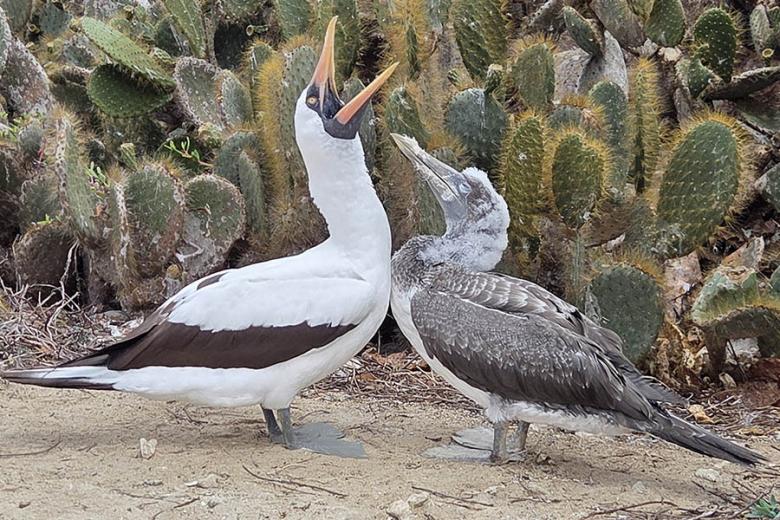
After a shower and a change into dry clothes, we headed back to the island for a sunset walk. We immediately had a close encounter with the famous Blue-footed Boobies and Frigate birds. August and September are nesting and hatching season, so we saw many infant boobies, as well as the large Frigate birds trying to eat them!
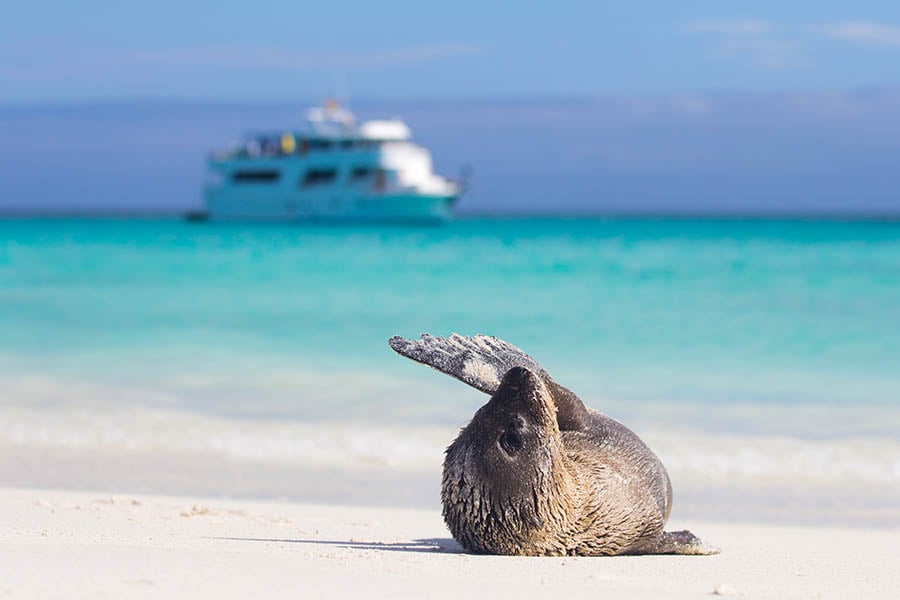
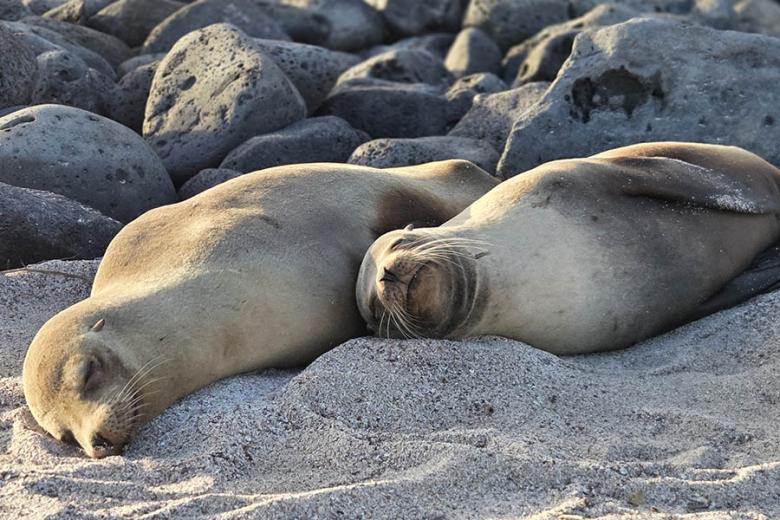
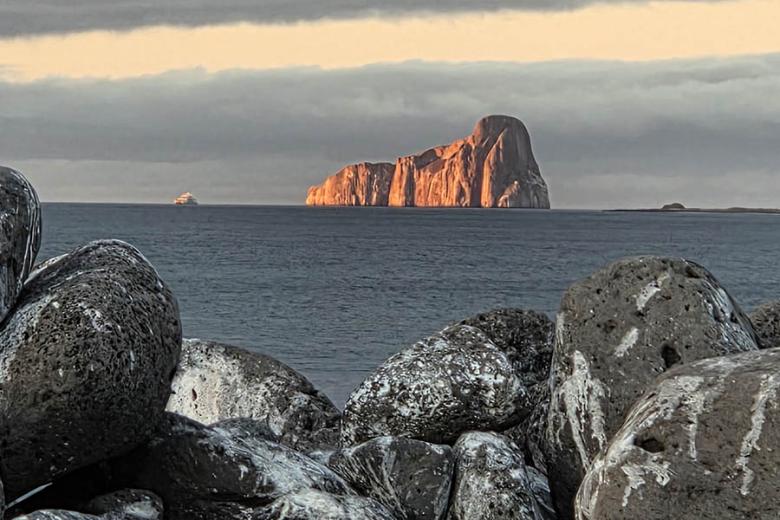
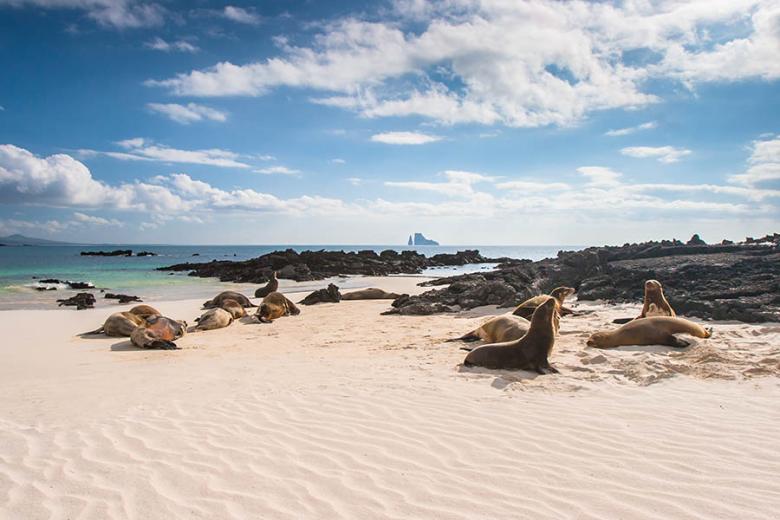
We then came across our first sighting of Galápagos sealions as they lay around the boulder-strewn shoreline, enjoying the last of the day's sun. We giggled at their hilarious grunts and barks (like really bad snoring), whilst the sunset lit up the famous Kicker Rock out at sea in a surreal orange glow.
Thinking that the day couldn’t get any better, we heard an excited cry from Christian, our naturalist guide, on our way back to the yacht. WHALE! Right on queue, we watched a half breach by a junior humpback whale against the sunset.
After an unbelievable first day, we enjoyed a wonderful 3-course dinner before turning in early. I found it hard to sleep that night; my head was so full of wonderment that it was almost too much to process. This was just day one, I kept saying to myself!
Day 2: Santa Fe Island and Black Turtle Cove
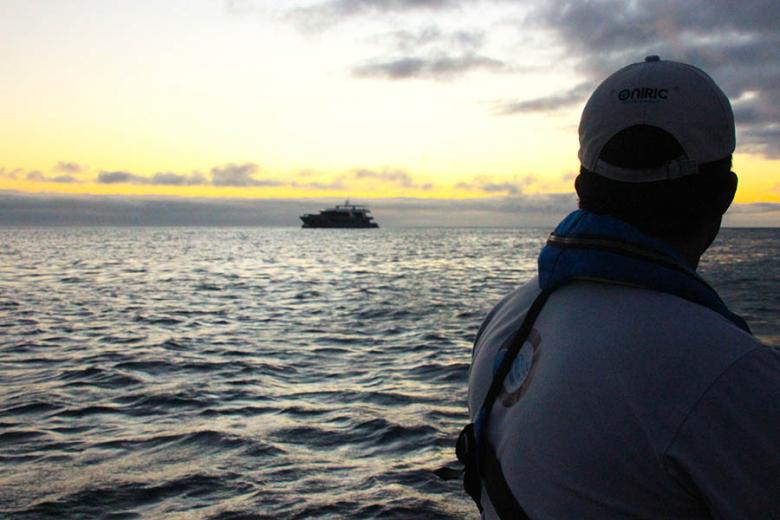
During the night, we set sail for Santa Fe Island, where we woke to an early breakfast of fruits, cereal, eggs and local delicacies accompanied by a strong cup of Ecuador’s finest coffee. Our morning activity was a wet landing at Barrington Bay on Santa Fe Island, best known for its large prickly pear cacti, abundant birdlife, land iguanas, and abundant sea lions.
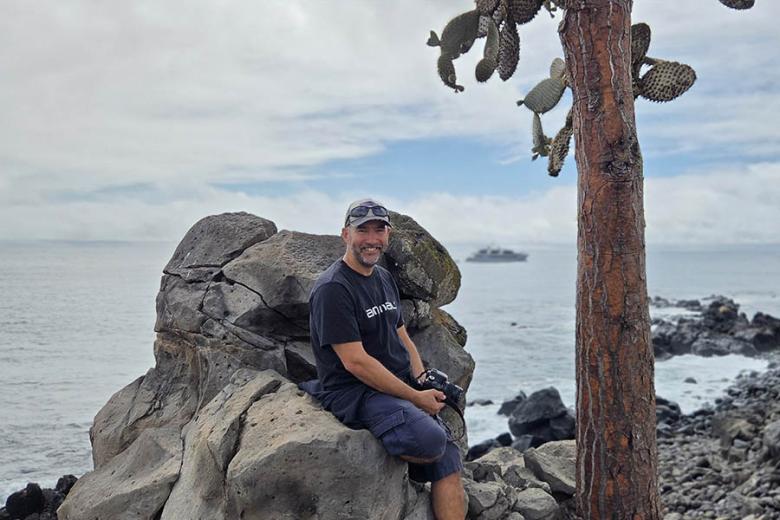
We followed a short trail through the cactus forest, with panoramic views of the rocky coastline. On the way, we saw large land iguanas (quite different in colour to the Marine Iguanas). We also saw some incredible birds, including the Darwin Finch, Cactus-Finch, Small Ground Finch, Galapagos Mockingbird, and vivid Yellow Warbler.
Snorkelling with sealions
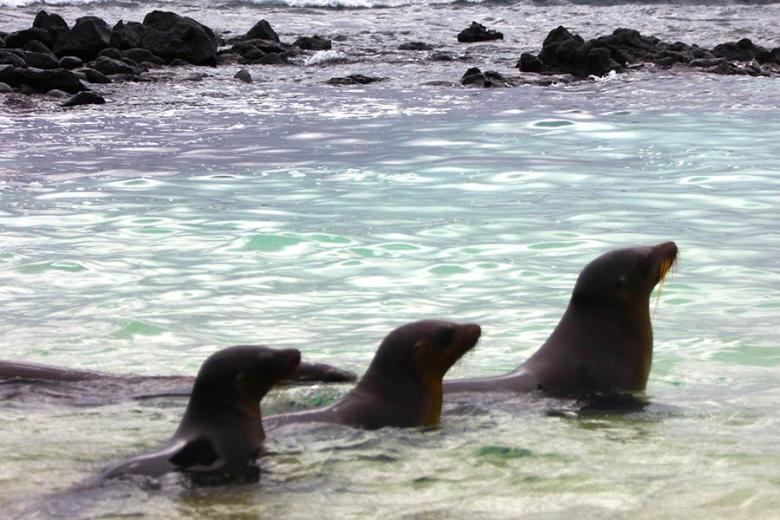
Next, we donned our wetsuits and headed to a quiet bay to snorkel along a stretch of submerged lava coastline. Almost immediately, a pack of inquisitive juvenile sealions came to investigate us. Cautious at first, they quickly became confident enough to swim around us, with such grace and speed that it was dizzying. We also saw large schools of amazingly colourful Yellowtail Surgeon fish.
Exploring Black Turtle Cove
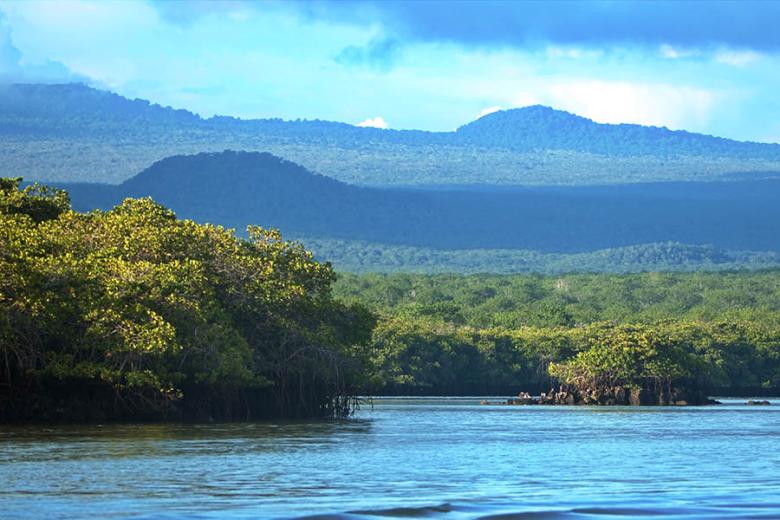
After another wonderful lunch, we sailed around Santa Cruz Island to Black Turtle Cove. This is a tranquil lagoon surrounded by red, white, and black mangrove trees, with an Amazonian feel, which we explored by small dinghy.
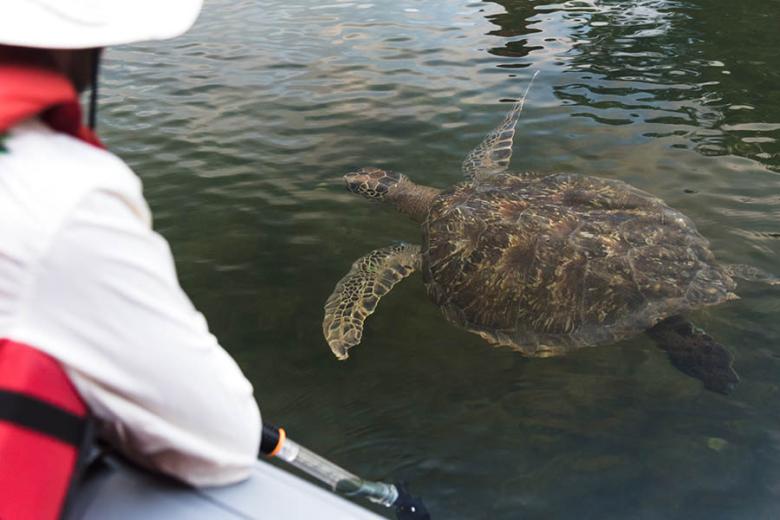
In the shallow still waters, we saw Pacific Green Turtles surfacing for air, Spotted Eagle Rays, and baby reef sharks. The calm waters and dense vegetation of Black Turtle Cove form a protected nursery for many marine species, before they grow large enough to survive in the open sea.
Before dinner, we enjoyed a drink and a briefing from Christian, our guide, about what we’d seen that day. He would then run over what we were doing the following day and answer any questions. During the cruise, he also gave us talks about the flora and fauna of the Galapagos Islands.
Day 3: Genovesa Island
During the night, we sailed to one of the remote outer Galapagos Islands, Genovesa, arriving at Darwin Bay. As we were snorkelling on our cruise (rather than scuba diving), Christian told us that this was our only real chance to see the famous, critically endangered, hammerhead sharks.
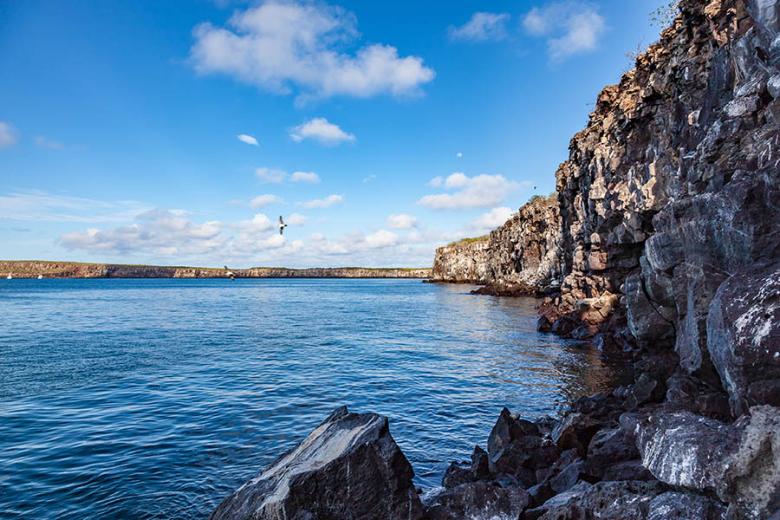
At 6 am, we grabbed a quick coffee, got our gear together, and headed over to his secret spot. The sea was very choppy, with big swells and foaming waves crashing onto the rocky cliff face. However, once in the water, it felt less scary, and we were not drawn towards the cliffs at all.
Swimming with hammerhead sharks
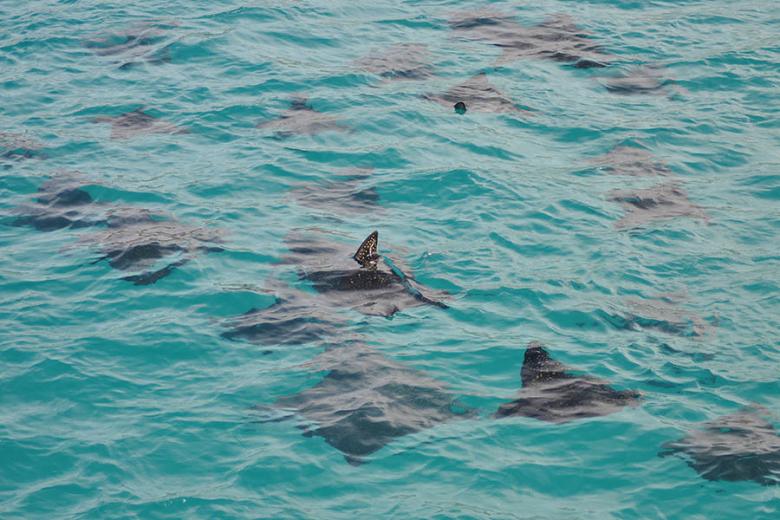
Within minutes, we saw the distinctive outline of a hammerhead shark directly below us, but it quickly slipped back into the darkness of the deeper water. We then saw a large group of Golden Rays in grid formation pass right underneath us. Next, we had a really close encounter with a hammerhead, as it cruised right in front of us, much shallower than before.
Although it lasted just seconds, this experience will stay with me forever. I am from the ‘Jaws’ generation, so I have a stupid, unfounded fear of sharks, and I don’t really enjoy swimming in open seas. This encounter felt like a first step to shedding that fear and appreciating the sheer beauty of these ancient creatures.
Birdwatching on Genovesa Islands
Next, we headed back to the boat for a shower and breakfast, before paying a visit to Prince Philip’s Steps. This famous set of once-natural rock steps (now quite definitely concrete) is named after Prince Philip, who visited the islands in 1964. They allow easy entry onto Genovesa Island, considered the crown jewel of birdwatching in the Galapagos (possibly the world).
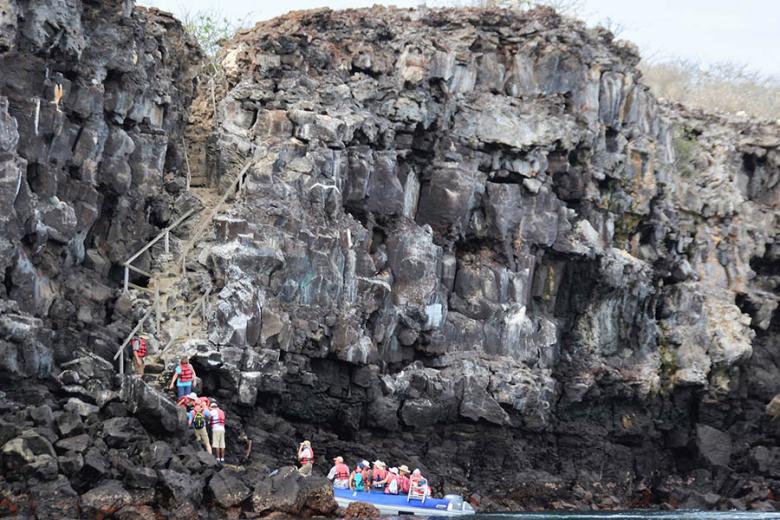
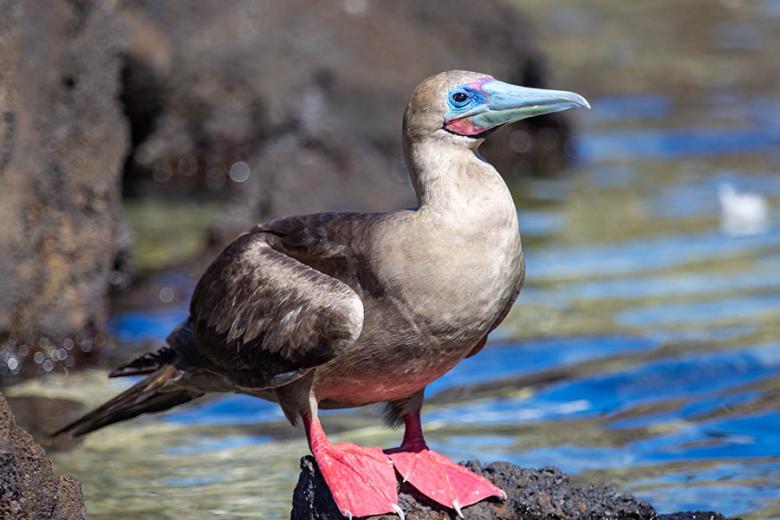
We stopped for an hour on the beach at Darwin Bay, where the birdlife is rich and chaotic. We saw Great Frigates, Red-footed and Nazca Boobies, Swallow-tailed Gulls, Lava Herons, Red-billed Tropicbirds and Galapagos Doves. We also saw the very endangered Galapagos Lava Gull, the rarest gull species in the world.
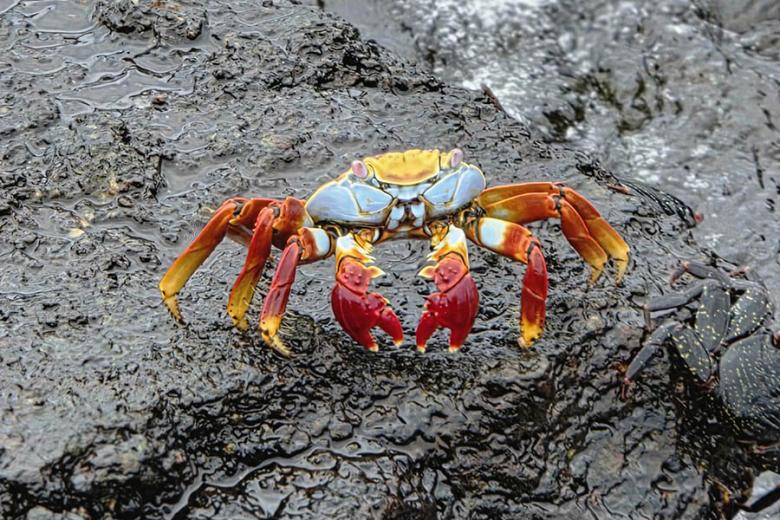
We were also lucky enough to see two short-eared owls, one hunting in open flight and the other tucked away sleeping in a craggy rock formation. Most stunning was a group of large Sally Lightfoot crabs in the rock pools around the bay. Their magnificent array of vivid colours was breathtaking.
Kayaking around Darwin Bay
In the afternoon, we kayaked around the cliff faces of Darwin Bay, where we saw two Galapagos Fur Seals resting in the sun on the rocks. We also got our first sighting of Marine Iguanas swimming in the sea. The sheer cliff faces were alive with seabirds, creating an unforgettable symphony of colour and sound on this remote island sanctuary.
That evening, we enjoyed the sunset with a few cocktails and some music, before another spectacular dinner and overnight cruise down to Santiago Island.
Day 4: Chinese Hat and Rabida Island
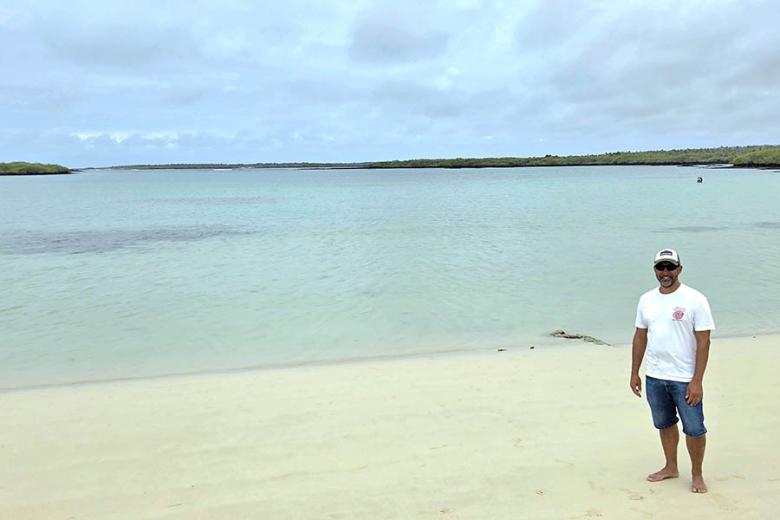
On Day 4, we woke up to several oddly shaped volcanic islands, including Chinese Hat, which resembles a traditional Chinese fisherman’s hat. After breakfast, we had a wet landing at the beautiful white sand beach on Chinese Hat, one of my favourites of the trip. Our guide took us on a short walk and explained how the volcanic island, one of the youngest islands in the Galapagos chain, was formed.
Snorkelling around Chinese Hat
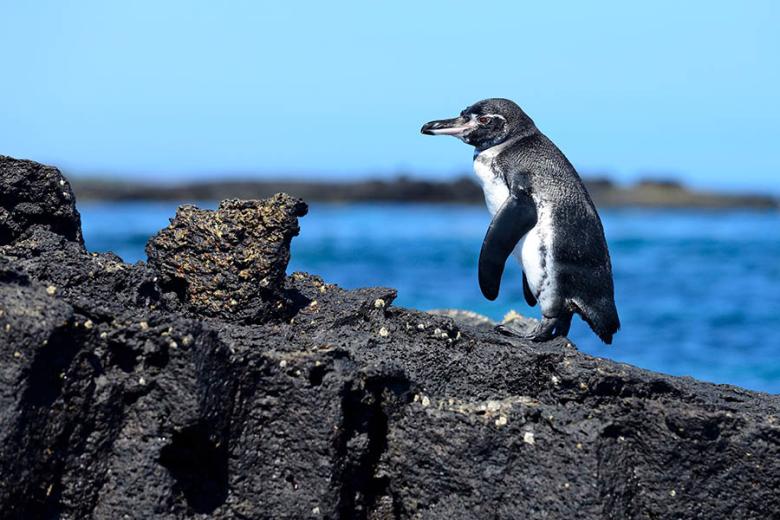
We crossed some impressive lava fields and saw amazing underground lava tubes. The sea channel between Chinese Hat and Santiago is calm, but deep enough to attract larger marine life, which means that the snorkelling is superb. With white sands and clear turquoise waters, the visibility is excellent. Almost immediately, we saw a Galapagos penguin hunting in and out of the surf, as well as white-tip reef sharks and large schools of fish.
Access to Chinese Hat is restricted to a select few visitor ships to limit human damage to the fragile ecosystem, so I was incredibly lucky to visit the island. Sitting up on the rocks, we had a close encounter with another penguin, who didn’t seem the least bit concerned by our presence. I was pinching myself.
The red sands of Rabida Island
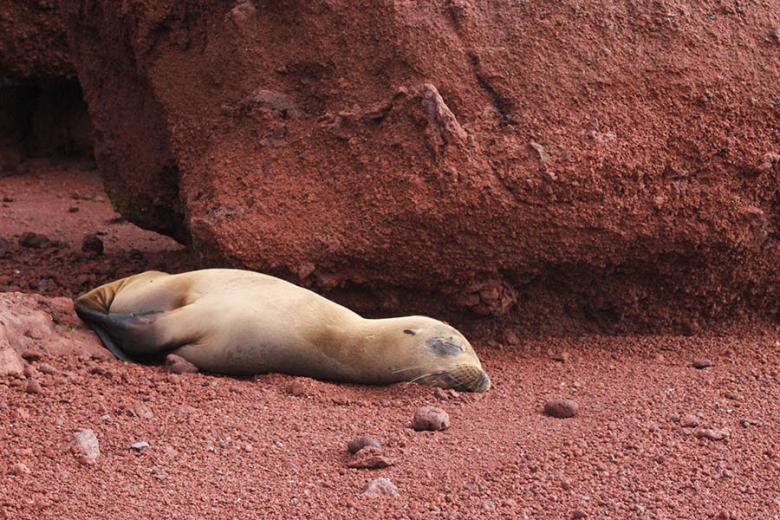
During a wonderful BBQ lunch on the upper deck of the yacht, we cruised onwards to Rabida Island. With distinctive red sandy beaches that get their colour from iron-rich volcanic eruptions, it’s unique. Rabida is best known for its flocks of American flamingos that wade in the salty lagoons behind the main beach. Sadly, we didn’t see any flamingos, but we did spend time playing with the young sealions in the surf, which was magical.
Day 5: Disembarking at Puerto Ayora
On the final morning of our cruise, we enjoyed a lovely last breakfast, packed our bags, and said goodbye to our guide Christian and the rest of the crew. Then, with heavy hearts but a lifetime of memories, we took the tender back to Puerto Ayora, the largest town in the Galapagos with approximately 40,000 people, located on Santa Cruz Island.
Back on the mainland, we checked into the Ikala Galapagos Hotel, a good four-star hotel with a swimming pool, centrally located in Puerto Ayora. Almost next door, there’s the newly opened Barranco Hotel, which has a lovely modern feel to it, with a great outdoor pool and a cocktail bar overlooking the harbour. Both properties are excellent choices in Puerto Ayora.
Visiting the Charles Darwin Research Station
During our stay, we visited the Charles Darwin Research Station, approximately 20 minutes from the town centre on foot. The centre is part conservation, part scientific research station, and part educational hub.
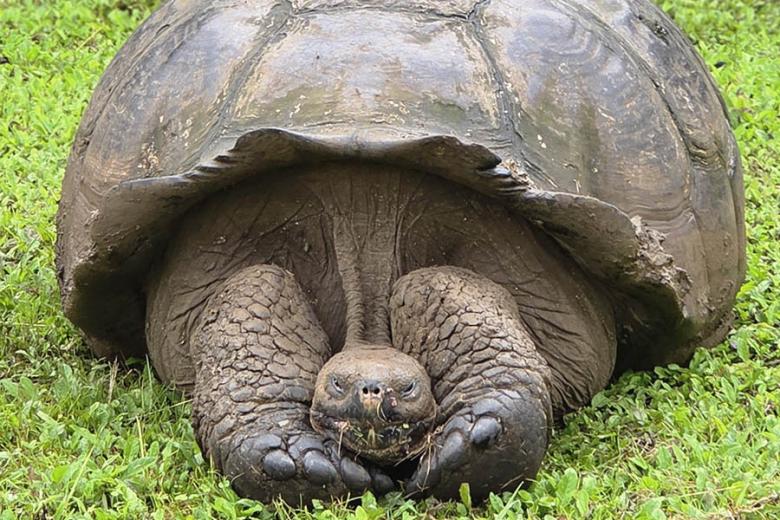
In the tortoise breeding area, they explained how they can manipulate the incubation temperature of tortoise eggs to foster a larger-than-normal female population and repopulate the Galápagos. It’s still going to be a tortoise-paced affair, as the Galapagos Giant Tortoise can take around 20-25 years to reach sexual maturity, but they can live up to around 200 years old!
The Galapagos Giant Tortoises were once abundant on the islands, but their numbers dropped sharply with the arrival of pirates and buccaneers in the seventeenth and eighteenth centuries. They were slow, easy to catch, and a large prize of meat for a hungry crew. By the 1970s, they were on the brink of extinction, with just 3000 left in the islands. Thankfully, their numbers have been slowly rising since then, albeit very slowly.
A day trip to El Chato Ranch
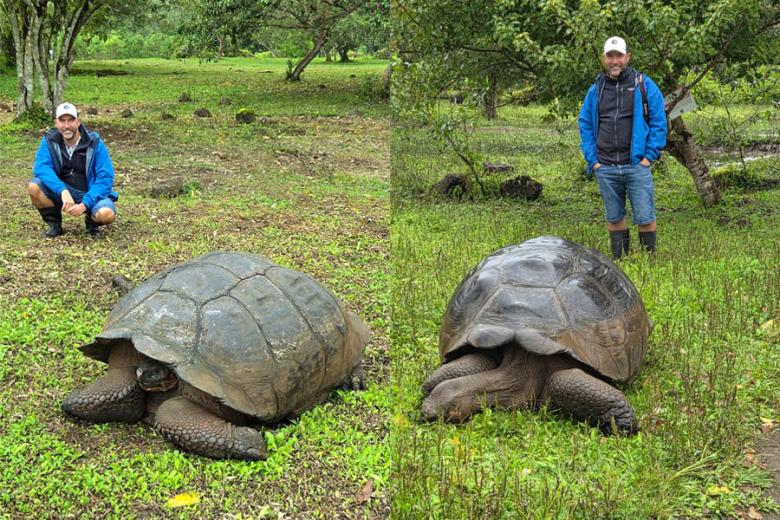
During our stay at Puerto Ayora, we took a day trip to El Chato Ranch. It’s a Giant Tortoise reserve where you can wander freely around observing one of the Galapagos most famous residents.
The huge creatures seemed entirely unfazed by our presence, casually munching on grass as we took photos. There are also huge underground lava tunnels on the ranch, peculiar cave-like formations created by the flow and cooling of the volcanic lava a very long time ago.
Kayaking around Tortuga Bay
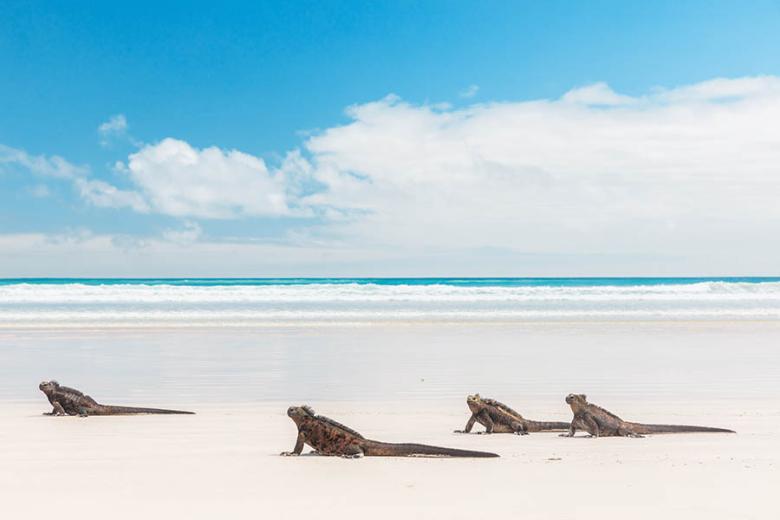
This stunning beach close to Puerto Ayora can be reached either by a short water taxi ride or a well-paved 1.5-mile walk track from town. The first large sweeping bay is pristine and flanked by dunes, but you can’t swim here due to dangerous tides. The smaller second bay is much calmer, and you can swim here.
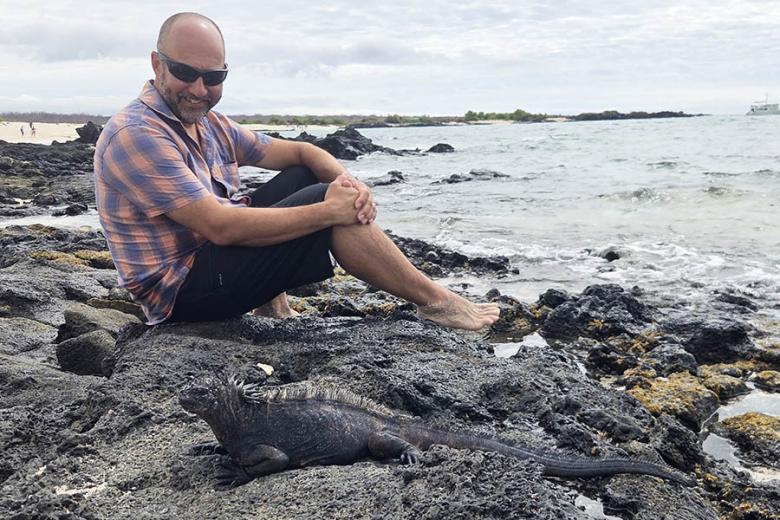
I hired a kayak from a friendly beach vendor for an hour ($15USD) and paddled around both shorelines. Over the course of an hour, I saw six sea turtles, three white-tip reef sharks, numerous marine iguanas and lots of colourful birdlife.
My thoughts about Ecuador and the Galapagos
In the two weeks I spent in Ecuador, I experienced a wide array of wonderful things, from the cobbled streets of Quito to the rural indigenous charm of Otavalo, and wildlife encounters in the Galápagos Islands. It’s the perfect country for nature and wildlife enthusiasts, and it will leave you with memories to treasure for a lifetime. I highly recommend adding it to your bucket list, and I still can’t believe my luck.
Ready to explore Ecuador and the Galapagos?
We’re experts at planning multi-centre Ecuador and Galapagos trips packed with local character and personal touches. We’ll craft an itinerary that fits your budget and travel style, supporting you every step of the way. To get started, give us a call on 1273 320 580 or send us an online quote request.

The perfect 2-week Ecuador and Galapagos tour
Jim Faulkner
Senior Travel Consultant
at Travel Nation
My Amazon experience at Sacha Lodge Ecuador

Milly Gill
Product Manager
at Travel Nation
5 South America honeymoons that will blow you away
Chris West
Senior Travel Consultant
at Travel Nation
About the author Jim Faulkner
Senior Travel Consultant
Jim started exploring at just 19 years old, and he has travelled around the world several times. However, since having a family, his travel plans have become a little shorter and more organised. Jim has worked in the travel industry for thirty years, and his knowledge is second to none. He is very familiar with the loveable chaos of family life and knows how difficult it can be to plan a trip, so he loves planning family-friendly holidays all over the world.