Rural Japan in a week: following the Three-Star Road

TripBlogs
One week in Japan can fly by in the blink of a speeding bullet train, so it’s crucial to plan your trip wisely. Most travellers visiting Japan will lean towards travelling between a couple of key cities, zipping between Tokyo and Osaka, or Hiroshima and Kyoto. This makes perfect sense if your goal is seeing a handful of Japan’s top highlights.
However, Japan is a large and varied place – and cities aren’t everyone’s cup of tea. Some of the most enticing elements of Japanese culture and geography can be found just a stone’s throw off the beaten path, in the mountains, forests and villages.

If you’re looking to take in some of the more rural destinations, cuisine and culture, I highly recommend spending your week exploring the Three-Star Road (Mitsuboshi Kaidou). It’s a wonderful choice if you’re on a tight time frame, or it can be added as an extension to a more well-trodden itinerary. The Three-Star Road is the perfect option to add on to a short trip to Japan, or to extend a more well-trodden itinerary to include something a little different.

What is the Three-Star Road?
The Three-Star Road is an area of Japan located in the Alps, linking the Nagano and Toyama regions. Sitting to the northwest of Tokyo, it’s easy to reach by train. The towns of the Three-Star Road are a wonderful mix of cultural hubs, busier towns, and traditional villages.
The road itself connects Matsumoto to the east with Takayama and Kanazawa to the west. It’s a particularly stunning area in terms of natural beauty, rural culture and local cuisine. All in all, it’s fabulous to explore and offers some unique Japanese experiences. Traditional ryokan stays, onsen baths and delicious rustic meals are all part of discovering this beautiful route.

If your ideal week in Japan is less centred around the neon-energised and fast-paced life of the main cities, and more focused on a traditionally slower-paced lifestyle, the Three-Star Road is the perfect match. In both winter and summer, the villages are picture-perfect examples of time-honoured rural living.


When to visit Japan’s Three-Star Road
As you can imagine, the scenery and activities available vary vastly depending on when you visit the Three-Star Road. Visiting in winter gives you a beautiful snow-capped version of the Japanese scenery, while the summer is perfect for hill-walking. The summer months bring hazy sun-drenched afternoons in pastoral villages, strolls through beautifully curated gardens, and green tea ice cream.
I visited Japan and the Three Star Road at the beginning of March, and although a quieter time to visit Japan, this area did not disappoint for soaking in some incredible culture and experiences often overlooked by fairer-weathered months.

The colder months (October-March) provide a winter wonderland of snow-dusted thatched roofs, deliciously cosy ramen bars and the opportunity to relax in a hot spring onsen whilst taking in the snowy scenery. Blissful!
One thing to note, however, is the need for a warm coat at this time of year. The Three-Star Road is high up in the breath taking Alps, and due to the altitude, there is a far crisper climate with plenty of winter snow. It’s important to wrap up warm!

Beginning in Kanazawa
After landing in Tokyo, I headed straight to train station, bypassing the capital altogether. Getting from the airport to the train station was a breeze, and once on the bullet train to Kanazawa, I could relax and watch the scenery rush by.
Arriving at Kanazawa for the first night, I was pleasantly surprised by the perfect amount of charming hustle and bustle that the town provided. It’s nothing on the scale of Tokyo, but there’s plenty of buzz about the place!

A small walk through the spectacular Kenroku-en Garden gave me an instant sense of zen, with its beautiful lake criss-crossed by red wooden bridges. It’s one of the region’s best gardens, replete with carp ponds and meticulously curated walkways and plants. No visit to Kanazawa is complete without a stroll through the garden.
I stayed at the beautiful Hotel Sanraku Kanazawa, which has a cosmopolitan style and impeccably decorated rooms. The breakfasts here were just incredible, and it was the perfect warm welcome into Japan.

Kanazawa is one of the larger towns along the Three-Star Road, and there’s plenty to see and do here. If you’re travelling with children, or want to try something a little different, I highly recommend a traditional archery class in the Kenroku-en Garden. It’s a great way to end a relaxing walk, with something a bit different.
I loved being dressed up in the traditional garb and taught how to fire a medieval Japanese bow. It was great fun, and I learned a lot in the process! I genuinely felt like we were welcomed into an authentic bit of historical tradition, and this made it a totally worthwhile experience. We also made the local paper, which was a bit of a fun souvenir!

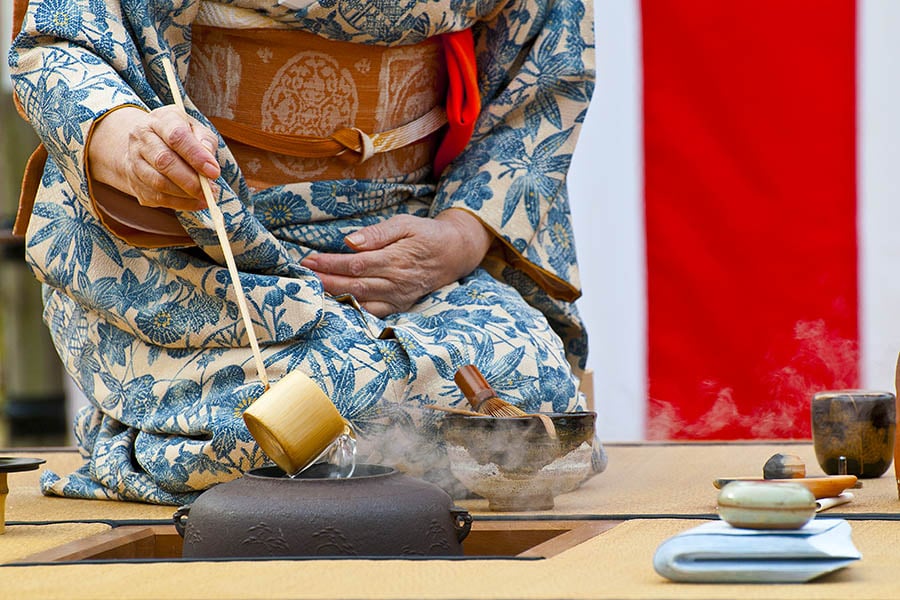
I also took part in my first traditional tea ceremony in Kanazawa. It was a fantastic experience, learning the rituals behind the tea and the process of creating the ceremony. Tea ceremonies are a wonderful window into Japanese traditional, and they can easily be added into an itinerary, giving you a unforgettable local experience and a chance to meet the experts.
Heading deep into rural Japan
After two nights in Kanazawa, we headed into rural Japan proper, making our way to Gokayama by small shuttle bus. Upon arriving into Gokayama, it was quickly apparent that we were in a world of mountainous rustic villages. Thatched roofs, traditional dwellings and snow-covered houses with whisps of open fires emanating from the chimneys. It felt like something from a storybook.

First, we headed to the rural town of Shirakawa-go and set about exploring this breathtaking medieval hamlet. In the summer months, it is famous for its green rolling landscape and thatched roofs. In winter, it is equally beautiful. We stopped at a local restaurant for some warm sake and a delicious hot meal before moving on to Gokayama, our home for the night.

Staying at a traditional village homestay
Gokayama is the next village along from Shirakawa-go. It’s a lot smaller and far less tourist orientated. There’s basically only a handful of locals living here, so it has a genuine and peaceful atmosphere. If you want to discover the real rural Japan, there’s nowhere better.
We stayed in a family-run homestay - The Gokayama Guest House Kitabura. Run by the Kitabura family, this was a treat and an overnight stay that I’ll never forget. There’s no Wi-Fi, no central heating, and traditional tatami beds on the floor. It was incredible to be hosted by a local family, and the entire stay was experiential in nature.
Our dinner and breakfast were prepared by the welcoming Kitabura family, and we really felt the warm atmosphere of being in a traditional home. If travelling in the winter months, however, do bear in mind that it gets chilly at night! Bring plenty of layers.

Exploring Gokayama
That evening, we wandered the UNESCO world heritage village, with its traditional gasshō-zukuri houses and then headed to the onsen baths. This was a stunning experience. Overlooking the ice-covered lake and mountains, we joined in the locals in the communal onsen. The steaming hot spring waters and an unmatched view of the Japanese alps really brought home just where we were, and how unique this route was.
As well as exploring the nearby villages in the hills, we also visited a traditional washi paper maker and took the tour of the way this local craft is produced. Again, this is perfect for travellers wanting to get a hands-on cultural experience, or families looking for an additional activity. It was a really interesting half-day. We were guided through the process and ended up with some beautiful souvenirs.

Taking in Takayama
Our next stop was Takayama, one of the larger, more established towns, along the Three-Star Road. It was the perfect spot to recharge after being immersed in the hills and snow. Coming down through the windy roads and entering the traditional town was wonderful – the views were out of this world.
If you want somewhere incredibly memorable to stay, then I recommend the Ryokan Gizan. Located just outside of the town, it has a wonderful mountain lodge feel to it, with private onsen baths, traditional paper walls, and home prepared meals. We had a 6-course traditional kaiseki dinner here, which was just incredible.

Our food and sake tour in Takayama
Takayama is famous for its melt-in-the-mouth Hida beef and sake breweries, making this town a food-lovers dream come true. We took a wonderful sake brewery and food tour, which was well worth it! The guide was incredible, and we stopped off at countless local eateries, shops and food-sellers. We had so many samples that I quickly lost count!
The tour ended with a visit to two of the main sake breweries, which was fascinating. I had no idea that there are so many varieties of sake! Sake tasting was also the perfect way to warm up after walking around in the fresh, chilly air.

Riding the Shinhotaka Ropeway
Before we left the mountainous region of the Japanese Alps, we decided to take a trip up to the peaks themselves. Near Takayama, the Shinhotaka Ropeway is the perfect way to experience the alps without strapping on skis.
I am certain that the views from up here in summer are stunning, it would be hard to beat the the breath taking snowscapes of the winter months. When you reach the top of the ropeway, the expanse of the Japanese Alps surrounds you from all sides, and you can walk around the summit area to take it all in. It’s a moment that I’ll never forget.

Ending the trip in Matsumoto
The final stop on our trip was the cultural hub of Matsumoto, which is a much larger city than the more rural town we had previously visited. It offered a brilliant contrast to the other destinations and felt like a wonderful place to end the trip. Suddenly, we were back to modern-paced life and home comforts!
Matsumoto offers plenty to occupy oneself, from the wonderfully interactive Matsumoto Museum of Art to soba noodle-making classes and samurai demonstrations. The main highlight of the town is Matsumoto Castle, a historic site and incredibly beautiful structure.
We took a tour of the castle, exploring both the grounds and inner rooms of the breath taking building. It felt great to get a bit of a history lesson on rural Japan’s past.

Staying at a converted onsen
There are plenty of interesting places to stay in Matsumoto, but the Asama Onsen Matsumoto Jujo was by far my favourite accommodation on the entire trip! It’s a converted onsen bath house, now fitted out as a boutique property, replete with an amazing restaurant, bookstore, and library (offering free booze in the evenings while you’re reading), and industrial-chic private onsen baths in each balcony room.
On top of that, it’s really well located! Just an incredible boutique property with amazing character and service. It's the perfect endpoint for this 7-day trip along Japan’s Three-Star Road.

My thoughts about the Three-Star Road
If you’re looking for something a bit different to the normal big city hops of a first-time Japan itinerary, or you want to extend your travel plans in Japan to include a bit more zen and tranquillity, then the Three-Star Road is spot on. It’s easily accessible from Tokyo but feels like a totally different world and a step back in time. I loved every moment, and I can’t recommend it highly enough.

Ready to plan your trip to Japan?
We’re experts at creating Japan itineraries packed with interesting cultural experiences and boutique accommodation. We can build you the trip of lifetime, based on your own personal interests and budget. To get started, simply give us a call on 1273 320 580 or send us a quote request by email.


Exploring Shikoku: Japan off the beaten path

Liz Goodall
Sales Team Manager
at Travel Nation

The perfect itinerary for 3 weeks in Japan

Audric Guerin
Senior Travel Consultant
at Travel Nation
Travel for foodies: 7 places to visit if you love to eat

Claire Parsons
Travelling friend
at Travel Nation
About the author Adam Smith
Senior Sales Consultant
Adam’s university days studying Geography set the scene for his early travel plans. Leaving the UK behind for three and a half years, he travelled through the Americas and spent a year living in Costa Rica before heading to the South Pacific islands. A passion for water sports including surfing and sailing encouraged him to undertake his greatest endeavour; a 2-man crossing of the Pacific Ocean which took 8 months and visited 6 countries including Fiji, French Polynesia and Tonga. He joined Travel Nation in 2012 as a round the world specialist and is now one of our Air Product Experts.