India and Bhutan twin centre holiday
- Image
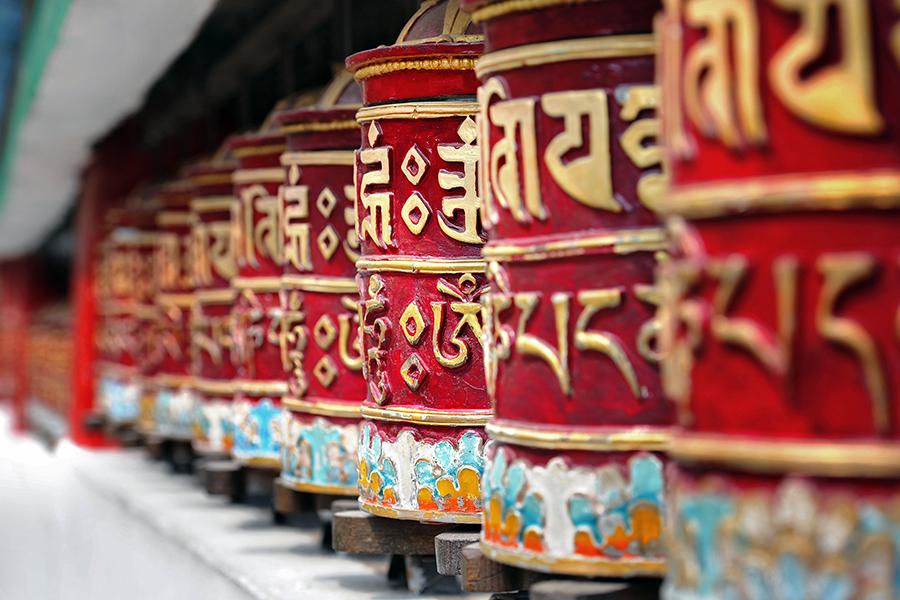 Prayer wheels - it's time to get spiritual
 - Image
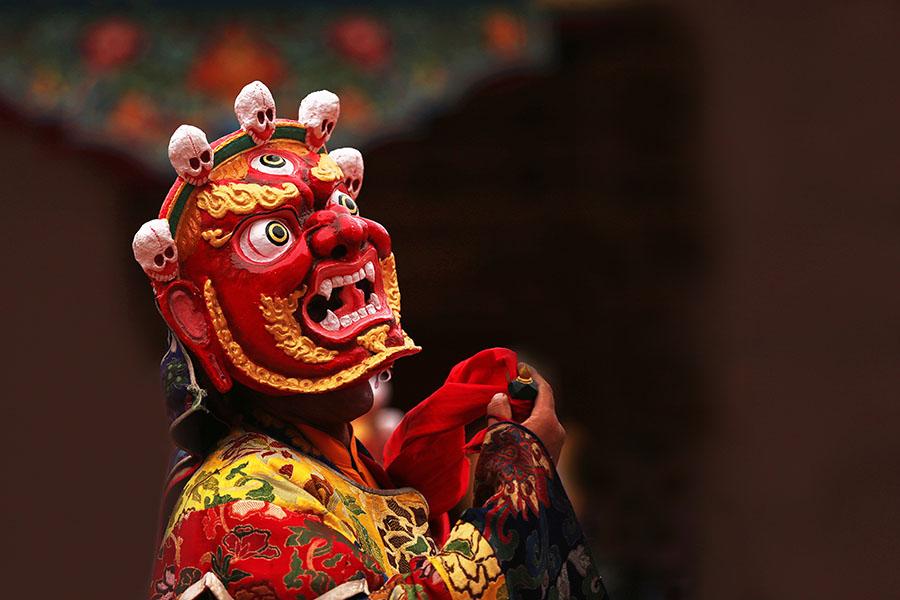 Watch masked dancers in Bhutan
 - Image
 Gaze up at the beautiful Taj Mahal in India
 - Image
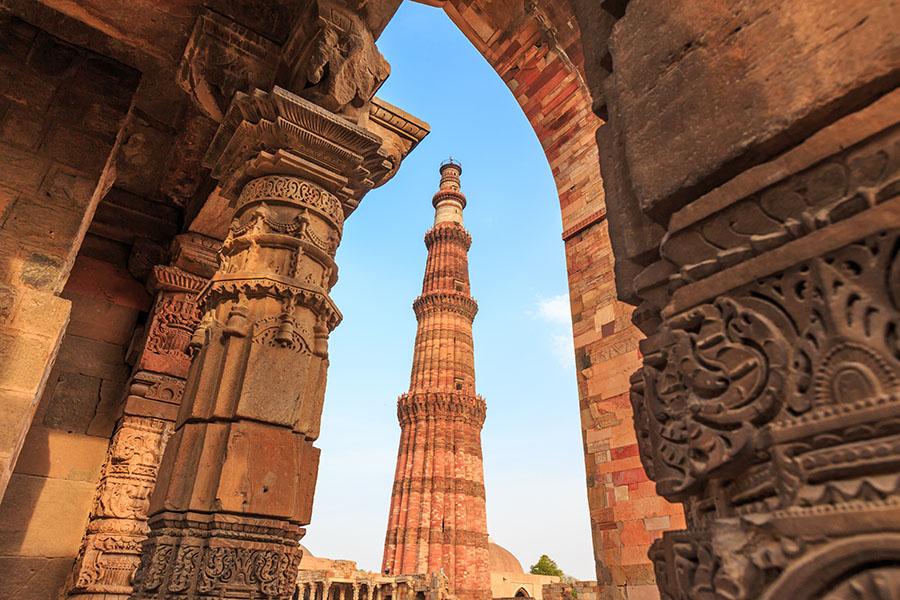 Admire the spectacular Qutub Minar in Delhi
 - Image
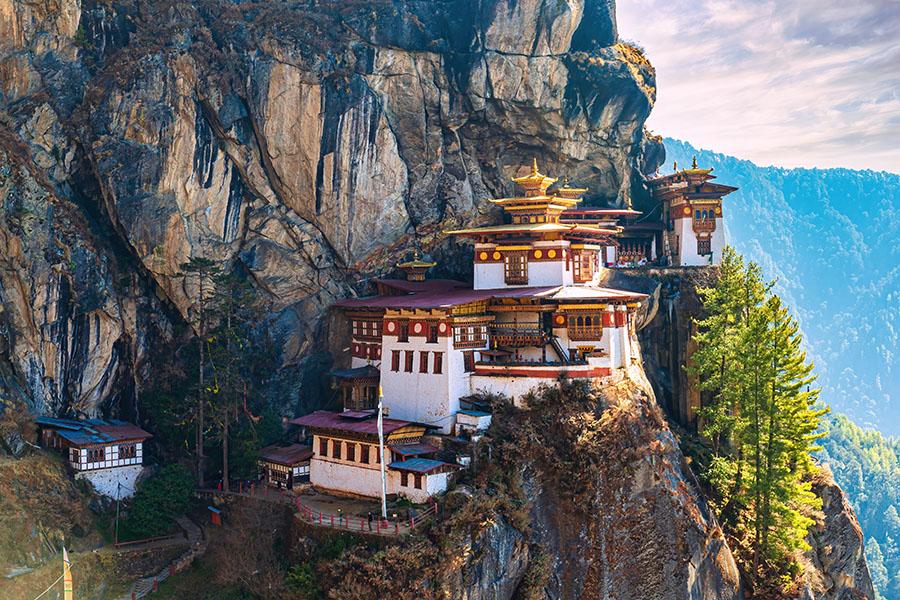 Hike to Tiger's Nest Monastery, where you can enjoy spectacular views
 - Image
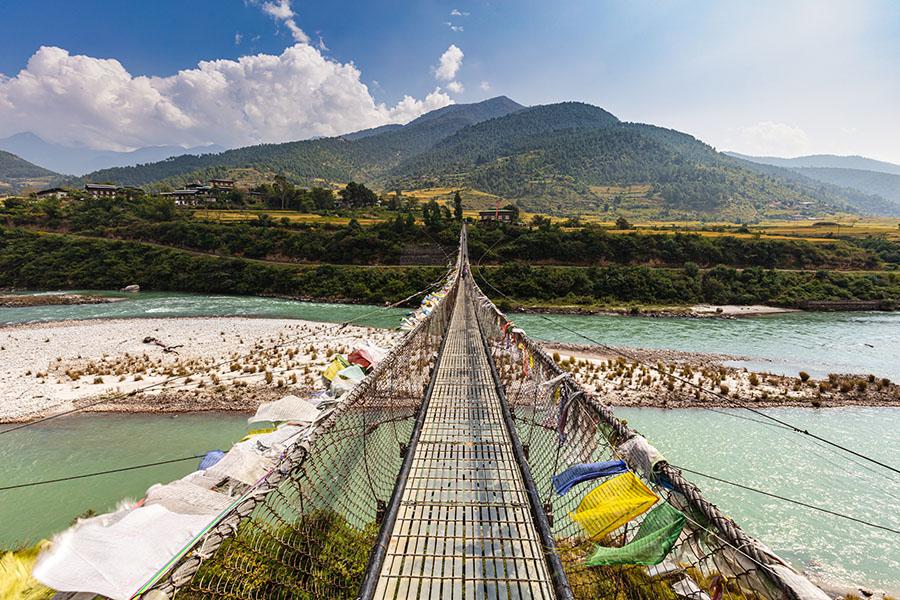 Admire the fluttering prayer flags at the Punakha Suspension Bridge
 - Image
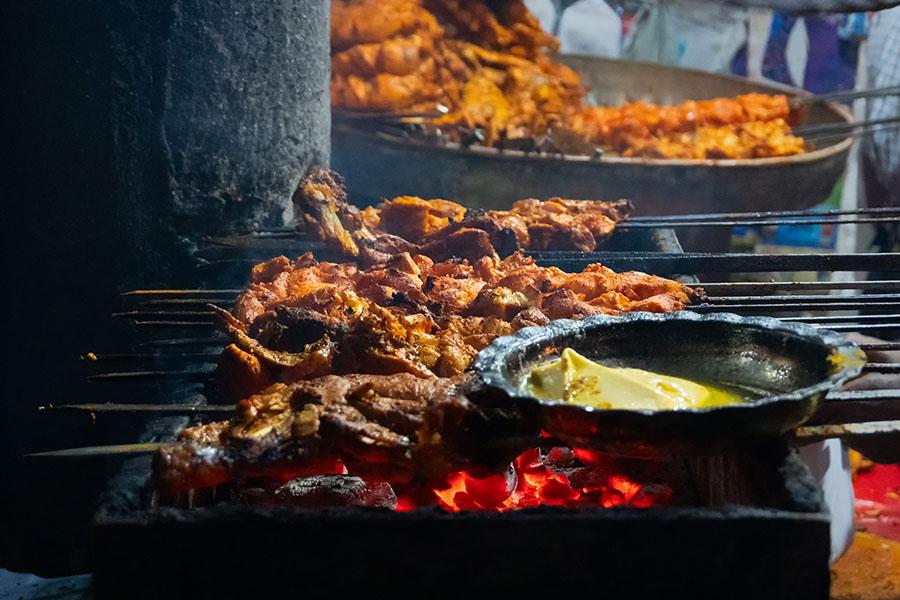 Taste delicious street food in the markets of Old Delhi
 - Image
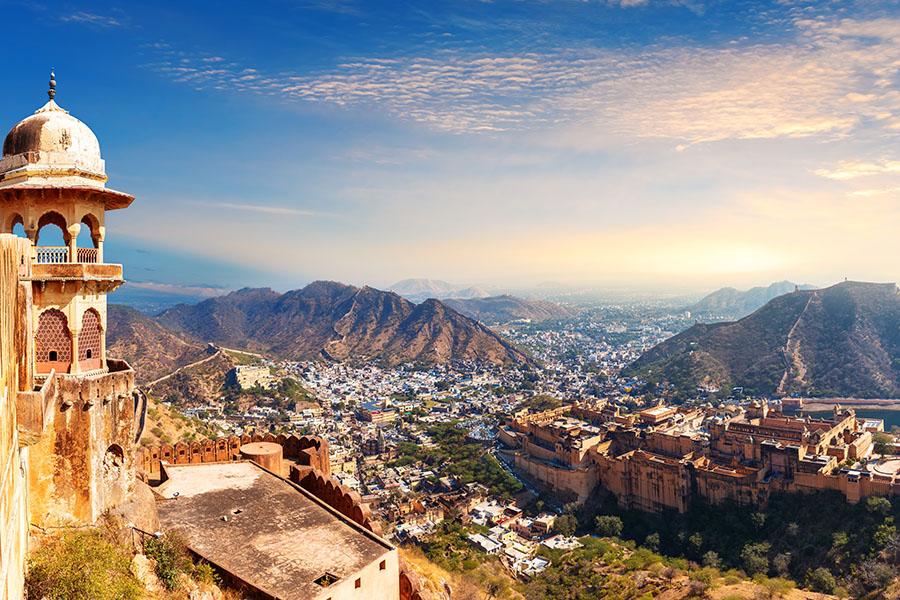 Enjoy scenic views from the Amber Fort in Jaipur


- Image Prayer wheels - it's time to get spiritual
- Image Watch masked dancers in Bhutan
- Image Gaze up at the beautiful Taj Mahal in India
- Image Admire the spectacular Qutub Minar in Delhi
- Image Hike to Tiger's Nest Monastery, where you can enjoy spectacular views
- Image Admire the fluttering prayer flags at the Punakha Suspension Bridge
- Image Taste delicious street food in the markets of Old Delhi
- Image Enjoy scenic views from the Amber Fort in Jaipur
Tailor-made holidays
Duration(in days): 17
From: UK
To: India | Bhutan
From
£6,175
Inc. International flights (Per person, based on 2 sharing)
or Call 01273 099433

See more ideas for: Bhutan | India
Overview
Explore India and Bhutan on this incredible twin centre holiday. Start in Delhi, where you’ll explore the incredible monuments of the Qutab Minar and Humayun’s Tomb, before heading to Agra. Watch the sun rise over the Taj Mahal and stop in at the abandoned imperial city of Fatehpur Sikri before continuing your journey to Jaipur. Explore the spice markets and admire the unique architecture before heading to Bhutan. Spend a week discovering this tiny mountain kingdom - hike to Tiger's Nest Monastery, meet friendly monks in Punakha and browse the markets of Thimphu. Soak up the magical spirit of Bhutan amongst the pine forests and rhododendrons of the Himalayas.
This itinerary can be tailored to suit your requirements; please contact one of our consultants to start planning your dream trip.
This holiday includes
- International flights
- All transfers
- All accommodation in India & Bhutan
- Excursions as mentioned in the itinerary
- Meals as mentioned in the itinerary
You’ll remember…
- Your first taste of delicious local street food in Delhi
- Watching the changing sunrise colours over Taj Mahal
- Admiring the spectacular architecture of Jaipur
- Exploring the monasteries and temples of Bhutan
- Gazing up at the huge Buddha Dordenma in Thimphu
- Meeting friendly locals in rural Bhutanese villages
- Hiking to the spectacular Tiger's Nest monastery
Itinerary
Itinerary in brief:
- 2 nights Delhi
- 2 nights Agra
- 2 nights Jaipur
- 1 night Delhi
- 2 nights Thimphu
- 1 night Gangtey
- 2 nights Punakha
- 2 nights Paro
- 1 night Delhi
Day 1: Depart UK
Depart the UK from your chosen airport.
Included: International flights
Day 2: Arrive Delhi
After breakfast, you’ll be driven back to the airport in time for your flight to Delhi. On arrival in Delhi, you’ll be met at the airport and driven to your hotel, checking in for two nights.
Included: Transfers, 4* hotel
Day 3: Delhi
You’ll spend your first morning in India exploring Old Delhi, a maze of crowded markets and tiny shops, crammed with some of the oldest businesses in the city. You’ll explore with a renowned chef, visiting around 8 different food spots, tasting some of the city’s best street food and learning about the different cultures and traditions that have created such delicious cuisine.
Spend the afternoon in the contrasting New Delhi, an area designed by the British in the 1920s - it’s home to government buildings set along wide boulevards and green parks and gardens. Visit monuments including the Qutub Minar, and Humayun’s Tomb, and drive past the impressive India Gate, a popular hangout for locals.
Included: Breakfast, guiding, 4* hotel
Day 4: Delhi to Agra
After breakfast in Delhi, you’ll be driven to Agra where the Taj Mahal awaits. After the four hour drive, you can relax at your hotel in the afternoon. In the evening you’ll head off on a Mughal Heritage walk, followed by a visit to Mehtab Bagh. You’ll walk though the village and meet the locals who live in the shadow of the Taj Mahal. You’ll chat to one of the village boys, enjoying chai and a pakora on the rooftop of a nearby house overlooking in the monument and learn about how tourism has benefited the local community. The money from this tour all goes to the village, providing education for women, initiatives for children and sanitation for the whole community.
Included: Breakfast, guiding, transfers, 4* hotel
Day 5: Agra Fort & the Taj Mahal
An early start this morning will get you to the Taj Mahal for sunrise. Spend the morning exploring this mighty building. As you learnt a lot about the history of the mausoleum last night, today you’ll be free to wander through the complex alone and really soak up this awe-inspiring wonder of the world. Built by an emperor in memory of his beloved queen, it took 18 years to complete, with craftsmen working around the clock on the intricate and romantic design.
With perfect proportions and distinct femininity, legend says that once the construction was completed, Shan Jehan ordered the architect’s hands cut off, and blinded, so he would never be able to duplicate the structure.
In the afternoon you’ll visit Agra Fort, where you’ll wander through the chambers of this ancient royal residence. The country was once governed from here, as well as containing the largest treasury and mint. Dignitaries and ambassadors from far off lands would be brought here, each one participating in the history of India.
Included: Breakfast, guiding, transfers, 4* hotel
Day 6: Drive to Jaipur
Leaving Agra behind, you’ll be driven towards Jaipur, stopping to visit Fatehpur Sikri, an incredible imperial city built during the Mughal dynasty. The majestic building is made of red sandstone and is completely abandoned, but in amazing condition considering its age. After exploring, you’ll arrive in the Pink City, checking in for three nights.
Included: Breakfast, guiding, transfers, 4* hotel
Day 7: Jaipur
Today, you’ll head out to explore beautiful Jaipur. First you'll leave the city to visit the Amber Fort - this marvellous example of Rajput architecture is made up of terraces and ramparts, all a rich terracotta colour that is reflected beautifully in the lake below. Each room within the royal halls is decorated with intricate ivory artwork and exquisite murals, really showing off the pomp and grandeur of a kingdom that was never conquered.
In the afternoon you’ll take a tour of the city – starting at the City Palace Complex, you’ll learn about the local styles of paintings as well as the royal family that still lives in parts of the palace. In the Maharaja Sawai Man Singh II Museum, you’ll find the Mubarak Mahal. Built in the nineteenth century, you’ll be able to view a huge range of textiles and costumes, including rare pashmina shawls, Benaras silk saris and folk embroidery. Across the road, you’ll look around the famous Jantar Mantar, one of the five observatories in India. Built to indulge the passionate hobby of astronomy by the king, they created complex astronomical instruments made of stone, which still provide accurate information on the heavens above, to this day. It’s a fascinating place to explore and learn about the twinkling skies above.
The rest of your day is yours to explore the city at leisure, or we can book in some extra experiences - you could enjoy dinner with a local family or head to a block printing class.
Included: Breakfast, guiding, 4* hotel
Day 8: Drive to Delhi
Today you’ll head back to Delhi, arriving back in the early afternoon. The rest of the day is yours to explore the city at your leisure or simply relax in your hotel, getting ready to journey to Bhutan tomorrow!
Included: Breakfast, transfers, 4* hotel
Day 9: Fly to Bhutan
After breakfast, you'll head to the airport for the short flight to Paro in Bhutan. The flight to Paro is one of the most spectacular in the entire Himalayas and soon you'll touch down, where you'll take your first breath of fresh mountain air. On arrival, you'll be met at the airport and welcomed, before being driven along the Paro Valley to Thimphu, the capital of Bhutan.
After checking into your hotel, you'll head out to explore the town with your guide - starting with a visit to the National Memorial Chorten, one of Thimphu's most iconic monuments. You'll interact with locals who come to visit the chorten, whirl the large red prayer wheels and pray at a small shrine inside the gate. Next you'll explore the market area, of Ka Ja Thorm, where the modern and traditional elements of Bhutanese life merge. You can browse the handicrafts and taste local street snacks while soaking up the atmosphere - Ka Ja Throm is a quintessential Thimphu experience.
Included: Breakfast, transfers, international flights, touring, 4* hotel
Day 10: Thimphu
After breakfast, you'll head out to visit the Buddha Dordenma, atop a hill within the Kuenselphodrang Nature Park. It is believed that this statue emits an aura of tranquillity and joy, extending its influence on the entire world. Crafted from bronze and adorned with a layer of golden gilding, this colossal Shakyamuni statue is one of Bhutan's largest monuments. From here, you'll embark on a two hour hike to Changangkha Lhakhang temple, walking past prayer flags fluttering in the breeze and through the pine forest filled with rhododendrons. At the end of the trail you'll arrive at the temple to admire the building, learning about it's history all the way back to the 12th Century. You'll also visit the Zilkha Nunnery with it's spectacular views and the Folk Heritage Museum, to learn about the documentation of local life.
Finish your day at the Trashichhoedzong, often referred to as the 'fortress of the glorious religion.' This remarkable building serves as the heart of both government and religion in Bhutan and houses the monarch's throne room.
Included: Breakfast, transfers, touring, 4* hotel
Day 11: Thimphu to Gangtey
This morning you'll begin your journey to Gangtey, around 6 hours drive from Thimphu. The journey is so scenic, taking you through the breathtaking Dochu-la Pass, soaking up the panormaic views and gazing over the Himalayas that peep out above the clouds on clear days. You'll also come across the Druk Wangyal Chortens, where 108 chortens are arranged in three circles, symbolising spiritual reverence. Continuing on, you'll pass through the dense forests of oak and rhododendrons, eventually arriving in the valley of Gantey.
In the afternoon, you'll visit Gangtey Goenpa, a magnificent monastery perched atop a small hill in the heart of the valley. Notably, it's the sole Nyingmapa monastery on the western side of the Black Mountains and also the largest of its kind in Bhutan. After exploring the monastery, you'll visit the Black Neck Crane Information Centre, strategically located on the edge of the forest and wetland along the main road of Phobjikha Valley. Equipped with high-powered telescopes and spotting scopes, the centre provides an ideal vantage point for observing the majestic cranes in their natural habitat.
Finish your day with by dropping in for evening prayers at Kuenzang Chholing Shedra, a Nyingmapa school with over 300 student monks.
Included: Breakfast, transfers, touring, 4* hotel
Day 12: Gangtey to Punakha
Today you'll be heading over to Punakha, straight after breakfast. Enroute you'll stop to visit the Chimi Lhakhang, found on a hillock in the centre of the valley, also known as the Temple of Fertility. It is widely believed that couples who do not have children and want one, if they pray at this temple, they are usually blessed with a child very soon. You'll enjoy a pleasant walk along a trail throug the rice fields to the tiny settlement of Pana. A walk through the village near the temple will give you rare glimpses into the daily life and lifestyle of the villagers.
Stop in to explore the Wangduephodrang Dzong before arriving in town and checking into your hotel for two nights. In the afternoon you'll visit Punakha Dzong or ‘Palace of Great Happiness’, built at the junction of the Pho chhu and Mo chhu rivers in 1637 by Zhabdrung Ngawang Namgyal. This majestic dzong served as both the religious and the administrative centre of Bhutan in the past. Cross the Punakha Suspension Bridge, gracefully suspended over the rushing waters of the Mo Chhu River. A marvel of engineering, you'll see the prayer flags fluttering in the wind and hear the river's roar below - crossing this bridge provides an exhilarating blend of natural beauty and cultural significance.
Included: Breakfast, transfers, touring, 4* hotel
Day 13: Punakha
Spend the day exploring Punakha, embarking on a scenic hike leading up to the majestic Khamsum Yuelley Namgel Chorten. The chorten stands as a commanding presence in the upper Punakha Valley, offering breath-taking panoramas that sweep over the Mo Chhu River and extend towards the towering peaks of Gasa and the surrounding landscape.
After lunch you'll visit Talo Village, where residences are scattered along the hillside of the valley. The beautiful farmhouses of the village have their own flower gardens and are surrounded byby wildflower meadows where corns and sweet peas are grown in abundance. You'll spend the afternoon in Nobgang and Talo villages visiting farmhouses and meeting families, experiencing Bhutanese rural life.
Included: Breakfast, transfers, touring, 4* hotel
Day 14: Punakha to Paro
After breakfast, you'll be driven to Paro along the scenic highway. On theay you'll visit the handsomely proportioned Simtokha Dzong built in 1629, often said to be the first dzong built in Bhutan. On arrival in Paro, you'll check into the hotel before heading out to explore the valley. he beautiful valley of Paro encapsulates within itself a rich culture, scenic beauty and hundreds of myths and legends. It is home to many of Bhutan’s oldest temples and monasteries - after a local style lunch, you'll visit Ta Dzong, originally built as Watchtower, which now houses National Museum. The extensive collection includes antique thangkha paintings, textiles, weapons & armour, household objects and a rich assortment of natural and historic artifacts.
The rest of the day is yours to explore the local area at your leisure.
Included: Breakfast, transfers, touring, 4* hotel
Day 15: Tiger's Nest hike
Spend your final day in Bhutan visiting the most iconic monastery in the country. Head off early on the five hour round trip hike up to Taktshang Monastery, known as Tiger's Nest. Clinging to the side of a cliff above the Paro valley floor, legend has it that Guru Rinpoche arrived at this sacred site on the back of a tigress and engaged in meditation, hence earning it the name 'Tiger's Nest.' It is now a pilgrimage site frequented by all Bhutanese at least once in their lifetime. After this incredible experience you'll be brough back to Paro town, stopping in at Kyichu Lhakhang before spending your final evening in Paro, toasting an incredible trip exploring India and Bhutan.
Included: Breakfast, transfers, touring, 4* hotel
Day 16: Depart Bhutan
After breakfast, you'll be taken back to the airport for your flight home.
Included: Breakfast, transfers, international flights
Day 17: Arrive UK
Info
The best time to visit India is generally between November and April, when the cooler season takes hold and the monsoon rains have ended. However, in such a large country, there are different microclimates within the other regions and each one can be vastly different. Read our blog, ‘When is the best time to visit India?’ to find out more.
March to May and September to November are the best months to visit Bhutan. Himalayan views are best in October and the rhododendron blooms peak in March and April. Some savings can be made if you travel outside of peak season when the weather is still pleasant although it can be cold in December and January. Monsoon rains put an end to most treks from June until August.
This itinerary is purely a suggestion and can be tailor-made to your requirements, so please contact us with your dates and requests, and we’ll put together a bespoke quotation for you.
What's included
International flights
Return airport transfers
Accommodation as mentioned in the itinerary
Meals as mentioned in the itinerary
Excursions as mentioned in the itinerary
Not included
Any meals not mentioned
Personal expenses
Tips & gratuities